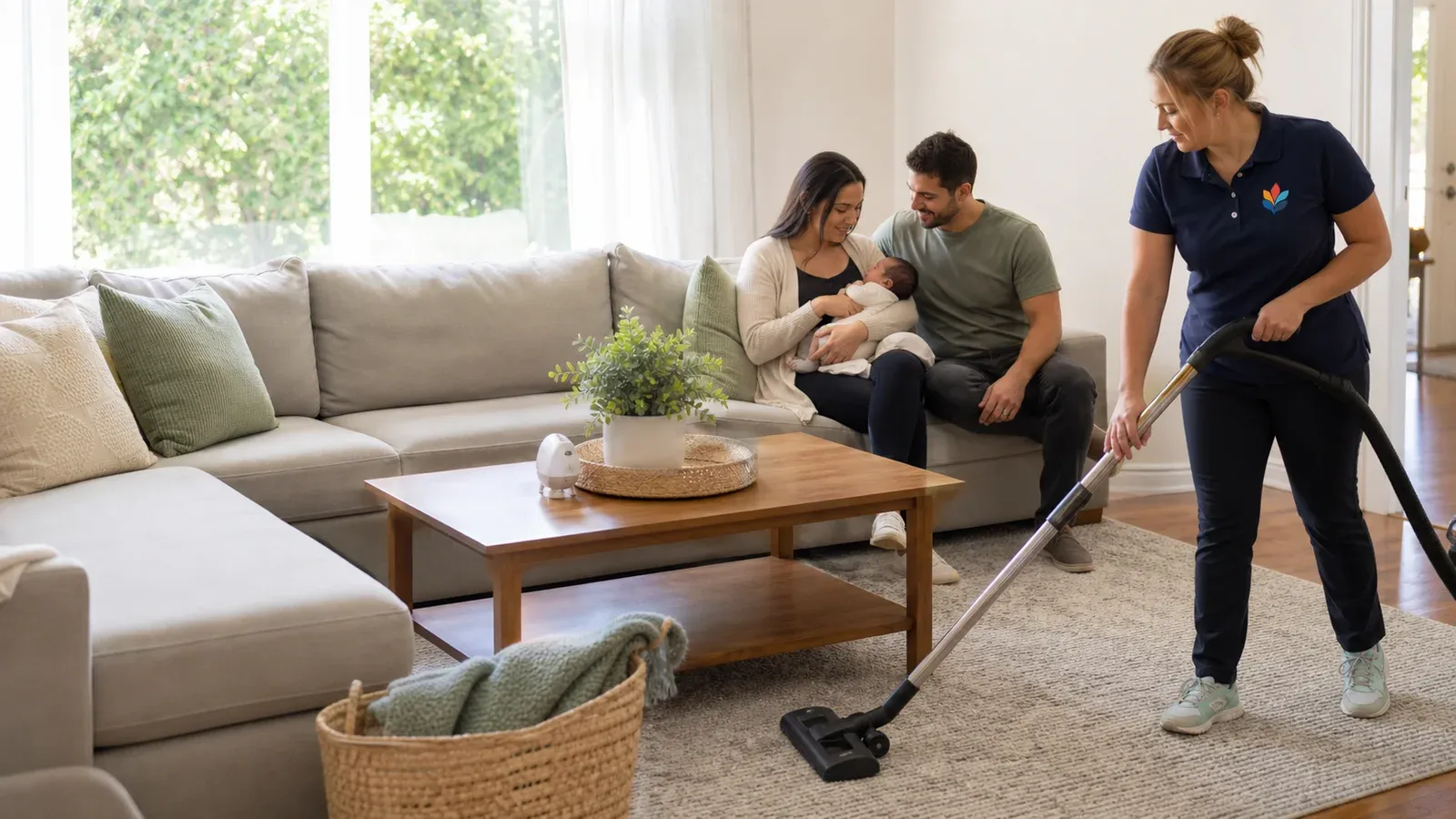
Preparing for a baby can make every room feel suddenly important. The floors look dustier. The kitchen seems too crowded. The bathroom needs attention. A simple nesting list can quickly turn into a whole-house project.
The good news is that cleaning during pregnancy does not have to mean making your home perfectly sterile. A more useful goal is to create a clean, comfortable, manageable space for the first weeks after your baby arrives.
This guide explains which rooms to prioritize, how to approach household cleaning products, what physically demanding work may be better to delegate, and how to build a realistic pre-baby cleaning checklist. It provides general information — not individualized medical advice. Discuss pregnancy restrictions, symptoms, or exposure concerns with your healthcare provider.
Start With a Manageable Home, Not a Perfect One
A newborn does not require every household surface to be disinfected from top to bottom. For most homes, routine cleaning in the rooms the family uses most is a more practical starting point.
Cleaning removes dust, crumbs, spills, and visible soil. Disinfection is a separate step intended for particular situations and surfaces. It may be appropriate when someone is ill or when a product label specifically directs its use, but it does not need to become the default treatment for every wall, floor, or piece of furniture.
Before starting, divide your list into three groups:
- Daily-use spaces: bedroom or nursery, kitchen, bathroom, and main living area.
- Basic reset tasks: floors, accumulated dust, high-touch surfaces, laundry, trash, and household supplies.
- Jobs to delegate: heavy lifting, moving furniture, unstable climbing, and long or exhausting deep-cleaning projects.
This approach gives the household a clear finish line. It also leaves room for lighter maintenance closer to the due date.

Cleaning Products During Pregnancy: Practical Precautions
Household cleaning products vary widely, so there is no responsible way to label every cleaner as universally appropriate for every pregnancy. Start with the product label. Use the product only for its intended purpose, follow dilution and surface instructions, and use any protective equipment specified by the manufacturer.
Use one product at a time
Never improvise by mixing household cleaning chemicals. The Centers for Disease Control and Prevention advises households never to mix bleach or disinfectants with other cleaners. Mixing bleach with ammonia, acids, vinegar, or other products can release dangerous vapors.
Keep products in their original containers, close them after use, and store them away from children and pets.
Ventilate as directed
If the product label recommends ventilation, open a window or door and allow fresh air to move through the room. Avoid using more product than directed. A stronger smell does not mean a surface is cleaner.
If a product causes irritation, dizziness, breathing difficulty, or another concerning symptom, stop using it, move away from the exposure, and seek appropriate medical guidance. For questions about a specific pregnancy exposure, contact your healthcare provider or a specialist service such as MotherToBaby.
What about bleach?
MotherToBaby reports that chlorine and chlorinated disinfectants have not been shown to increase the risk of birth defects. That statement should not be treated as a blanket guarantee for every product, concentration, exposure, or individual pregnancy.
If bleach is used, follow its label, provide appropriate ventilation, and never combine it with other cleaners. Questions about a specific exposure belong with a healthcare provider or poison-control professional.
Capital Clean Care
Ready to take deep cleaning off your pre-baby checklist?
Capital Clean Care can handle the labor-intensive work while your family focuses on getting ready for the baby. Serving Maryland, DC & Northern Virginia.
What to Clean Before Your Baby Arrives
Focus first on the spaces that will support sleeping, feeding, bathing, laundry, and everyday family routines.
1. Bedroom or baby sleep area
Whether the baby will initially sleep in your room or in a separate nursery, give the area a practical reset:
- Dust reachable shelves, window sills, and furniture.
- Vacuum rugs and clean hard floors.
- Remove unnecessary clutter from walkways.
- Wash bedding and washable fabrics according to their care labels.
- Organize frequently needed items where adults can reach them comfortably.
Avoid placing cleaning products or supplies near the baby’s sleep area. Follow current safe-sleep guidance from your healthcare provider or pediatrician when arranging the sleep space.
2. Kitchen
The kitchen may soon hold bottles, pump parts, feeding supplies, medication, and quick meals for tired adults. Make the room easier to use rather than trying to make it look untouched.
- Clean counters, sink, faucet, and appliance handles.
- Wipe refrigerator shelves and discard expired food.
- Create a defined area for feeding supplies.
- Clean the microwave and frequently used small appliances.
- Restock simple meals, snacks, paper goods, and dishwashing supplies.
- Keep household cleaners separated from food and feeding items.
3. Bathroom
A bathroom reset can reduce the amount of work waiting after delivery:
- Clean the toilet, sink, faucet, shower, or tub.
- Wipe frequently touched handles and switches.
- Clean the floor and empty the trash.
- Wash towels and bath mats.
- Restock toilet paper, soap, and personal-care essentials.
If scrubbing the tub or shower requires prolonged bending, an uncomfortable posture, or significant effort, place it on the delegation list.
4. Floors, rugs, and accumulated dust
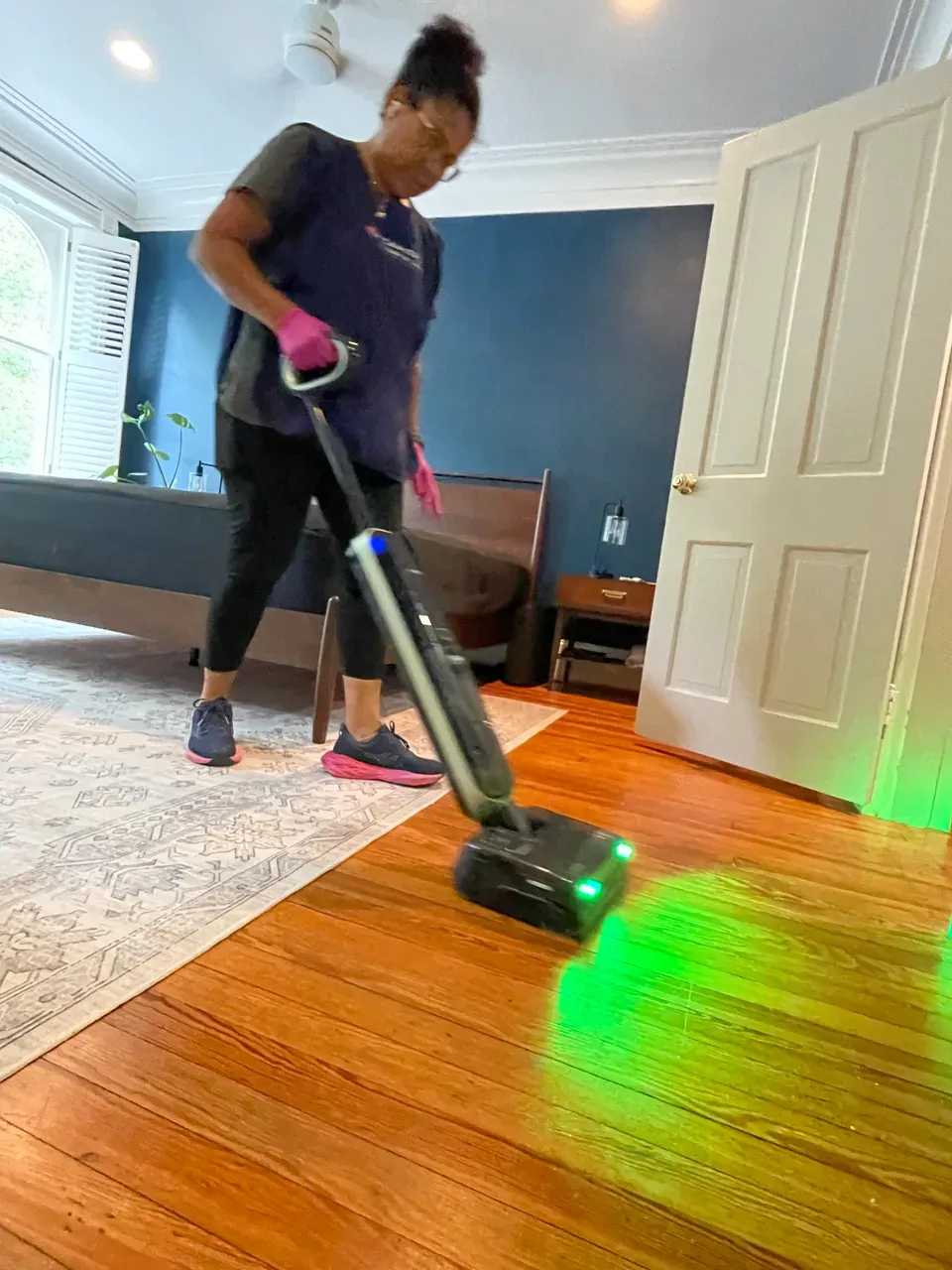
Floors collect soil, crumbs, dust, and pet hair. A whole-home floor reset can make later maintenance simpler.
- Vacuum carpets, area rugs, and accessible upholstery.
- Clean hard floors according to the flooring manufacturer’s instructions.
- Address visible dust on baseboards and reachable ledges.
- Pay attention to pet hair in the rooms where the family spends the most time.
- Move only lightweight items that can be handled comfortably.
Large rugs, heavy furniture, and appliances should not be moved by someone who has been advised to avoid heavy lifting.
5. Frequently touched surfaces
High-touch surfaces are easy to overlook because they rarely look dirty. Add a simple pass through the home for door handles, light switches, cabinet and drawer pulls, faucet handles, stair rails, remote controls, and frequently used counters.
Follow the surface and product instructions. Routine cleaning may be sufficient unless there is a specific reason to disinfect.
6. Laundry and household basics
The most helpful preparation may be the ordinary work that prevents small problems during the first days home:
- Catch up on essential laundry.
- Wash baby clothes and linens according to their care instructions.
- Empty household trash and recycling.
- Replace vacuum filters or bags when needed.
- Restock soap, paper goods, trash bags, and laundry supplies.
- Clear safe walking paths through bedrooms and living areas.
The objective is not to complete every optional organizing project. Prioritize the basics that make daily routines easier.
Cleaning Tasks That May Be Better to Delegate
Pregnancy experiences and medical restrictions differ. A task that feels comfortable for one person may be inappropriate or exhausting for another. Follow the restrictions provided by your healthcare team.
From a practical standpoint, consider delegating work that involves:
- Moving furniture, mattresses, or heavy equipment
- Carrying heavy loads or full buckets
- Climbing ladders or using unstable stools
- Prolonged bending, kneeling, or overhead reaching
- Strong odors or products that cause irritation
- Mold, pest waste, renovation dust, or other specialized contamination
- Hours of continuous scrubbing or whole-home deep cleaning
A partner, family member, friend, or professional cleaning team can handle labor-intensive work while the expecting parent focuses on lighter organization and baby preparation.
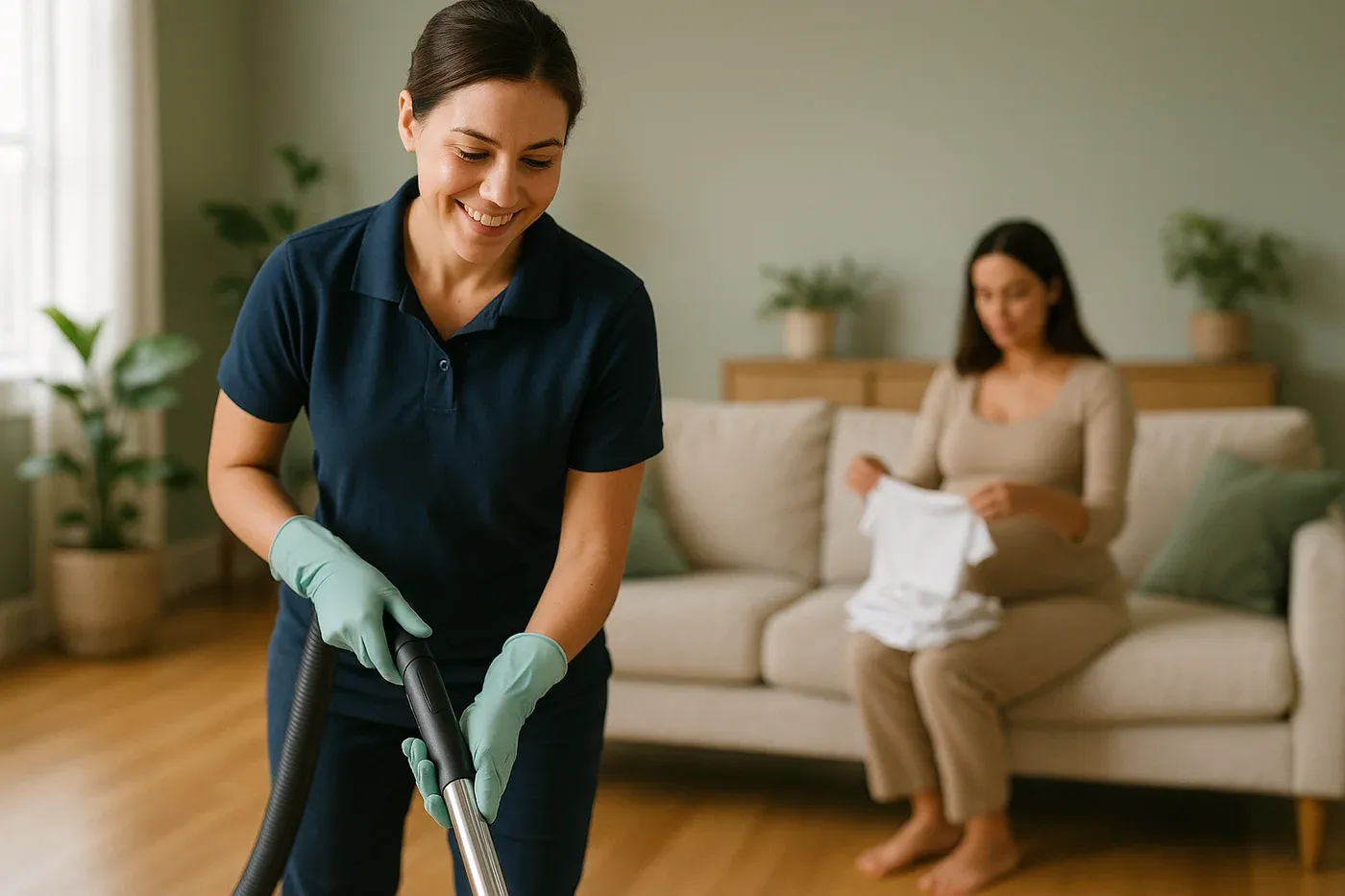
When Should You Deep Clean Before the Baby Comes?
There is no universal medically required week for deep cleaning a home before delivery. A practical schedule is to complete larger projects while the expecting parent still feels comfortable, then use lighter routine maintenance as the due date approaches.
One possible timeline is:
- Several weeks before the due date: complete bathrooms, kitchen details, floors, accumulated dust, and other demanding work.
- One to two weeks before: wash essential laundry, refresh high-use rooms, remove trash, and restock supplies.
- Closer to the due date: limit the plan to light maintenance and tasks that remain comfortable.
Pregnancy complications, activity restrictions, fatigue, pain, or other symptoms can change that timeline. Follow individualized medical advice rather than a generic schedule. If you are scheduling a professional deep cleaning, booking before the final stretch can remove one more item from the family’s last-minute list.
Complete Pre-Baby Cleaning Checklist
Use this checklist as a menu, not a requirement to complete every item personally.

Bedroom and baby area
- Dust reachable surfaces and window sills
- Vacuum rugs or clean hard floors
- Wash essential bedding and washable fabrics
- Clear walkways and reduce unnecessary clutter
- Organize frequently used baby items
Kitchen
- Clean counters, sink, and faucet
- Wipe appliance and cabinet handles
- Clean refrigerator shelves and discard expired food
- Create space for feeding supplies
- Restock easy meals and household essentials
Bathroom
- Clean toilet, sink, shower, or tub
- Wipe handles and switches
- Clean the floor
- Wash towels and bath mats
- Restock soap, toilet paper, and personal-care items
Floors and living areas
- Vacuum carpets, rugs, and accessible upholstery
- Clean hard floors
- Address visible dust and pet hair
- Wipe frequently touched surfaces
- Empty trash and recycling
Before finishing
- Catch up on essential laundry
- Store cleaning products securely
- Check that walkways are clear
- Delegate any remaining heavy or exhausting work
- Leave optional projects for another time
Should You Hire a Cleaner Before Your Baby Arrives?
Professional cleaning can be useful when time, fatigue, discomfort, or physical restrictions make a whole-home reset difficult. It is not a requirement, and it does not need to replace every household task.
A pre-baby cleaning service can focus on labor-intensive areas such as bathrooms, kitchen details, floors, dust, and high-touch surfaces. The family can then handle personal organizing, baby supplies, and lighter maintenance. When choosing a company, ask what is included, which products the team uses, whether special product requests are possible, and how the company handles ventilation, pets, access, and quality control.
Capital Clean Care provides professional house cleaning and deep-cleaning services across Maryland, Washington DC, and Northern Virginia. Our trained team can handle the demanding cleaning work while your family focuses on preparing for the baby.
Frequently Asked Questions
What should I clean before my baby arrives?
When should I deep clean my house before having a baby?
Can you clean your house while pregnant?
Is bleach safe to use during pregnancy?
Do I need to disinfect my entire house before bringing a newborn home?
Should I hire a cleaner before my baby arrives?
Prepare the Home Without Exhausting Yourself
Preparing for a baby should make the first weeks at home easier — not create another impossible standard. Focus on the rooms your family will use, follow cleaning-product directions, ventilate when needed, and delegate physically demanding work.
Take Deep Cleaning Off Your Pre-Baby List
If you would like to remove deep cleaning from your pre-baby list, Capital Clean Care serves families throughout Maryland, Washington DC, and Northern Virginia. Request a free quote and tell us which rooms or tasks matter most to your household.
Already home with your newborn? Continue with our practical cleaning guide for the first weeks after bringing baby home.

Rodrigo Reis
Founder & Owner, Capital Clean Care
Rodrigo founded Capital Clean Care in 2015 and still runs it as a family-owned, Latino-operated business. Over 10+ years his team has cleaned 500+ homes across Montgomery County and the wider DMV, and the pricing and checklists in these guides come from the real quotes and jobs they run every week, not national averages. Read our story →