Home Care Guides
Can House Dust Make You Sick? A Practical Guide to Dust and Indoor Air
What dust carries and what cleaning can realistically do about it
By Rodrigo Reis, Owner, Capital Clean Care · Published
This guide is written by a house cleaning company. It covers what we know from the work: where dust collects and how to lower it. For anything about your health, it points to medical and government sources and to your own doctor.
What Is in House Dust
House dust is a changing mix of particles from indoors and outdoors. EPA lists cooking, smoking and burning candles among indoor particle sources. Fabrics and tracked-in dirt also contribute.
Dust can contain biological allergens, but its appearance does not identify them. The American College of Allergy, Asthma and Immunology (ACAAI) describes common triggers and how an allergist evaluates a suspected dust allergy.

Symptoms Do Not Tell You the Cause
A dust allergy can look like a cold that does not end: sneezing, a stuffy or runny nose and itchy eyes, and in some people coughing or wheezing. Colds, seasonal pollen and smoke can look much the same, so symptoms alone do not identify a cause. A cleaning company cannot identify it either.
If symptoms persist or keep returning, see a doctor. An allergist can evaluate possible triggers and decide whether testing is needed. People with asthma should follow the plan they have with their own doctor. EPA advises working with one to identify triggers and plan treatment.
Trouble breathing needs medical care right away. If someone is struggling to breathe, call 911 or go to emergency care. A cleaning appointment is the wrong response to that.
Why a Closed House Can Feel Dustier in Winter
When windows stay shut for months, less outdoor air comes in to dilute what is produced indoors, so particles from cooking, candles, fabrics and pets tend to stay around longer.
EPA's general advice is to reduce sources and ventilate with clean outdoor air. The word clean matters. AirNow reports the local Air Quality Index, which covers pollutants such as particle pollution and ozone, so you can check it before opening windows. The index does not report pollen. If pollen is one of your triggers, check a pollen forecast separately. Kitchen and bathroom exhaust fans that vent outdoors move particles and moisture out without opening the house.
Humidity matters too. Indoor air often gets drier in heating season, and a humidifier set too high can swing a room the other way. The range EPA suggests is in the key facts above, and an inexpensive humidity gauge shows where a room stands.
The local reasons dust returns quickly here, such as tree pollen and older housing, are covered in our guide to why dust builds up in Maryland homes.
Dust, or a Moisture Problem?
Dust and dampness call for different responses, and dampness is not a cleaning job. The table is about what you can observe in the house. It cannot tell you what the dust contains or why you feel unwell.
| What you notice at home | What it may point to | A reasonable next step |
|---|---|---|
| A thin gray film that comes back on furniture and shelves | Settled dust. How it looks does not show what it contains or where it comes from. | Dust with a damp cloth, vacuum and check the HVAC filter. Then look at likely sources such as fabrics, pets and open windows. |
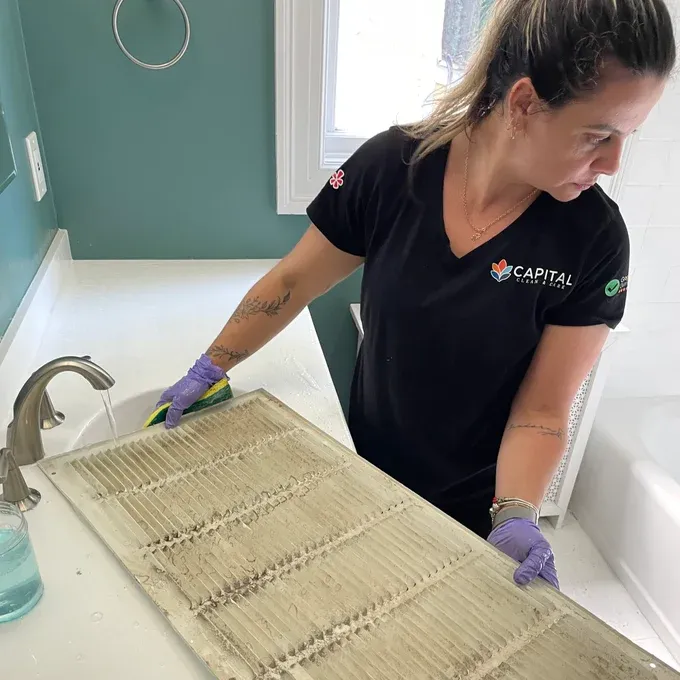
| Dust on return grilles or vent covers | Usually normal. EPA says dusty air is pulled through the grate, and this alone does not show that the ducts are contaminated. | Vacuum the outside of the covers you can reach. |
| A musty smell, or spots on caulk, window frames, walls or ceilings | Possible mold, which needs moisture to grow | Find and fix the moisture. CDC does not recommend testing for the type, because any type needs to be removed. |
| Condensation on windows, water stains or a leak | Excess moisture | Repair the leak and lower the humidity. For damp materials or growth that returns, call a water damage or mold remediation professional. |
The mold rows follow CDC, and the vent row follows EPA's guidance on air duct cleaning.
Capital Clean Care is a house cleaning company. We do not remediate or test for mold, and we do not clean the inside of air ducts. Dust from deteriorating old paint or from damaged materials that may contain lead or asbestos is also outside routine house cleaning and belongs with a certified professional.
Reachable Spots That Often Get Missed
Dust collects on surfaces that rarely get touched. Stay with the outside of surfaces you can reach safely from the floor:
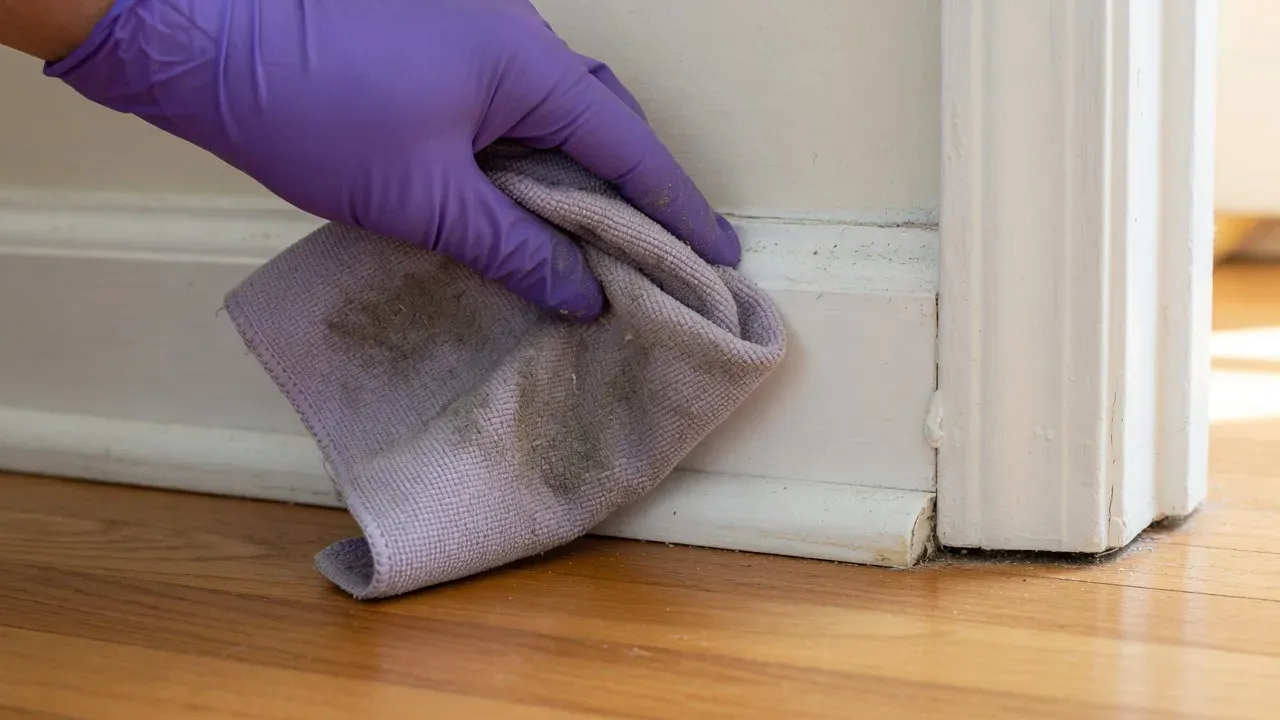
- Baseboards and the strip of floor along the walls
- Window sills, blinds and door frames within reach
- Shelves, picture frames and the tops of furniture you can reach from the floor
- The outside of vent covers and return grilles within reach
- Under beds and furniture, as far as you can reach without lifting heavy pieces
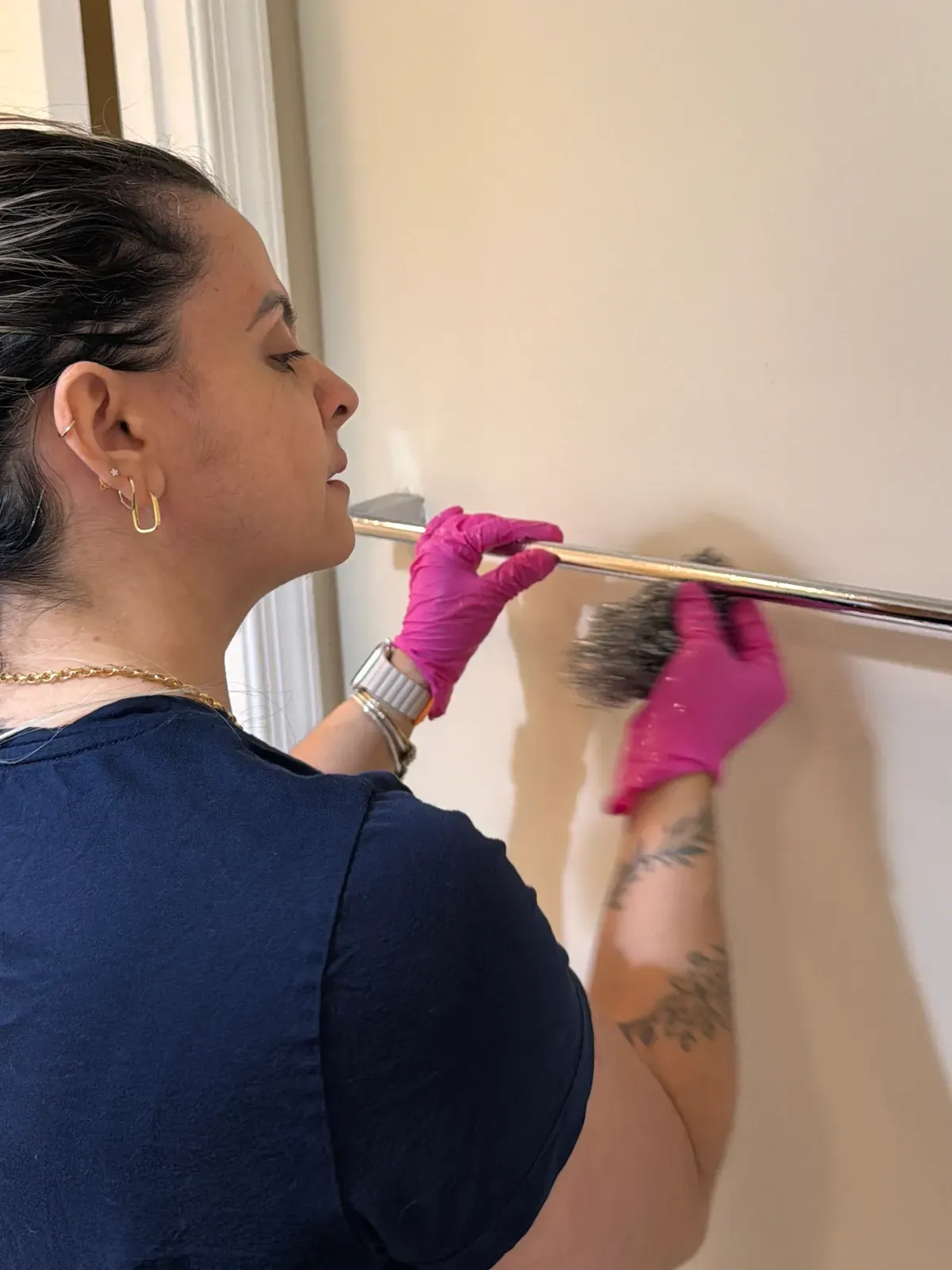
Do not climb on furniture or take equipment apart, and skip what is out of reach. Ceiling fans, light fixtures and electronics need their own care: follow the manufacturer's instructions, and do not assume a damp cloth is safe on them. The inside of ducts belongs to an HVAC professional.
A Practical Order for Lowering Dust
Work in this order.
- Deal with moisture and sources first. Fix leaks, run exhaust fans that vent outdoors and keep humidity in the range above. Cleaning around an active moisture problem does not last.
- Dust with a damp microfiber cloth. Start with the highest surfaces you can reach and work down. EPA notes that a damp cloth helps keep settled dust from going back into the air.
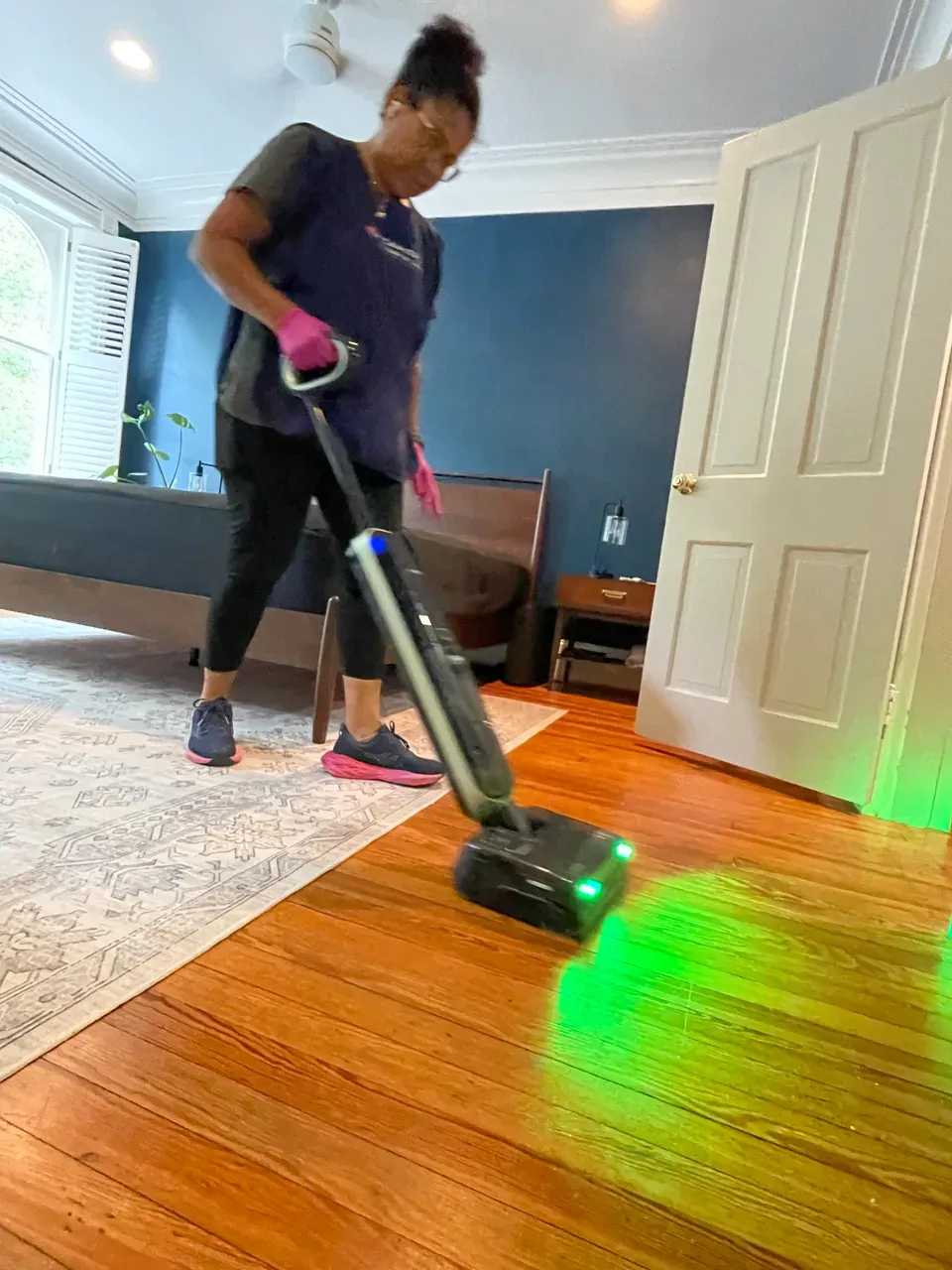
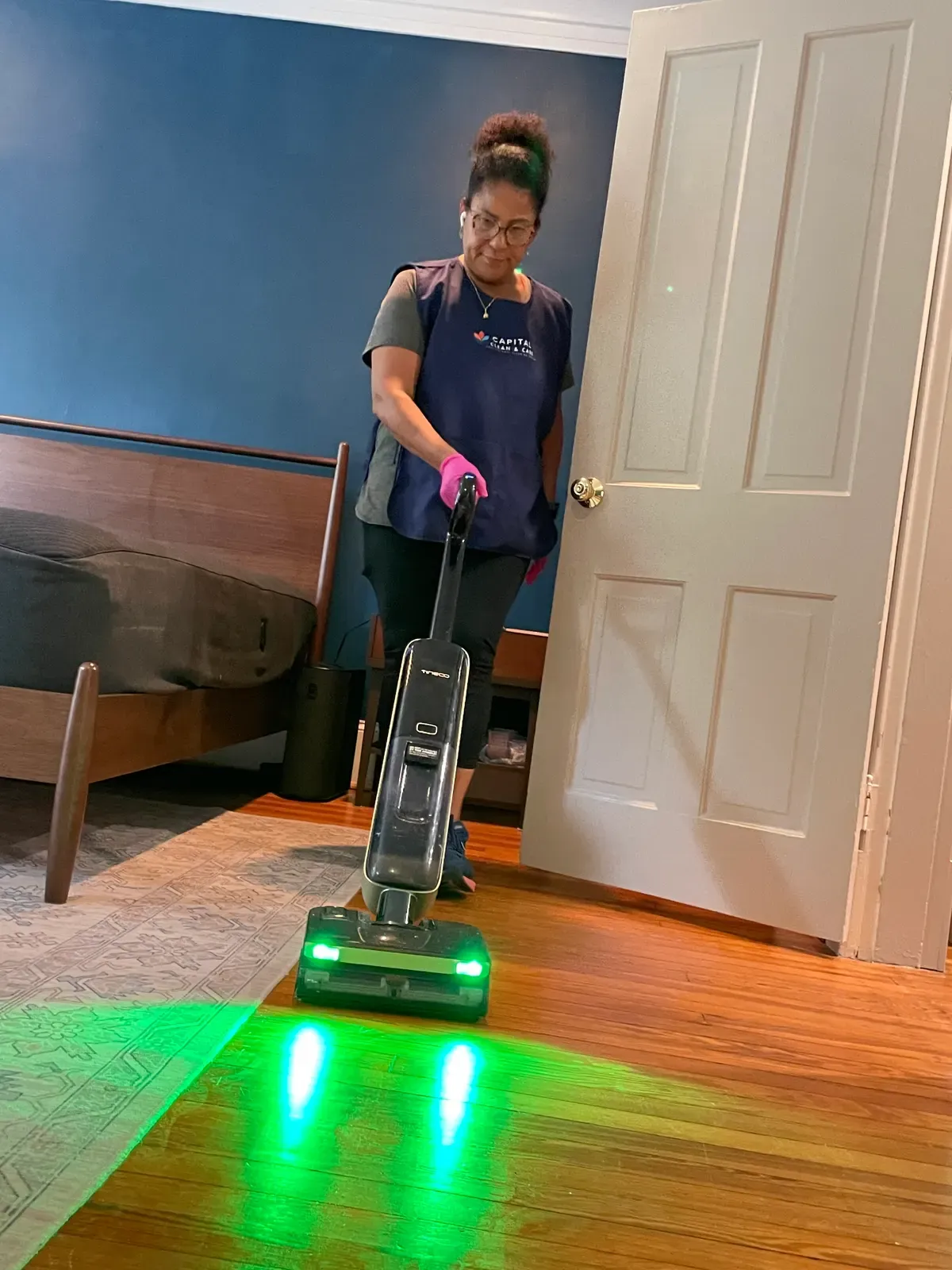
- Vacuum floors, rugs and upholstered furniture. EPA suggests considering a vacuum with a HEPA filter to reduce dust buildup.
- Wash bedding regularly, following the care label.
- Check the HVAC filter. EPA's guidance is a filter rated MERV 13, or as high as your system will accommodate, replaced on schedule. An HVAC technician can tell you what your system handles.
- Repeat. Dust keeps arriving, so the routine has to continue.
Two places dust is, and what works on each
Settled on surfaces
Dust resting on shelves, floors, fabrics and bedding. Damp dusting and vacuuming remove it.
Suspended in the air
Fine particles that stay in the air for a while. Cutting sources and bringing in clean outdoor air lower them. Filtration supplements that.
The two feed each other. Dusting, sweeping and vacuuming can lift settled dust into the air, and airborne particles can settle onto surfaces again. That is why the steps above work on both.
A portable air cleaner can supplement these steps. It does not replace them, and the FAQ below covers what EPA says about choosing one.
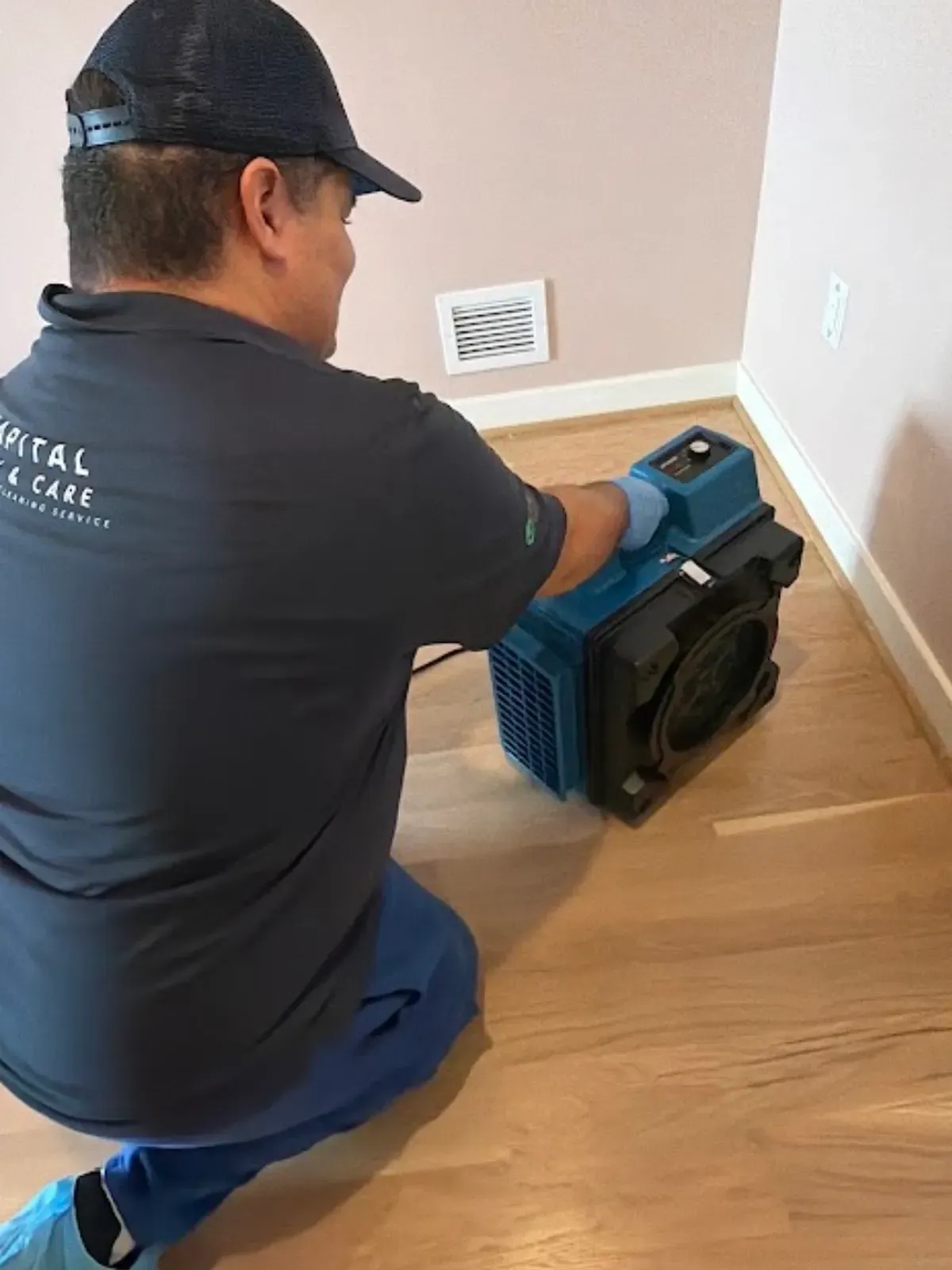
Our own work follows the same idea. On post-renovation cleans we use a portable air scrubber in the room while we work, like the one in the photo at the top of this guide. It filters the air as the cleaning lifts dust. It supplements the surface cleaning and does not replace it.
What Cleaning Can and Cannot Do
Thorough cleaning removes settled dust from surfaces, which leaves less of it to be stirred back into the air. That is the benefit. Cleaning does not diagnose an allergy, treat asthma or replace a doctor's plan. NIOSH describes evidence of an association between damp indoor spaces and asthma symptoms. That is a reason to deal with moisture. It is not evidence that a cleaning service prevents illness, and we do not promise health outcomes.
Who to call depends on what you are seeing:
- A doctor or allergistfor symptoms that persist, keep returning or involve breathing.
- A plumber, roofer or remediation professionalfor leaks, damp materials, visible mold growth or a musty smell that stays.
- An HVAC professionalfor filter questions and anything inside the ducts.
- A house cleaning companyfor dust on reachable surfaces that has gotten ahead of you.
If what you have is settled dust in more places than you can keep up with, that is house cleaning work. See what our deep cleaning includes.
Frequently Asked Questions
Sources
- EPA: What Is Indoor Air Quality? (factsheet)
- EPA: Sources of Indoor Particulate Matter
- EPA: Asthma and Your Health
- EPA: Should You Have the Air Ducts in Your Home Cleaned?
- EPA: Guide to Air Cleaners in the Home
- AirNow: Air Quality Index (AQI) Basics
- American College of Allergy, Asthma and Immunology (ACAAI): Dust Allergies
- CDC: Mold
- CDC NIOSH: Health Problems, Mold
This guide is general information from a house cleaning company. It is not medical advice and does not replace an evaluation by a doctor. Capital Clean Care does not diagnose health conditions, remediate mold or clean the inside of air ducts.