
Almost every post-construction job we walk into has paint on the floor somewhere. Drips under a window where the trim got a second coat, a roller splatter line along a wall, a footprint of primer tracked down a hallway, overspray on the baseboards. None of it is a disaster. What turns it into a disaster is grabbing the strongest thing in the garage and scrubbing.
I'm Rodrigo, and I run Capital Clean Care in Silver Spring. We do post-construction cleaning in homes and commercial spaces across Montgomery County, and learning how to remove paint from a floor without hurting the floor is a big part of that work. This guide is how we actually do it, surface by surface, with the products we trust and the ones we keep away from certain floors.
In this guide
Start Here: What Kind of Paint, What Kind of Floor
Before anybody touches a scraper, we answer two questions. What paint is it, and what floor is it sitting on? Those two answers pick the method. Get either one wrong and you can strip a finish, cloud a vinyl plank or etch a marble tile in a few seconds.
Latex vs. oil-based vs. primer, spray paint and lacquer
Most interior wall and ceiling paint in new construction and remodels is latex, which means water-based acrylic. It's the easiest to get off, especially while it's fresh. Oil-based or alkyd paint shows up more on trim, doors and in older homes; it needs a solvent like mineral spirits to break down. Primers follow the same split: a latex primer behaves like latex paint, an oil or shellac-based primer behaves like oil. Spray paint and lacquer are solvent-based, dry fast and thin, and grab hard onto whatever they land on.
Wet, dry and cured: why timing matters
Paint goes through stages. Sherwin-Williams (opens in a new tab) lists latex as dry to the touch in 1 to 2 hours but taking 2 to 3 weeks to cure, and oil-based as dry to the touch in 6 to 8 hours and curing in 5 to 15 days. Wet paint wipes up. Dry paint can still be softened and lifted. Fully cured paint has bonded as hard as it's going to get, and that's when people reach for aggressive chemicals. On our jobs, the sooner we get to a drip, the gentler the fix.
The 30-second paint test
If nobody knows what paint was used, check the can first. If the can is gone, Bruce Flooring (opens in a new tab) suggests a simple test: wipe the spot with a cotton ball dampened with rubbing alcohol. If paint comes off on the cotton, it's water-based. If nothing comes off, treat it as oil-based. Run the test somewhere hidden first if you don't know the floor finish.
Do you still have the paint can?
The label is the fastest answer.
The Capital Clean Care Soft-First Method: Our Post-Construction Paint Removal Process
We call it Soft-First because the gentlest thing that works is always the first thing we try. It comes from years of post-construction jobs across Montgomery County. The tools and products change by surface. The order doesn't.
Softest tool first.
A wooden spatula or a plastic scraper and a warm damp cloth come before any product. Metal blades and strong solvents are never the first move.
One floor, one test patch.
Nothing touches a visible area until it has passed a hidden spot on that same floor.
Low-angle light before we leave.
Every treated area gets checked with a light held low across the floor, the way haze and missed specks show up.
If it can't come off safely, we say so.
We stop and tell the client, and point to a refinisher or stone restorer when that is the right call.
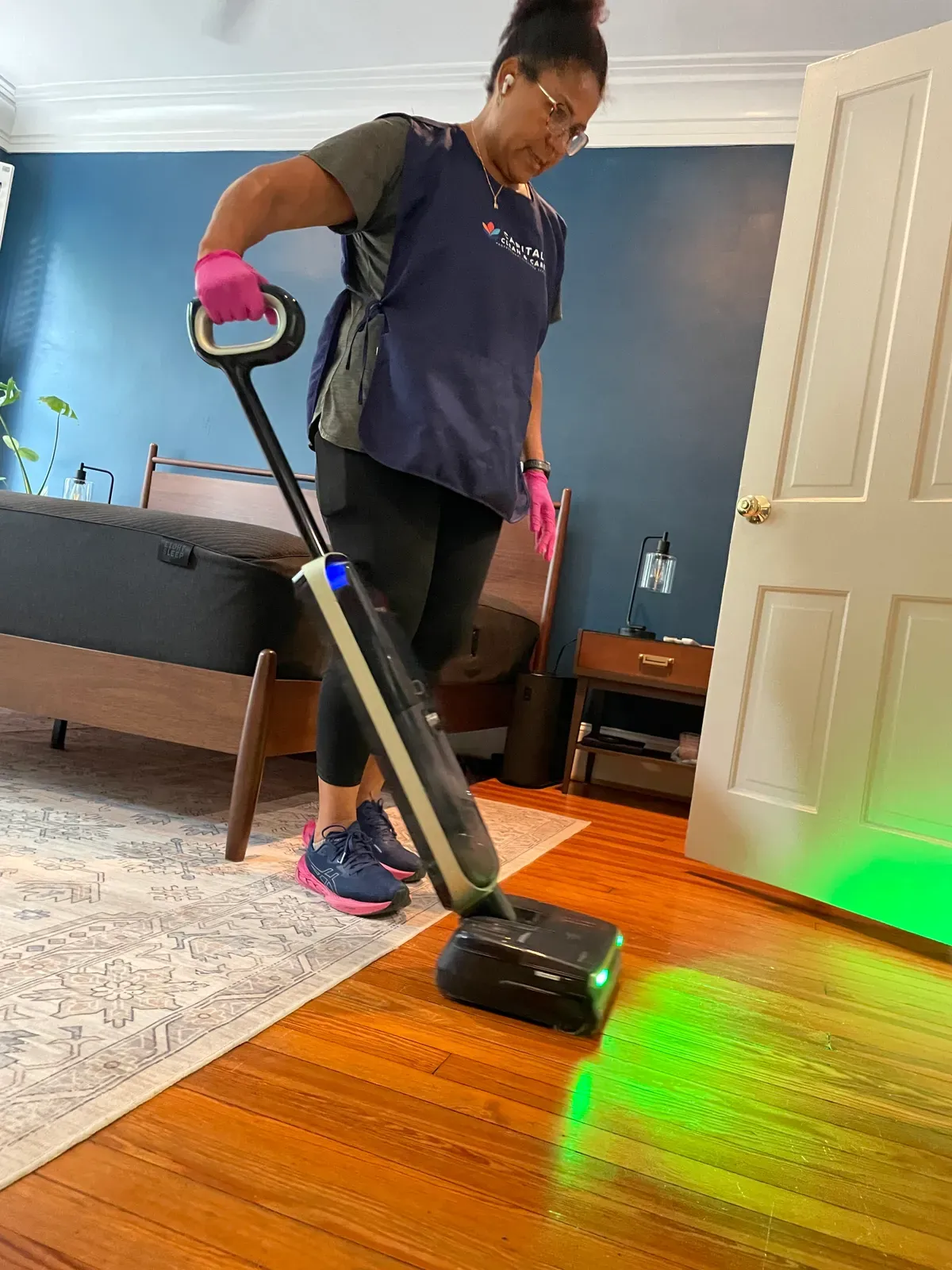
These are the nine steps of the Soft-First Method, in the order our crew works through them on every floor.
Step 1. Assess the paint. Latex or oil, fresh or dried, a few drips or a whole roller line. We check the can or run the alcohol test.
Step 2. Identify the floor and its finish. Solid hardwood, engineered, vinyl, laminate, tile, stone, concrete or carpet. On wood, we figure out whether the finish is polyurethane, oil, wax or shellac, because that decides what's allowed.
Step 3. Test patch. Every product goes on a hidden spot first: inside a closet, under where an appliance will sit, behind a door. We wait and look for dulling, softening, haze or color change.
Step 4. Soften. A warm, well-wrung cloth laid over the drip for a few minutes, a remover left to dwell, or steam on surfaces that tolerate it (glazed tile, bare concrete). Never steam on wood, laminate or vinyl.
Step 5. Lift. A plastic or wooden scraper held low, pushing under the edge of the paint rather than digging into the floor. A razor only on glazed tile and only flat to the surface.
Step 6. Clean the residue. A clean cloth with warm water and a few drops of dish soap, or the floor manufacturer's cleaner.
Step 7. Neutralize and rinse. Any solvent or remover gets wiped off completely with a damp cloth so it doesn't keep working on the finish, then the spot is dried.
Step 8. Finish and protect. On wood, a pass with a pH-neutral hardwood cleaner. On stone, a check for etching. On grout, a note to the client if it needs sealing.
Step 9. Final inspection. We look at the floor at a low angle with a light, because that's how you see haze, missed specks and dull spots. If we can't remove something safely, we tell the client instead of forcing it.
Pick your floor
What can I use on my floor?
Choose your floor to see what is generally safe after a test patch, what needs caution, and what to keep away from it. The full method for each floor follows below.
Generally safe after a test patch
- Warm water + dish soap
- Plastic or wooden scraper
Caution, spot only, test first
- Rubbing alcohol (isopropyl) · spot, latex
- Motsenbocker's Lift Off Latex (water-based) · test
- Goo Gone Latex Paint Clean Up (citrus) · short contact
- Mineral spirits (petroleum distillate) · spot, oil paint
- Heat gun · low, moving
Avoid
- Razor blade
- Steam
- Acetone / nail polish remover
- Goof Off Pro Strength (60–100% acetone, xylene)
- Lacquer thinner
- Citrus gel stripper (e.g., Citristrip)
- White vinegar · NWFA advises against on wood
How to Get Paint Off Hardwood Floors Without Damaging the Finish
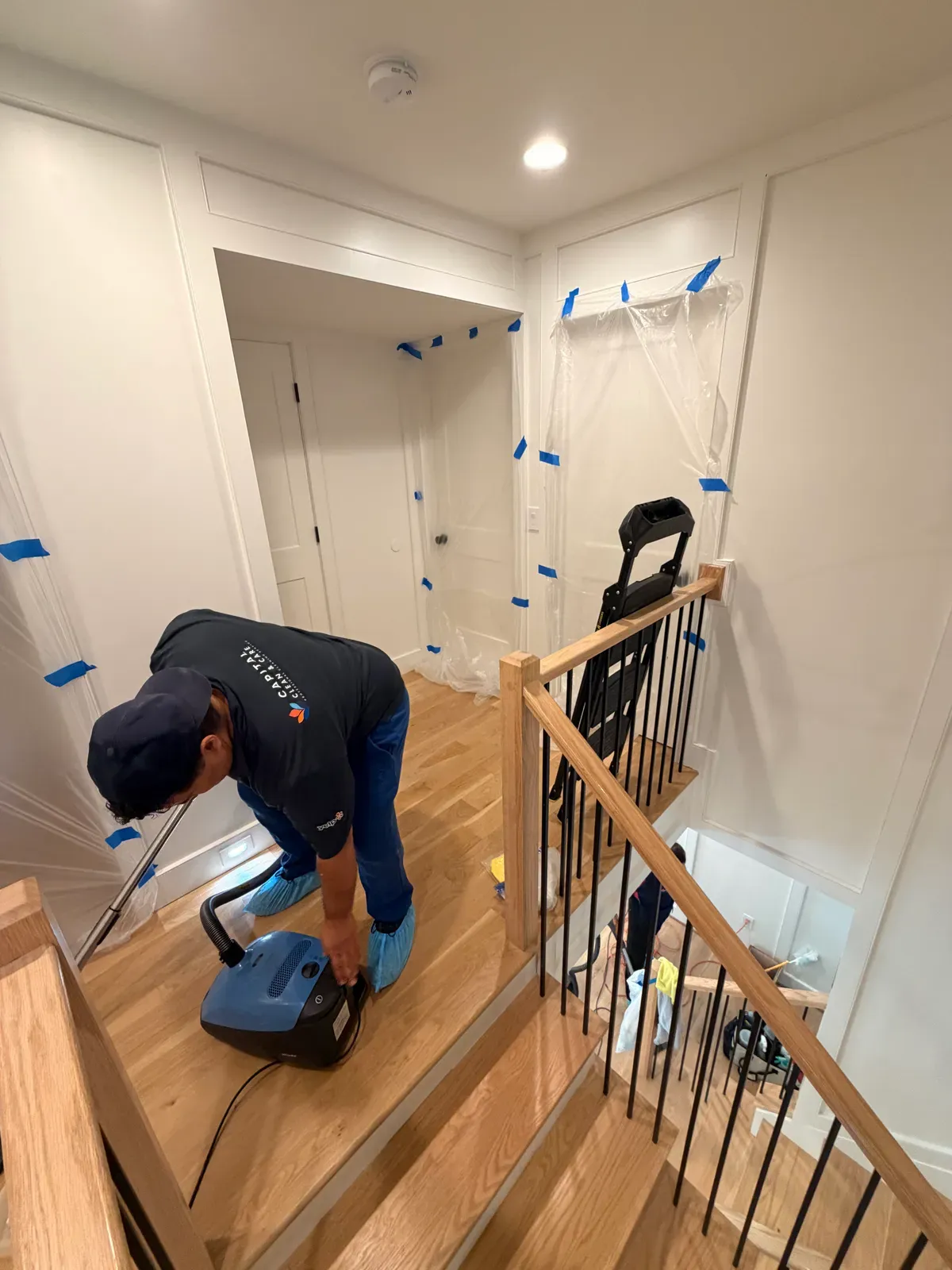
On wood floors we have to be very careful. Hardwood is the most delicate surface we deal with after construction, because what you're really protecting is the finish, the varnish or polyurethane on top. Sometimes it's a brand-new floor finished a week ago. Sometimes it's an old floor that's been in the house for decades. Either way, our approach starts the same: a wooden spatula or a plastic scraper to lift the paint, then a warm damp cloth with a little product. Sometimes the paint comes off with patience and the plastic scraper alone. Sometimes we put a product on, let it act, and wipe. What we never do is reach for a metal blade or a strong solvent first.
New hardwood with a polyurethane finish
Polyurethane is the most forgiving wood finish. Bruce Flooring says polyurethane-finished floors can handle more than wax or shellac. Even so, we start gentle.
For latex drips: lay a warm, well-wrung cloth over the spot for a few minutes, then lift with a plastic scraper held low. Wipe with warm water and a few drops of dish soap. For what's left, a small amount of rubbing alcohol on a cloth, dabbed on the spot, works well on latex. Don't pour it on the floor, and wipe it off with a damp cloth right after. A water-based latex remover like Motsenbocker's Lift Off (opens in a new tab) is the next option after a test patch; the manufacturer lists wood and floors among its surfaces and tells you to test in an inconspicuous area first.
For oil-based drips: scrape what you can, then a cloth lightly dampened with mineral spirits, rubbed gently on the spot only. Bruce warns that rubbing too hard can take the finish off with the paint. Ventilate, keep flames away, and wipe the area clean afterward.
Finish with a pH-neutral hardwood cleaner. Bona's hardwood floor cleaner, for example, is labeled for unwaxed, unoiled, polyurethane-finished wood floors.
Old hardwood: oil, shellac, wax and worn finishes
Older floors are where people get hurt. Bruce Flooring is clear on this: wax finishes should get warm soapy water or rubbing alcohol for latex and no chemical removers, and heat guns can melt the wax. Shellac is sensitive to chemicals and heat, so the same rule applies. Alcohol dissolves shellac, so on a shellac floor we skip it too and stay with water and patience. On a worn finish, any solvent goes straight into bare wood fibers.
Our approach on old floors is plastic or wooden scraper, warm damp cloth, a little dish soap, and time. If a drip won't come up that way, we stop and talk to the owner. Sometimes the right answer is a flooring refinisher, not more chemistry.
If the house was built before 1978 and the paint you're dealing with is old paint on the floor itself (not fresh renovation drips), read the lead paint section below before you scrape or sand anything.
How do you get dried paint off of wood floors?
Dried latex on polyurethane usually releases after a few minutes under a warm damp cloth. Once it's soft, slide a plastic scraper under the edge and lift. If a ring of residue stays, a dab of rubbing alcohol on a cloth takes it. Dried oil-based paint is slower: scrape what will come, then mineral spirits on a cloth, gently, with a rinse afterward. Cured paint that's been down for weeks may need two or three rounds. Patience beats pressure here.
What paint remover is safe for hardwood floors?
Warm soapy water, rubbing alcohol (polyurethane only, latex only), mineral spirits used sparingly for oil paint, and a tested water-based latex remover like Motsenbocker's Lift Off. That's the list. Acetone, lacquer thinner and acetone-based Goof Off Pro Strength are not on it, and neither is "paint thinner for hardwood floors" poured directly on the boards. Thinner is for a cloth, in small amounts, with a rinse.
Unfinished or raw wood
Raw wood has no finish to protect the fibers, so latex soaks in and solvents carry pigment deeper. Scrape off what's on the surface, use as little liquid as possible, and expect that the last trace may only come out with light sanding by whoever finishes the floor. We coordinate with the flooring contractor rather than sanding raw floors ourselves.
Engineered hardwood
Engineered hardwood has a real wood top layer over a plywood or composite core, and that top layer can be thin. Treat it like finished solid hardwood, with even more caution on moisture, because water at the seams can reach the core. No steam, no standing water, no sanding unless the manufacturer says the wear layer allows it.
For construction dust on wood (as opposed to paint), see our guide on how to clean hardwood floors after construction.
How to Remove Paint from Concrete Floors (Bare, Painted and Epoxy)
Bare concrete: garage and basement floors
Bare concrete is porous, so paint soaks in. Fresh latex comes up with water, a stiff brush and a scraper. For dried paint, This Old House (opens in a new tab) describes a chemical paint stripper followed by scraping, then pressure washing with a 15-degree nozzle at about 2,500 to 3,000 PSI. Indoors, in a basement, pressure washing usually isn't practical, so we use a gel stripper with a dwell time, a floor scraper and a wet-vac rinse. Citrus-based strippers like Citristrip are a lower-odor choice, but you still ventilate and follow the label.
When paint is thick, widespread, or the owner wants the slab ready for a new coating, the answer is a floor grinder, and that's a flooring contractor's job. Grinding creates silica dust, and on older paint it can release lead. Neither belongs in a cleaning visit.
Can you remove paint from concrete without chemicals?
For latex, often yes. Hot water, a stiff nylon brush and a floor scraper will lift fresh and lightly dried latex from most slabs. Pressure washing handles more. Vinegar is the question we get most, and the answer is: warm vinegar can soften thin latex on concrete, but it's slow and does nothing for oil-based or cured paint. It's a fine first try outdoors, not a plan.
How to remove paint from a painted concrete floor or epoxy
Here the coating is the thing you're protecting. Dried latex drips usually release from cured epoxy after you keep them wet for a while and lift them with a plastic scraper. Avoid pouring acetone, lacquer thinner or brake cleaner on a coating, because they can soften it. Motsenbocker's warns that its latex remover may remove painted, colored or treated concrete finishes, so test first. If a drip won't come off without hurting the coating, stop.
How to Get Paint Off Vinyl, LVP and Linoleum Floors
Vinyl is tougher than wood against water but softer against solvents. Strong solvents and abrasive pads can dull or haze the wear layer.
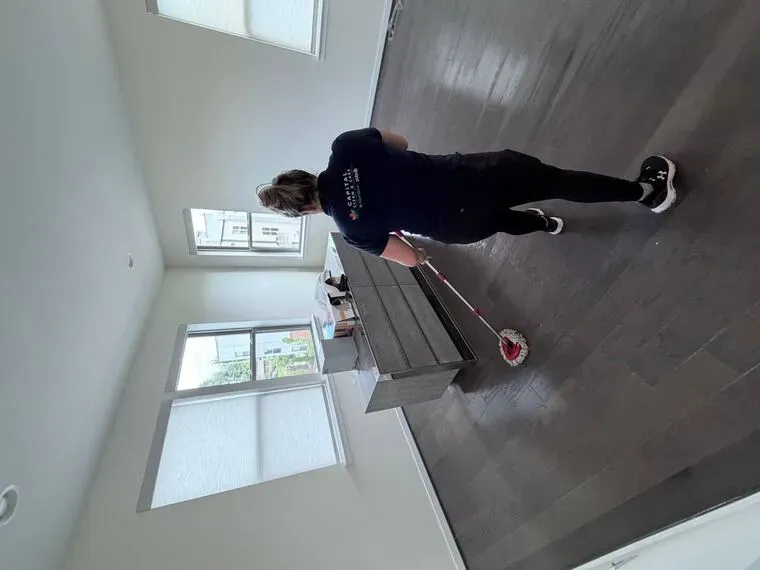
Our standard: soften first. Floors USA recommends laying a damp rag over dried paint for about ten minutes, avoiding hot water, then lifting it with a plastic scraper or an old credit card. For latex, that plus a little dish soap handles most drips. Lift Off's latex remover lists vinyl and linoleum among its surfaces, and that's our next step after a test patch. That's the closest thing to a "vinyl-safe paint remover" we've found.
For oil-based paint, flooring care guides disagree. A retailer care guide for LVT and LVP from Great Floors says to gently peel the dried paint and, if needed, rub lightly with mineral spirits, paint thinner or nail polish remover, then always rinse with clean water. Other vinyl care guides say to avoid acetone and thinners. We follow the floor manufacturer's care sheet when we can find it, use the mildest solvent on a cloth (never poured), and rinse right away. No steel wool, no green scrub pads, no steam.
How to Get Paint Off Laminate Floors (Including Pergo)
Laminate's enemy is water at the seams, because the core is a wood-fiber board that swells. Keep it nearly dry. Pergo's care guidance allows acetone nail polish remover or denatured alcohol on a clean cloth for tough spots like tar, marker and nail polish, and a blunt plastic scraper for hardened material. We use the same idea for paint: scrape gently, a dab of solvent on a cloth, wipe off, dry. Pergo notes the solvent shouldn't be used on its coordinating wall base or quarter round, so keep it off the trim. No steam mops, wax or oil soaps on laminate.
How to Get Paint Off Tile Floors (Ceramic, Porcelain and Grout)
Glazed ceramic and porcelain are the easiest floors to get paint off. The glaze is hard and non-porous, so paint sits on top. Soften with warm soapy water. Steam is fine on glazed tile. Then lift with a plastic scraper. On stubborn dried drips on glazed tile only, a new single-edge razor blade held nearly flat and pushed under the paint works. Keep the blade off the grout and off unglazed, matte or textured tile.
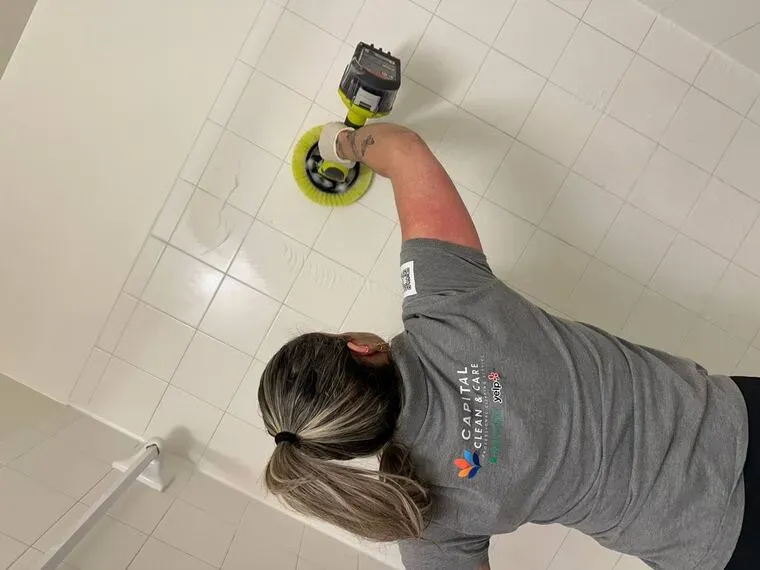
Grout is the weak point. It's porous and cement-based, so paint gets in. Use a nylon brush with warm soapy water, and for latex, a latex remover like Lift Off (which lists tile) after a test. Don't use metal picks or wire brushes in grout lines. If paint has soaked deep into the grout, the realistic fixes are a grout colorant or regrouting, and we'll tell you that honestly.
How to Get Paint Out of Carpet
Speed matters most with carpet. The Carpet and Rug Institute (opens in a new tab) says to act quickly, blot with a white cloth, and work from the outside of the spot toward the center so you don't spread it. Don't rub. CRI's detergent solution is 1/4 teaspoon of liquid dish detergent per 1 cup of lukewarm water. Pretest any solution in a hidden spot, and never go to a stronger concentration.
Wet latex: blot, then the detergent solution, then rinse with plain water and blot dry. Dried latex: scrape or pick off what you can with a dull edge or spoon, soften the rest with the detergent solution, blot, repeat. Lift Off's latex remover lists carpet as a safe surface. Acrylic craft paint behaves like latex. For oil-based paint on synthetic carpet, a little mineral spirits on a white cloth, blotted, then detergent and water to rinse. Avoid solvents on wool. If dried oil paint has matted into the fibers, the honest answer is usually a professional carpet cleaner or a patch, not more scrubbing.
For other spills on carpet, see our carpet stain guide.
Natural Stone: Marble, Travertine, Slate and Granite
Stone needs its own rules. The Natural Stone Institute (opens in a new tab) says small amounts of paint can be removed with lacquer thinner or scraped off carefully with a razor blade. Heavy paint coverage should only come off with a commercial "heavy liquid" paint stripper. Acids and flame tools should never be used on stone, and strippers can etch the surface, so re-polishing may be needed. Use only wood or plastic scrapers for the softened paint. Never vinegar on marble, travertine or limestone; it etches. For latex, start with warm soapy water. Polished marble scratches easily, so our crew leaves the razor alone there and calls in a stone restoration pro if a drip won't come off gently.
Baseboards and Trim Overspray
Overspray on painted baseboards is tricky, because anything strong enough to remove the stray paint can soften the baseboard paint too. Fresh latex wipes off with a damp microfiber cloth. Goo Gone Latex Paint Clean Up is marketed for baseboards and trim, and the brand says to avoid prolonged exposure on finished wood and sealed surfaces. Test, wipe, rinse. On stained or clear-coated trim, treat it like finished wood.
Product and Solvent Safety Chart by Floor Type
✔ = generally safe after a test patch · ⚠ = caution, spot only, test first, or depends on manufacturer · ✘ = avoid
Swipe sideways to see every floor type.
| Product / method (active base) | Poly hardwood | Wax / shellac / oiled wood | Vinyl / LVP | Laminate | Glazed tile | Grout | Natural stone | Bare concrete | Epoxy concrete | Carpet |
|---|---|---|---|---|---|---|---|---|---|---|
| Warm water + dish soap | safe after a test patch | safe after a test patchdamp, not wet | safe after a test patch | safe after a test patchdamp | safe after a test patch | safe after a test patch | safe after a test patch | safe after a test patch | safe after a test patch | safe after a test patch |
| Plastic or wooden scraper | safe after a test patch | safe after a test patch | safe after a test patch | safe after a test patch | safe after a test patch | caution | safe after a test patch | safe after a test patch | safe after a test patch | safe after a test patchdull edge |
| Razor blade | avoid | avoid | avoid | avoid | safe after a test patchflat, glazed only | avoid | caution | safe after a test patch | caution | avoid |
| Steam | avoid | avoid | avoid | avoid | safe after a test patch | caution | caution | safe after a test patch | caution | caution |
| Rubbing alcohol (isopropyl) | cautionspot, latex | avoidon shellac; caution on wax | caution | caution | safe after a test patch | cautioncan discolor colored grout | caution | safe after a test patch | caution | caution |
| Motsenbocker's Lift Off Latex (water-based) | cautiontest | cautiontest | safe after a test patch | safe after a test patch | safe after a test patch | safe after a test patch | cautiontest | safe after a test patch | cautionmay lift coatings | safe after a test patch |
| Goo Gone Latex Paint Clean Up (citrus) | cautionshort contact | caution | caution | caution | safe after a test patch | safe after a test patch | caution | safe after a test patch | caution | safe after a test patch |
| Mineral spirits (petroleum distillate) | cautionspot, oil paint | avoidon wax | caution | caution | safe after a test patch | caution | caution | safe after a test patch | caution | cautionsynthetics only |
| Acetone / nail polish remover | avoid | avoid | cautioncheck manufacturer | cautionPergo allows on cloth | safe after a test patch | caution | cautiondark stone only | safe after a test patch | avoid | avoid |
| Goof Off Pro Strength (60–100% acetone, xylene) | avoid | avoid | avoid | avoid | caution | caution | avoid | cautionventilate | avoid | avoid |
| Lacquer thinner | avoid | avoid | avoid | avoid | caution | avoid | cautionsmall spots (NSI) | safe after a test patch | avoid | avoid |
| Citrus gel stripper (e.g., Citristrip) | avoid | avoid | avoid | avoid | caution | caution | cautionmay etch | safe after a test patch | caution | avoid |
| White vinegar | avoidNWFA advises against on wood | avoid | caution | caution | safe after a test patch | caution | avoidetches calcareous stone | safe after a test patch | caution | caution |
| Heat gun | cautionlow, moving | avoid | avoid | avoid | caution | avoid | avoid | caution | avoid | avoid |
What NOT to Do: Mistakes That Ruin Floors
The damage we get called to fix after construction usually comes from the same short list. A metal putty knife or razor on hardwood, vinyl or laminate leaves scratches you can't buff out. Goof Off Pro Strength is mostly acetone (its safety data sheet lists 60 to 100 percent) with some xylene, and Popular Woodworking notes that acetone attacks all but the most durable finishes, so it doesn't belong on finished wood. Steam mops on wood are out; the NWFA, as reported by HGTV, warns that water in any form, liquid or vapor, can permanently damage the wood and the finish. Pouring a solvent on the floor instead of putting it on a cloth lets it run into seams. Leaving a remover to sit longer than the label says is another. So is skipping the rinse, because leftover solvent keeps working on the finish. Vinegar or any acid on marble etches it. Green scrub pads or steel wool on vinyl and epoxy dull them. And wadding up rags soaked with oil-based paint or thinner and throwing them in the trash creates a fire risk.
Safety: Ventilation, Rags and Lead Paint in Older Homes
Ventilation and PPE. Open windows, run a fan blowing out, and wear nitrile gloves and eye protection with any solvent. The Goof Off Pro Strength safety data sheet warns against using it in small enclosed spaces like basements and bathrooms, because vapors can build up and ignite. Keep pilot lights, candles and space heaters off when using flammable products.
Rags. Rags soaked with oil-based paint, stain, linseed oil or thinner can heat up and catch fire on their own as they dry. Fire-safety guidance (for example the City of Methuen, MA oily-rag sheet) says to store them in an airtight metal container with a tight-fitting lid, completely covered with water, until a hazardous waste collection day. On job sites, OSHA 1926.252(e) requires oily rags to be kept in a covered, fire-resistant container emptied every day. This risk doesn't apply to water-based paint rags.
Lead paint. Federal law sets the rules here. EPA's Renovation, Repair and Painting (RRP) Rule (opens in a new tab) applies to paid work that disturbs painted surfaces in homes and child-occupied facilities built before 1978. Work that disturbs more than 6 square feet of interior paint per room, or more than 20 square feet outside, has to be done by certified firms using lead-safe work practices. Maryland's Home Improvement Commission (opens in a new tab) publishes the same guidance. Montgomery County has a lot of older housing: Montgomery Planning's analysis of 2017–2021 Census data puts the median year built for the county's renter-occupied units at 1983, which means a large share of homes here predate the 1978 cutoff. So if you're dealing with old paint on an old floor, don't dry-sand it, don't use a heat gun on it, and don't grind it until it's been tested. Fresh latex drips from this month's renovation are a different situation from 60-year-old paint on porch boards.
When to Call a Professional
Call someone when the paint covers a large area or several rooms. Call when you don't know the floor finish or the paint type. Call when it's natural stone, an antique floor or a floor under warranty. Call when the paint is old and the house is pre-1978. And call if you've already tried something and the finish looks dull or soft. That last one matters, because a second attempt with a stronger product usually turns a cleaning job into a refinishing job. Our crew handles paint drips, overspray, primer tracks, adhesive and dust as part of post-construction cleaning, and when a floor needs a refinisher or a stone restorer instead of a cleaner, we'll tell you.
Frequently Asked Questions
Sources
- Bruce Flooring, how to remove paint from hardwood floors (opens in a new tab)
- Natural Stone Institute, stain removal (opens in a new tab)
- Carpet and Rug Institute, dried latex paint (opens in a new tab)
- U.S. EPA, Renovation, Repair and Painting Program (opens in a new tab)
- Maryland Home Improvement Commission, lead paint FAQ (opens in a new tab)
- Sherwin-Williams, dry time vs. cure time (opens in a new tab)
- This Old House, removing paint from a concrete floor (opens in a new tab)
- Motsenbocker's Lift Off Latex Paint Remover (opens in a new tab)
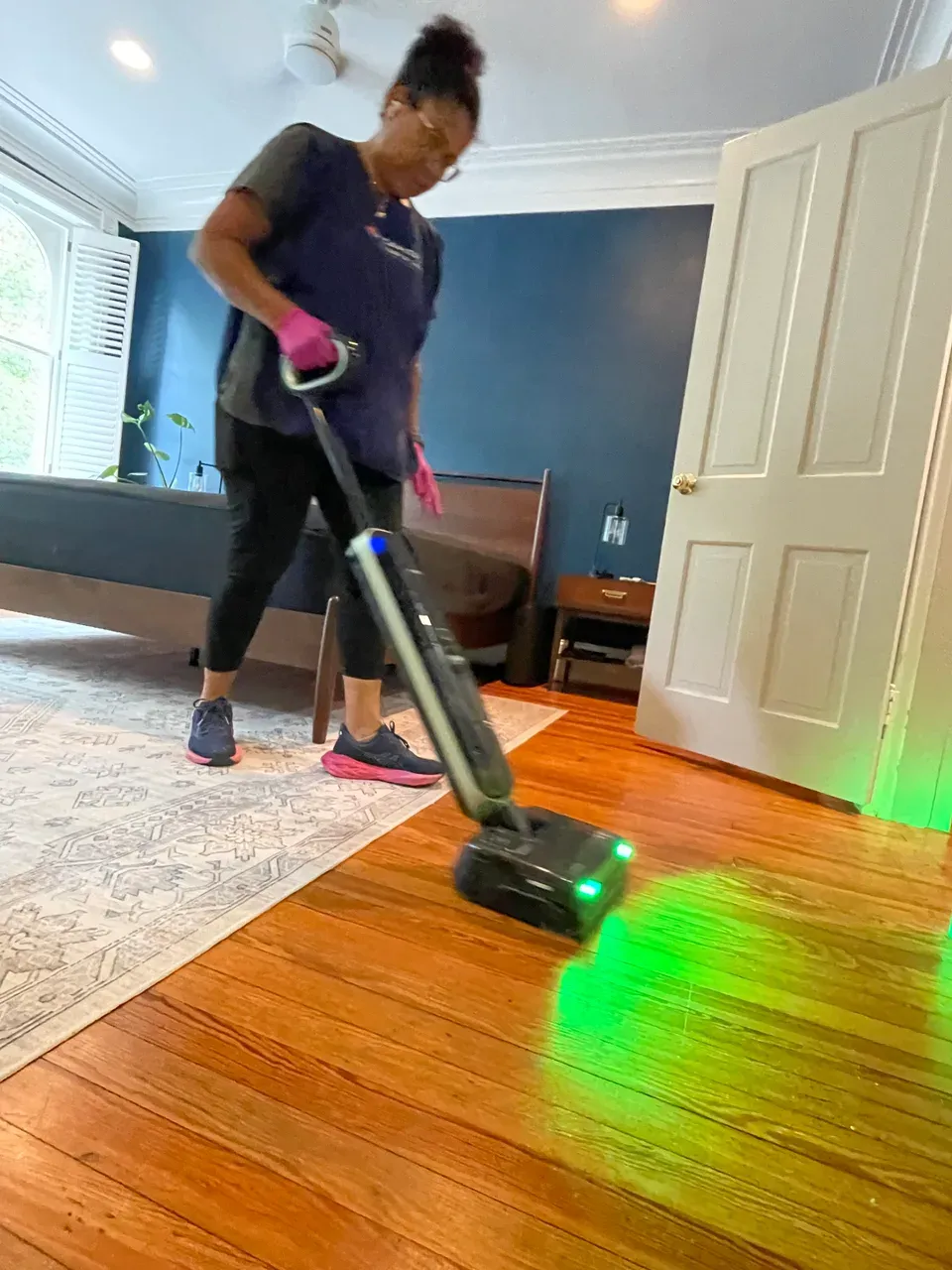
About the photos: all are real Capital Clean Care photos of our team and our jobs. They show our crew cleaning floors, tile, doors and windows, not the specific paint removal steps described above. Capital Clean Care provides cleaning; it does not perform sanding, refinishing, stone restoration or lead abatement.