Home Care Guides
Carpet Stain Guide: Pet Accidents, Wine, Milk, Blood and Coffee
What to do first, what the carpet industry's own instructions say for each stain, and when to stop and call someone
By Rodrigo Reis, Owner, Capital Clean Care · Published
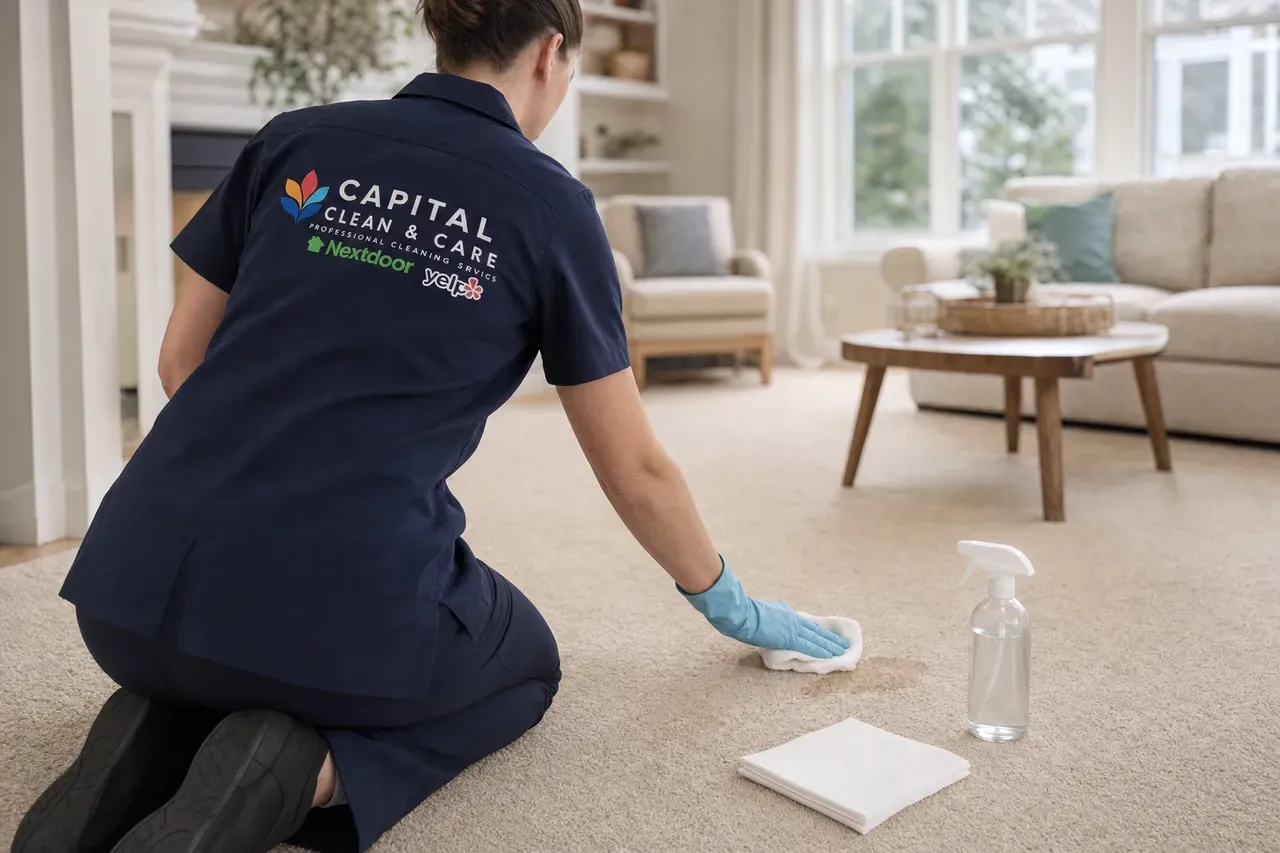
This guide is written by a house cleaning company, not a carpet mill or a restoration firm. Where it gives a procedure, the procedure is the Carpet and Rug Institute's, the IICRC's or WoolSafe's, with a link to the page it came from, so you can check the exact wording and the exact mix. Your carpet's own care guide and warranty come first when they say something different.
The First Five Minutes, for Any Spill
The CRI's stain pages open with the same line every time: act quickly, because delay can turn a spill into a permanent stain. The six moves below are the common ground of the CRI, Shaw Floors, the IICRC tip sheet and WoolSafe. They apply to synthetic carpet; wool and silk have their own section.
Edge to center, press and lift. Every source says to start at the outside of the spot and work in, so the spill is not pushed outward into clean pile.
- Press the folded cloth on the edge of the spot and hold a moment.
- Lift it straight up. No dragging, no rubbing.
- Move one cloth-width toward the center and press again, until you reach the middle.
- Pick up what you canLift solids with a spoon or plastic scraper. Do not press them into the pile. Blot liquids with a dry white cloth or plain white paper towels (CRI, IICRC).
- Blot, do not rubRubbing frays the fibers and pushes the spill deeper (CRI, Shaw Floors). Press and lift, then move to a clean part of the cloth.
- Work from the edge inStart at the outside of the spot and move toward the center, so it does not spread (CRI, WoolSafe).
- Pretest anything you applyTry the product on a hidden spot first, such as inside a closet, and check the cloth for color (CRI).
- Small amounts, on the clothApply the solution to the cloth, not straight onto the carpet, and never a stronger mix than the label or the CRI page gives (CRI, WoolSafe).
- Rinse and dryBlot with clear water until no product is left, then blot dry. Avoid soaking the carpet (CRI).
What to keep out of it. Laundry detergent and dishwasher detergent (the CRI says never; they carry brighteners and bleaching agents), a stronger mix than the one given, and any product that claims no rinsing is needed (the IICRC's own test: let a half ounce evaporate in a glass; sticky residue in the glass means sticky residue in your carpet). For a large wet spill, the IICRC's first tool is a small wet/dry vacuum. With pets in the house, read the label the way our guide to what "pet-safe" cleaning really means explains.
Stain by Stain
Each card names the CRI page it follows. "Detergent solution" and "vinegar solution" mean the CRI mixes from the key facts: 1/4 teaspoon of liquid dish detergent per cup of lukewarm water, and 1 cup of white vinegar per 2 cups of water. Pretest both in a hidden spot.
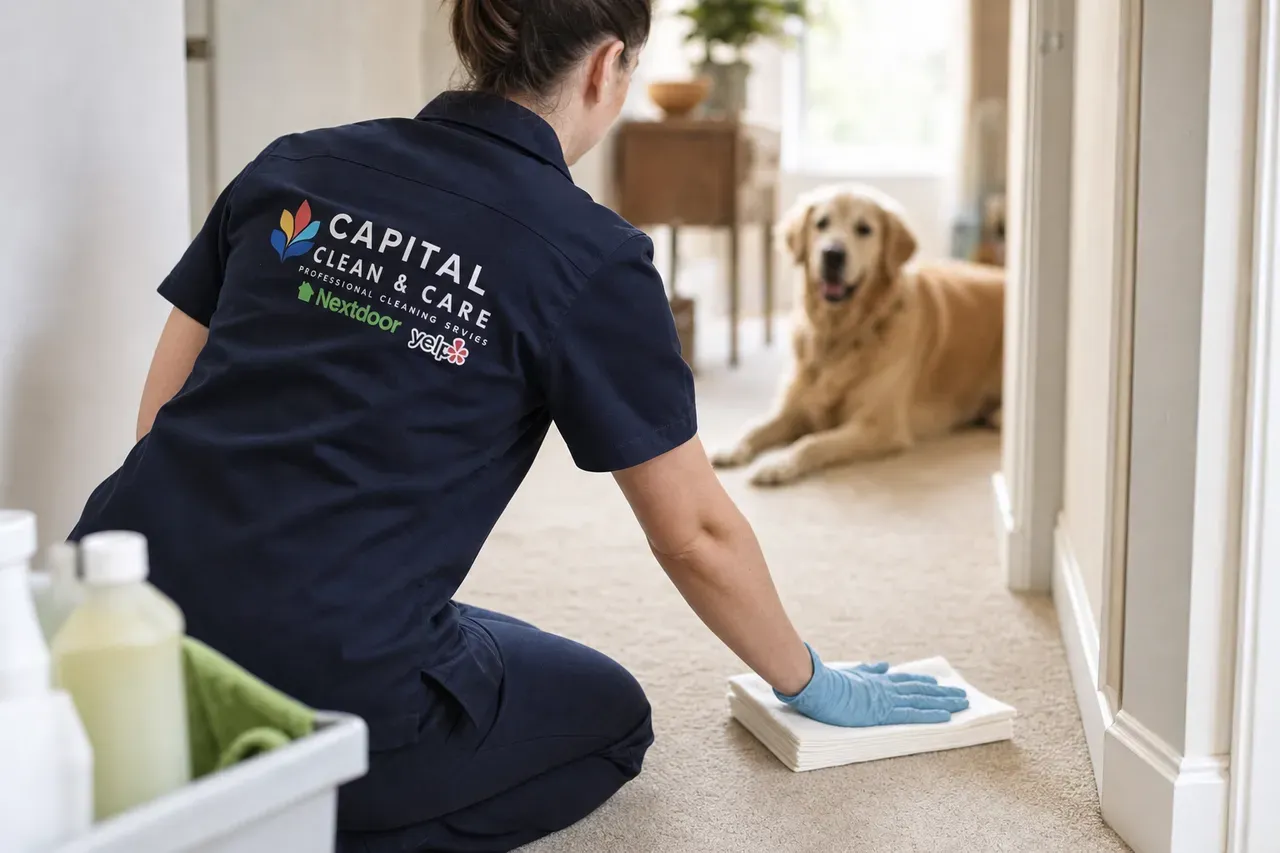
Pet urine, fresh
- First
- Blot the damp area right away with plain white paper towels, pressing firmly, until nothing more transfers.
- Then
- The CRI pet urine bulletin blots in a solution of 1/4 teaspoon of liquid dish detergent (no bleach, no lanolin) in 1 cup of lukewarm water, absorbs it, rinses with water, and repeats while the towel keeps picking up anything. It finishes with 1 cup of white vinegar in 2 cups of water, blotted dry. Enzyme-based products are sold at pet stores; follow the label and pretest.
- Careful with
- Hold off on heat or a machine until the spot is handled. The IICRC notes that the heat and humidity of cleaning can make odors more evident.
- Call a professional when
- The urine soaked through to the pad, the odor returns, or the carpet dye changed color (the CRI bulletin notes urine can affect dyes).
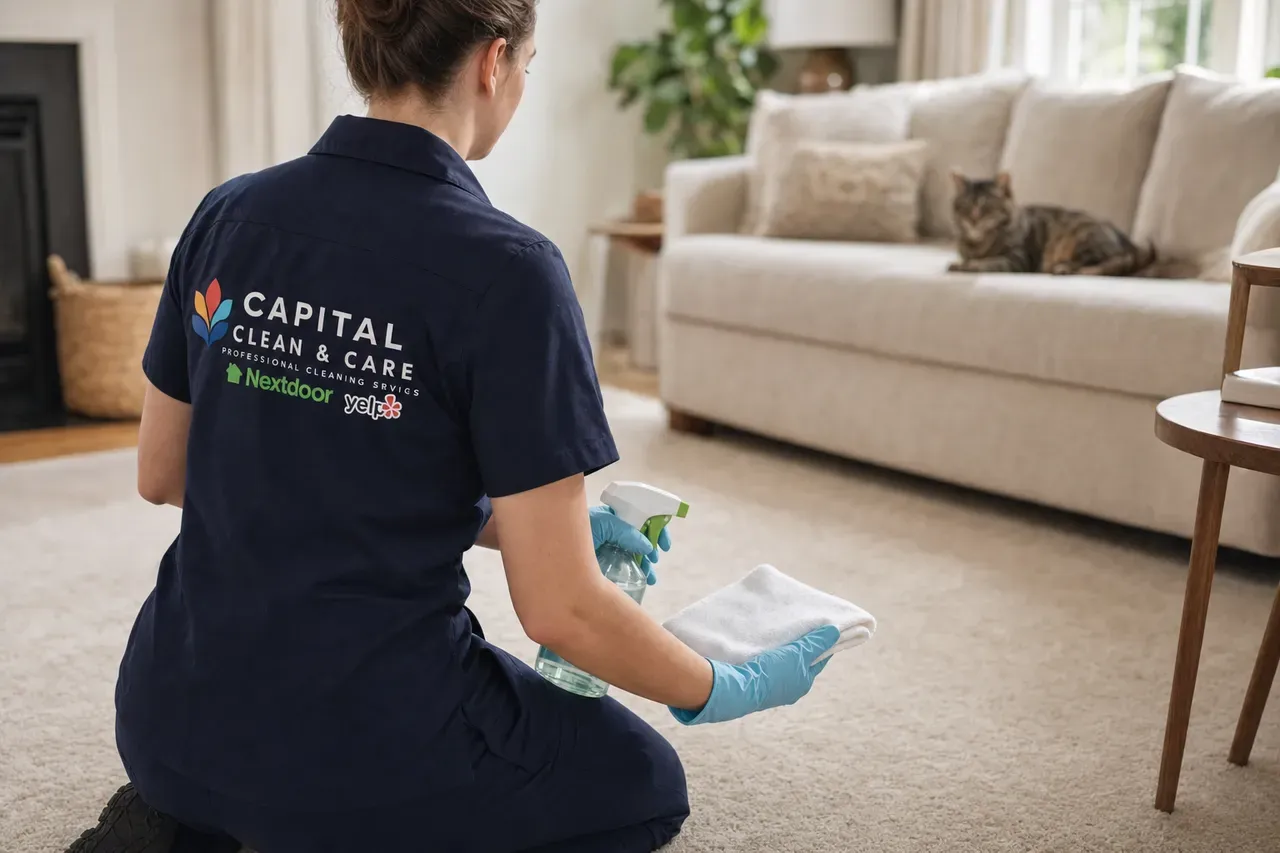
Pet urine, dried
- First
- Find every spot you can. Old urine often shows no stain, only an odor in humid weather.
- Then
- The CRI dry urine page uses the same detergent solution, a water rinse, then the vinegar solution. It also lists an ammonia solution with a warning that ammonia can change colors, which is a step we would leave to a professional.
- Careful with
- The CRI is direct about cats: unless the urine can be completely removed, complete odor removal is unlikely.
- Call a professional when
- Several old spots, a smell that comes back, or color damage. The IICRC describes slow reactions over days or months that change dyes and weaken fibers, and says aged urine often cannot be fully restored.
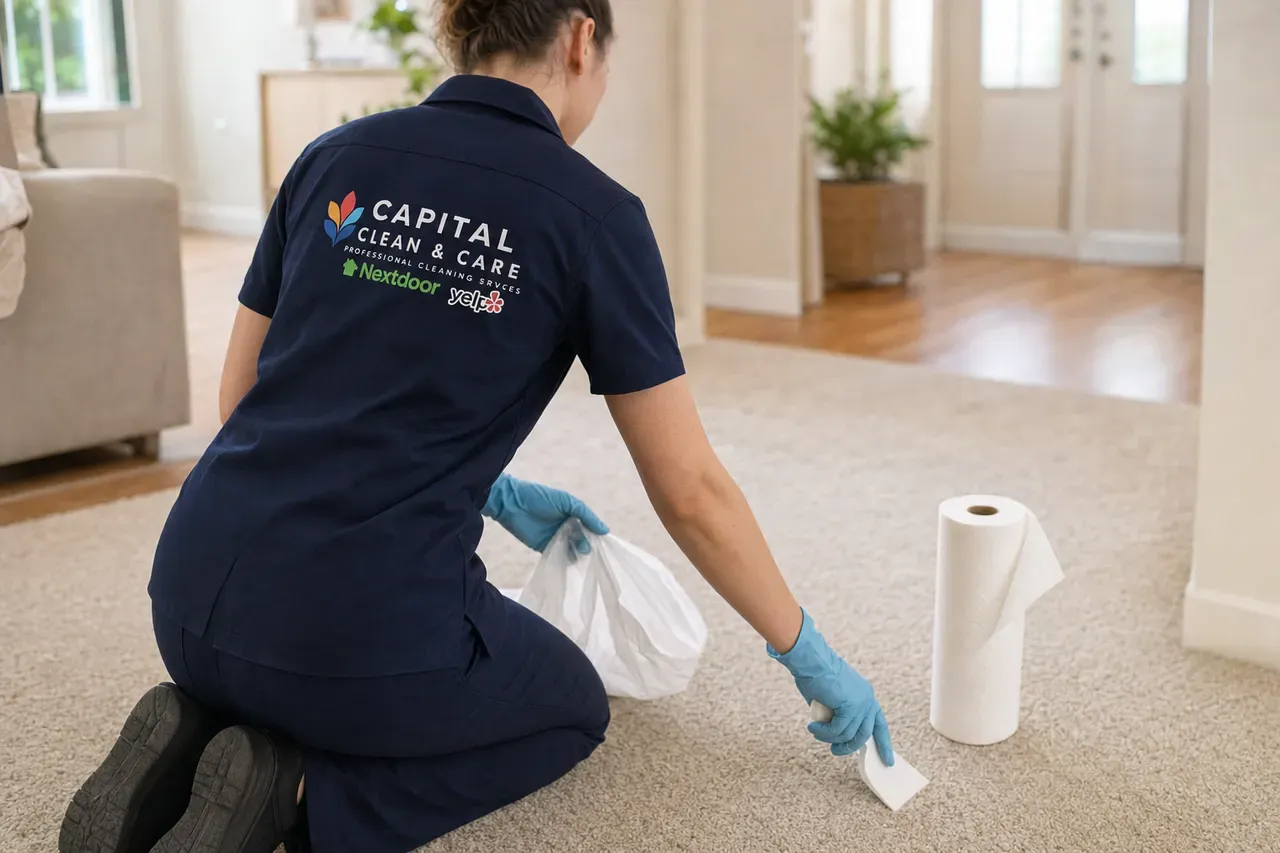
Dog or cat feces
- First
- Wear gloves. Lift solids with a plastic scraper or spoon without pressing down, bag them, and wash your hands.
- Then
- The CRI feces page works in the detergent solution, blots, rinses with lukewarm water, and uses the vinegar solution to reduce the alkalinity left by detergent, then a cold water rinse and a dry blot. For loose stools the IICRC treats the area like fresh urine and follows with a disinfectant whose label allows it.
- Careful with
- Food dyes in pet food or treats can leave a color at the spot (IICRC). Do not scrub it; that spreads it.
- Call a professional when
- Diarrhea that soaked through, a color that stays after rinsing, or a smell that returns.
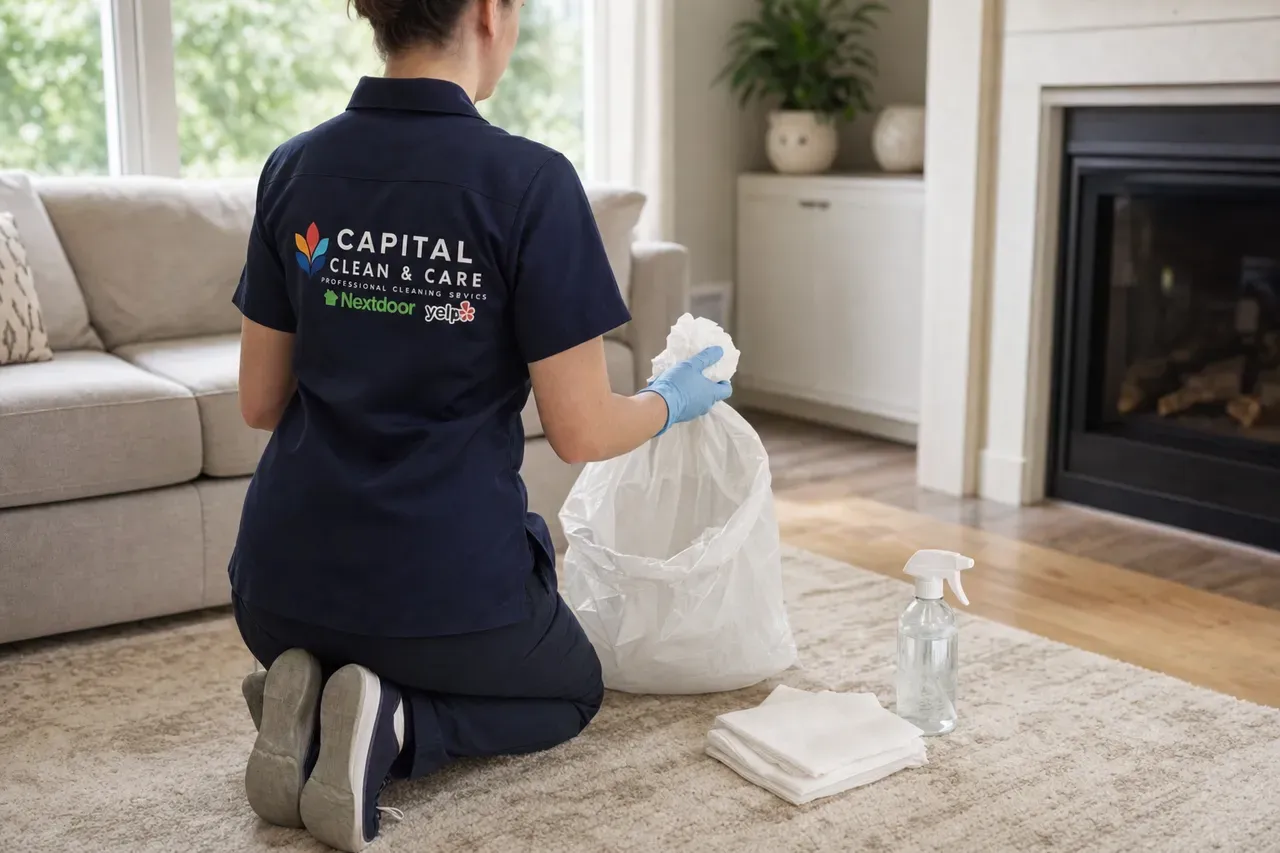
Vomit
- First
- Remove solids, then take up as much liquid as you can. The IICRC suggests a wet/dry vacuum before any spotting.
- Then
- The CRI vomit page applies the detergent solution, blots, rinses, then the vinegar solution, and ends with a cold water rinse blotted dry.
- Careful with
- Stomach acid and food or medicine dyes can stain permanently, and the longer vomit sits, the more likely the stain and the odor (IICRC). If it came from someone who is sick, read the disinfecting section below.
- Call a professional when
- A large amount, a pad that got wet (the IICRC says it may need treatment under the surface or replacement), or a color that remains.
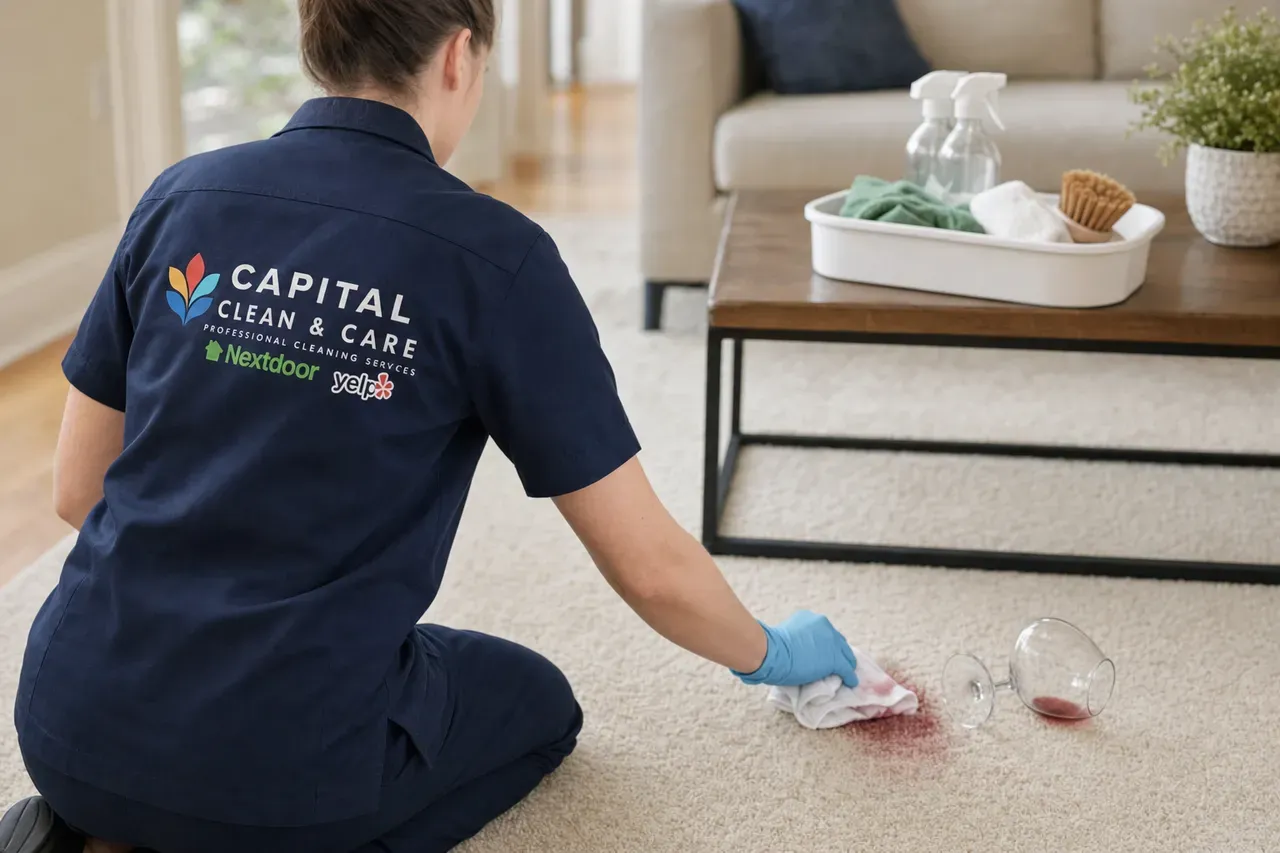
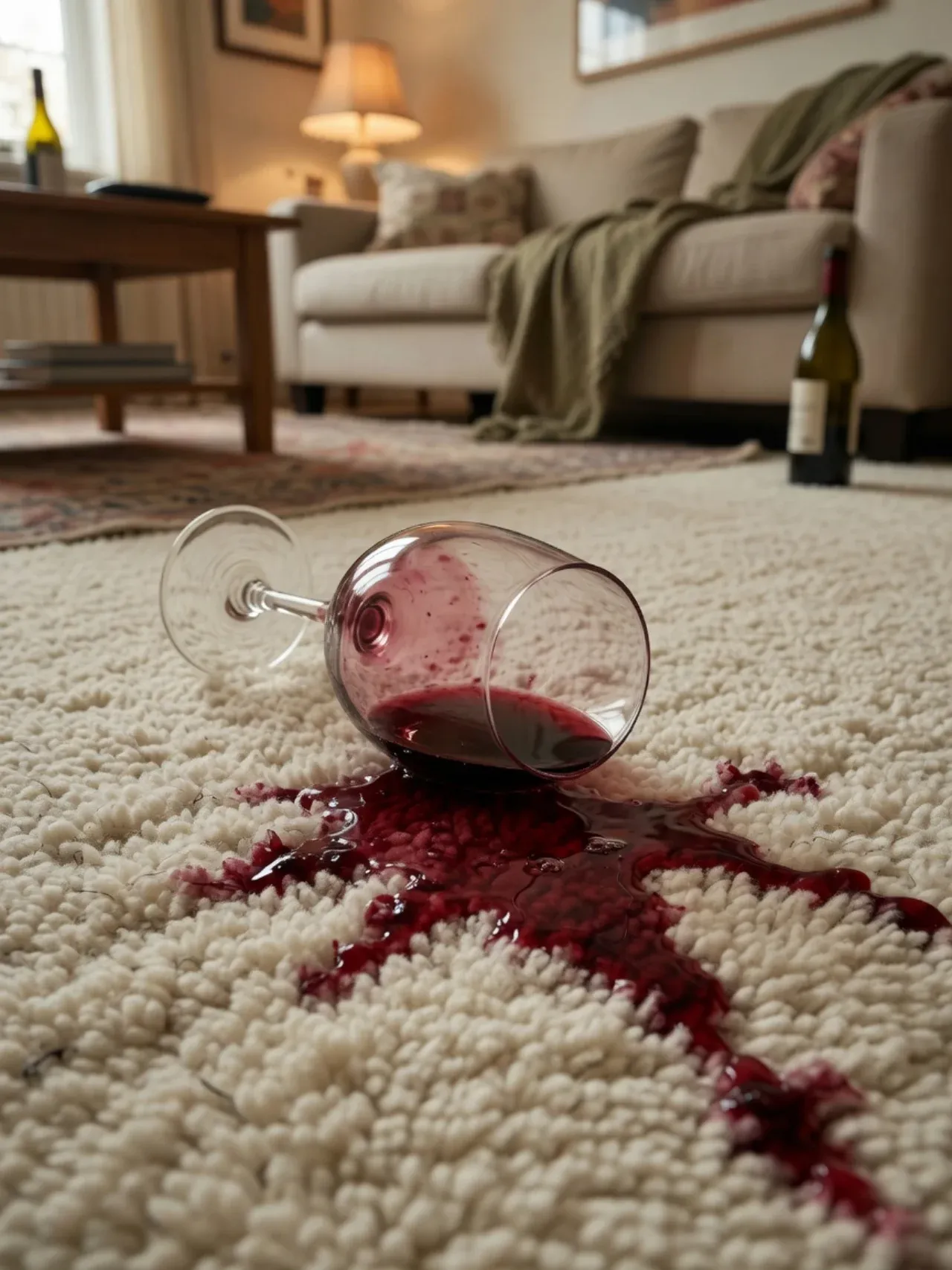
Red wine
- First
- Blot at once. For a big spill the IICRC suggests extracting with a wet/dry vacuum first, then blotting with a cloth dampened with clear water.
- Then
- The CRI wine page uses the detergent solution and a water rinse. It warns that using the vinegar solution before the wine is completely removed can set a permanent stain. The full walkthrough, with photos, is in our red wine stain guide.
- Careful with
- Skip anything with bleach. Wine that reached the backing can reappear as the carpet dries (IICRC).
- Call a professional when
- A pink or red tint that stays. The IICRC sees this most on natural fibers and older synthetic carpet.
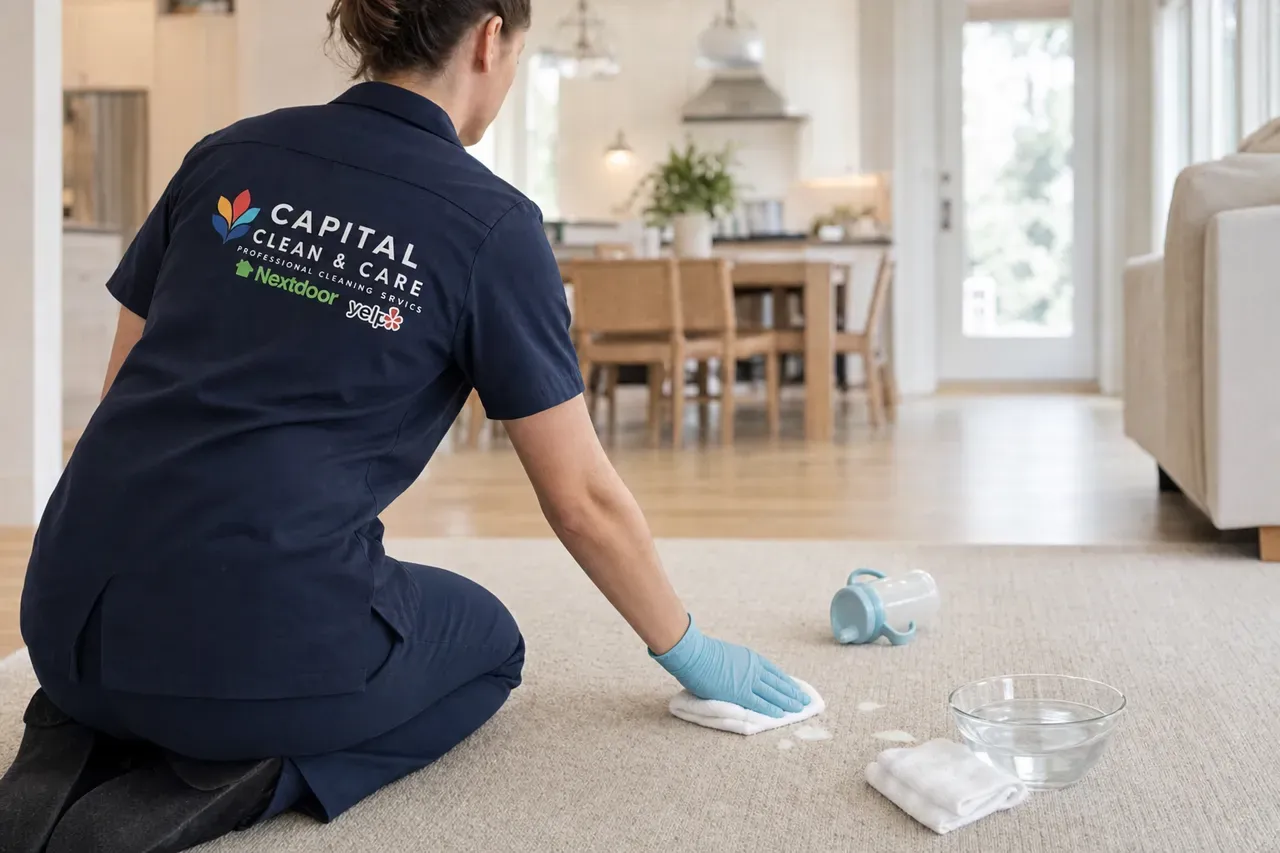
Milk
- First
- Blot as much as you can right away. Milk that stays in the pile can sour as it dries.
- Then
- The CRI milk page lists a dry-cleaning-type spot solvent first (never poured on, never reaching the backing), then the detergent solution, then several rinses with lukewarm water. At home, the detergent solution and a thorough rinse are the usual steps.
- Careful with
- Rinse more than you think you need to. Detergent left in the pile attracts dirt (CRI).
- Call a professional when
- A sour smell that stays after the spot has dried. Residue may be left in the fibers, the backing or the pad, and a smell that persists is worth having assessed.
Blood
- First
- Gloves, eye protection and long sleeves. The IICRC treats blood as potentially infectious. Blot small droplets with a dry cloth, then with a cloth dampened with clear water.
- Then
- The CRI blood page uses the detergent solution, lukewarm rinses and a final cold water rinse blotted dry. For residual color on synthetic fibers the IICRC mists fresh 3% hydrogen peroxide and lets it sit, after testing; it is not recommended on wool or other natural fibers.
- Careful with
- Medications in the bloodstream of a person or a pet can prevent full removal (IICRC).
- Call a professional when
- Anything larger than small droplets. The IICRC says larger spills need a technician trained in that kind of cleanup.
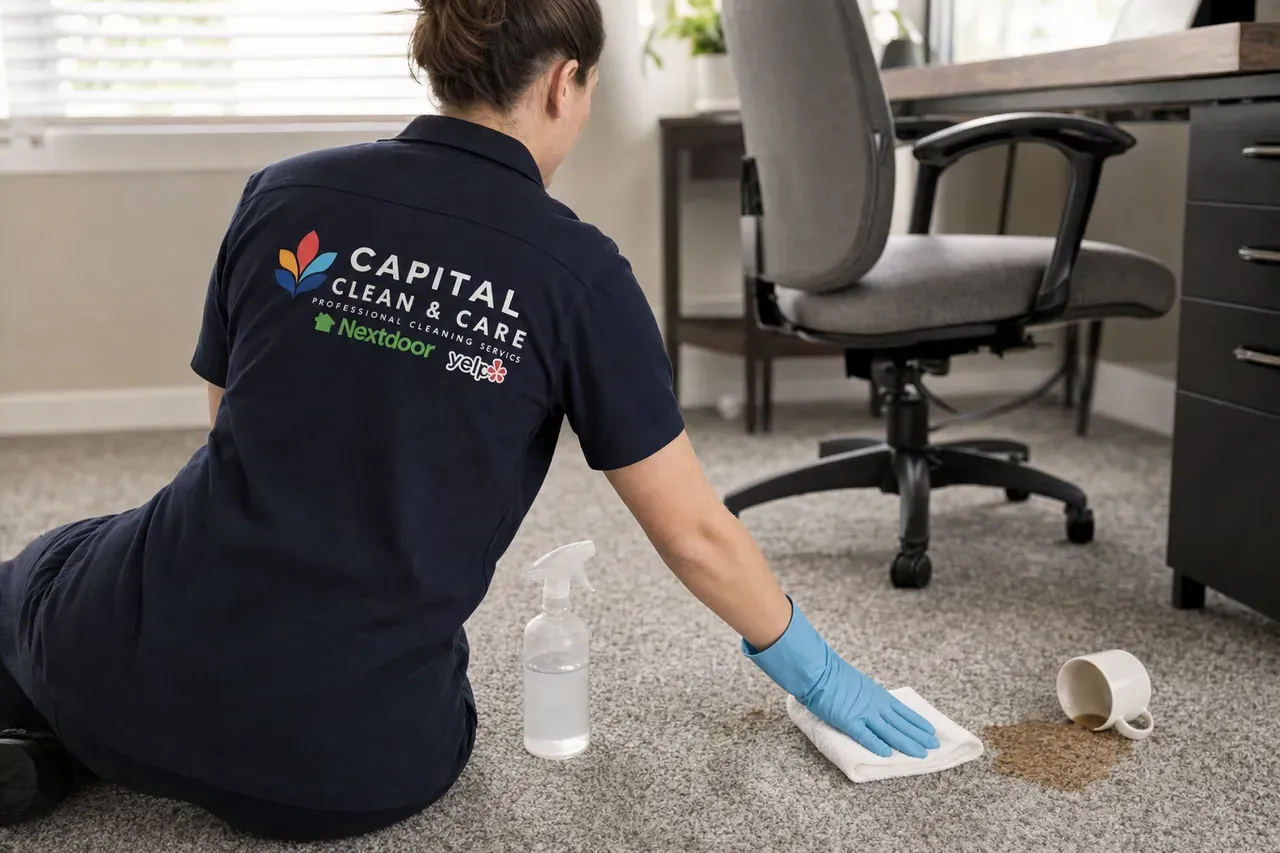
Coffee or tea
- First
- Blot. Coffee with milk or sugar is harder, so do not let it dry.
- Then
- The CRI coffee page applies the detergent solution, then the vinegar solution, then lukewarm rinses and a final cold rinse blotted dry. The IICRC adds a light mist of fresh 3% hydrogen peroxide for leftover color on synthetic fibers, after testing.
- Careful with
- Coffee and tea are dyes; the IICRC notes that full removal is not always possible on every fiber.
- Call a professional when
- A tan ring that comes back after the spot dries.
Why a Spot or Smell Comes Back
The IICRC calls it wicking: as the carpet dries, whatever is left at the base of the yarn and in the backing travels up to the tips and shows again. Wine, coffee and urine that reached the backing or the pad are the usual cases. The surface can look clean while the pad still holds the spill, which is why an odor can return on a humid day even after a good cleaning (IICRC).
For a stain that reappears after the carpet has been cleaned and dried, and only for that (not for a soaked pad or water still coming in), the IICRC tip sheet gives a patient routine: let the carpet dry for at least 48 hours, vacuum the area slowly from three or more directions, lightly mist distilled water and blot with a white towel while it keeps picking up soil, then cover the spot with a thick pad of white paper towels weighed down with a few books for 6 to 8 hours, changing them as they absorb.
Odor is a different problem. The CRI notes that an odor, especially from cat urine, is unlikely to go completely unless the urine itself is completely removed. If the smell keeps coming back, more surface cleaning will not fix it. For the rest of the house, our guide to dog smell covers bedding, furniture and air, and removing pet hair and odors goes room by room. A musty smell is a moisture question rather than a pet one; see how to get rid of a mildew smell.
Spot Cleaning Is Not Disinfecting
Everything above removes the spill. It does not kill germs. The CDC separates the two: cleaning removes most germs and dirt with water, soap and scrubbing; disinfecting kills most germs on a surface. For soft surfaces such as carpet and rugs, the CDC's advice is to clean with products made for those surfaces, launder what can be laundered, and vacuum. It suggests disinfecting in addition when someone in the home is sick or at higher risk (CDC).
After vomiting or diarrhea from a person who may have a stomach virus, the CDC's norovirus page says to wear gloves, wipe the area up with paper towels into a plastic trash bag, use an EPA-registered product effective against norovirus, and wash your hands afterward (CDC). The CDC does not give a carpet procedure. On carpet, a product is an option only when its label claims effectiveness against norovirus and also allows use on carpet or soft surfaces; follow its directions and contact time. Cleaning the spot is not the same as disinfecting it against this virus. If no product fits both, have the area assessed by a specialist. Never mix products, and never mix bleach with ammonia or with an ammonia-based spotter.
Blood and larger body-fluid spills are outside home cleaning. The IICRC says they need a technician trained in that kind of removal. Capital Clean Care does not do biohazard cleanup.
Wool, Silk and Unknown Fibers
Most wall-to-wall carpet in the area is nylon, polyester or olefin, and the CRI procedures above are written for it. Wool is different. WoolSafe's consumer guide says never to use dish washing liquids, soaps or other general household cleaners on wool carpets and rugs: they can cause rapid resoiling, color bleeding or damage to the pile or backing. It recommends only products carrying the WoolSafe mark, no rubbing, small amounts on a cloth, a thorough rinse of any water-based spotter, and drying the spot afterward (WoolSafe). The IICRC adds that 3% hydrogen peroxide is not recommended on wool or other natural fibers without extensive testing for color loss.
Silk, viscose, jute and antique or hand-knotted rugs are a professional's job from the first minute: blot with a dry white cloth, nothing else, and call. If you do not know what a rug is made of, treat it the same way. A label on the back, the retailer, or the mill's care guide will tell you the fiber and the warranty's own cleaning rules.
Winter: Mud, Road Salt and Wet Boots
From the first snow to the last thaw, the entry rug and the first few feet of hallway carpet take snowmelt, mud and road salt every day. Treat the two halves differently. Water from snowmelt or wet boots gets blotted up right away so the area starts drying. Mud is the exception: once it has dried, it lifts out with a vacuum instead of smearing. Our eco cleaning tips for Maryland winters cover the rest of the house in the same season.
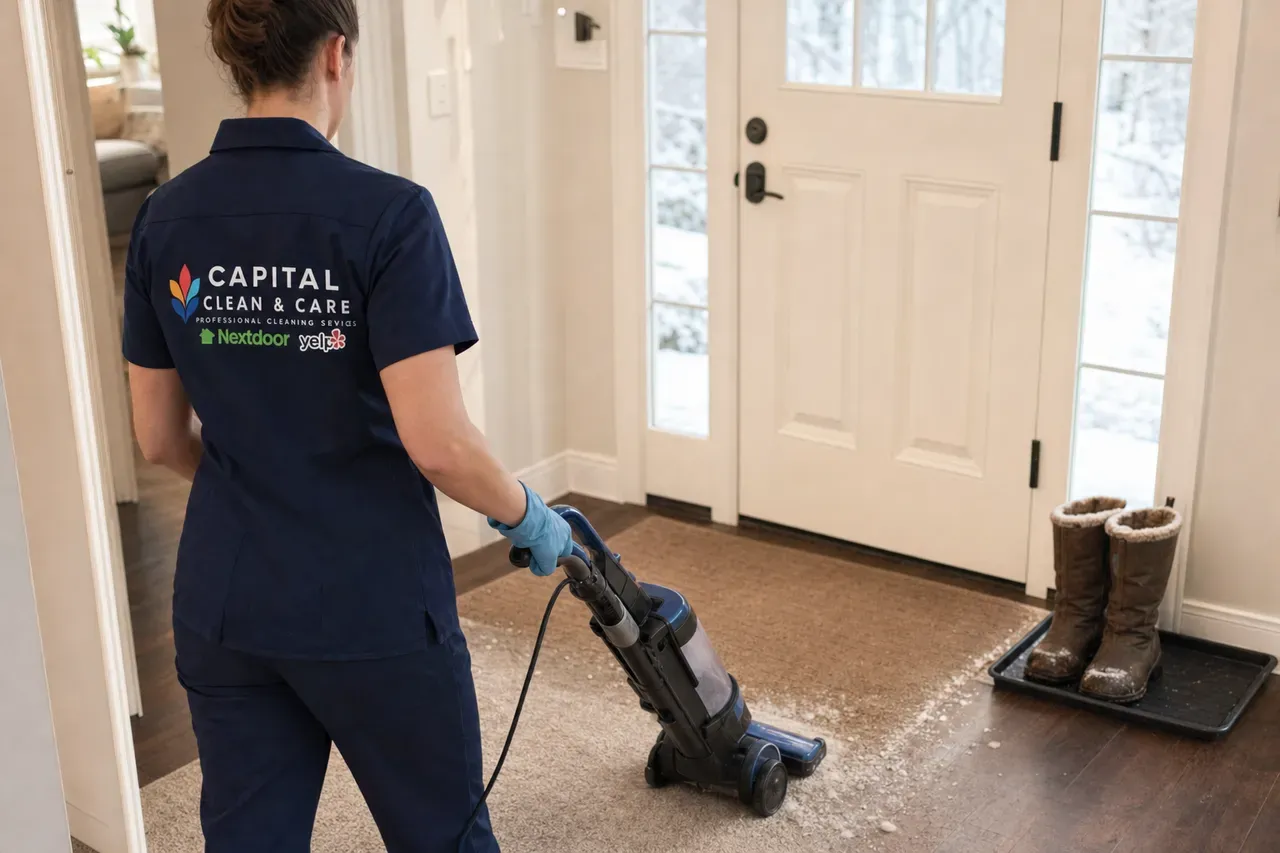
- MudLet it dry, break it up and vacuum it out, then the CRI mud page: detergent solution, blot, lukewarm rinse, cold rinse, blot dry. Wet mud smears; dry mud lifts.
- Road salt and ice meltThe CRI salt page starts by vacuuming the dry residue, then the detergent solution, a lukewarm rinse and a cold rinse, blotted dry. A white crust that shows again as the spot dries is wicking: repeat the rinse and blot, or have the area cleaned.
- Wet bootsThe CRI's winter advice is an entry mat at every outside door, cleaned regularly through the season, that lies flat and stays put (CRI). WoolSafe says the same for wool. Boots off at the mat does more than any cleaner.
Drying is the winter problem. Windows stay shut, air moves less, and the IICRC warns that the pad can stay wet long after the surface feels dry. Blot until nothing transfers, keep the area from being soaked while you clean (the CRI's one rule for every stain), and give it air. The EPA says to act quickly: materials dried within 24 to 48 hours usually do not grow mold (EPA). That is a prevention window, not a time to wait. If the pad is soaked, the water came from a leak or is contaminated, or you cannot get the area drying promptly, ask for a water-damage assessment early instead of waiting to see. For the rest of the season's carpet care, see how to clean the carpet in your home or apartment.
When to Call a Professional
The CRI ends every stain page the same way: professional cleaners have the ability and the equipment to use more aggressive cleaning solutions. Who to call depends on what you are looking at:
- Carpet cleaning professionalSpots that return, odors that linger, old pet urine, large spills, and anything the carpet's warranty asks a professional to handle. The IICRC has a locator for certified firms.
- WoolSafe approved cleanerWool and wool-rich carpets and rugs. WoolSafe keeps a directory of approved service providers.
- Water damage or restoration specialistCarpet that stays wet, a musty smell that keeps coming back, or water from a leak or sewage. The EPA says contaminated water calls for a professional with that experience.
- VeterinarianA pet that keeps having accidents. That is not a carpet question, and no cleaning method answers it.
Directories: IICRC certified firms and WoolSafe approved service providers.
Frequently Asked Questions
Sources
- Carpet and Rug Institute (CRI): Cleaning and Maintenance
- CRI: Carpet Stains 4-1-1, Best Practices for Removing Stains
- CRI: Technical Bulletin, Pet Urine and Carpet
- CRI Spot Solver: Urine, Dry
- CRI Spot Solver: Feces
- CRI Spot Solver: Vomit
- CRI Spot Solver: Wine
- CRI Spot Solver: Milk
- CRI Spot Solver: Blood
- CRI Spot Solver: Coffee
- CRI Spot Solver: Mud
- CRI Spot Solver: Salt
- CRI: Preparing for Winter's Wrath (entry mats)
- IICRC: Consumer Floor and Furnishings Care Information (PDF)
- WoolSafe: The Safe Way to Care for Your Wool Carpets and Rugs (PDF)
- Shaw Floors: Carpet Care and Maintenance
- CDC: When and How to Clean and Disinfect Your Home
- CDC: Preventing Norovirus (cleaning up after vomiting or diarrhea)
- EPA: A Brief Guide to Mold, Moisture and Your Home
This guide is general information from a house cleaning company. Carpet fibers, dyes, backings and warranties differ; the manufacturer's care instructions and the product label take precedence over anything here. Capital Clean Care does not provide biohazard cleanup, water damage restoration or mold remediation.