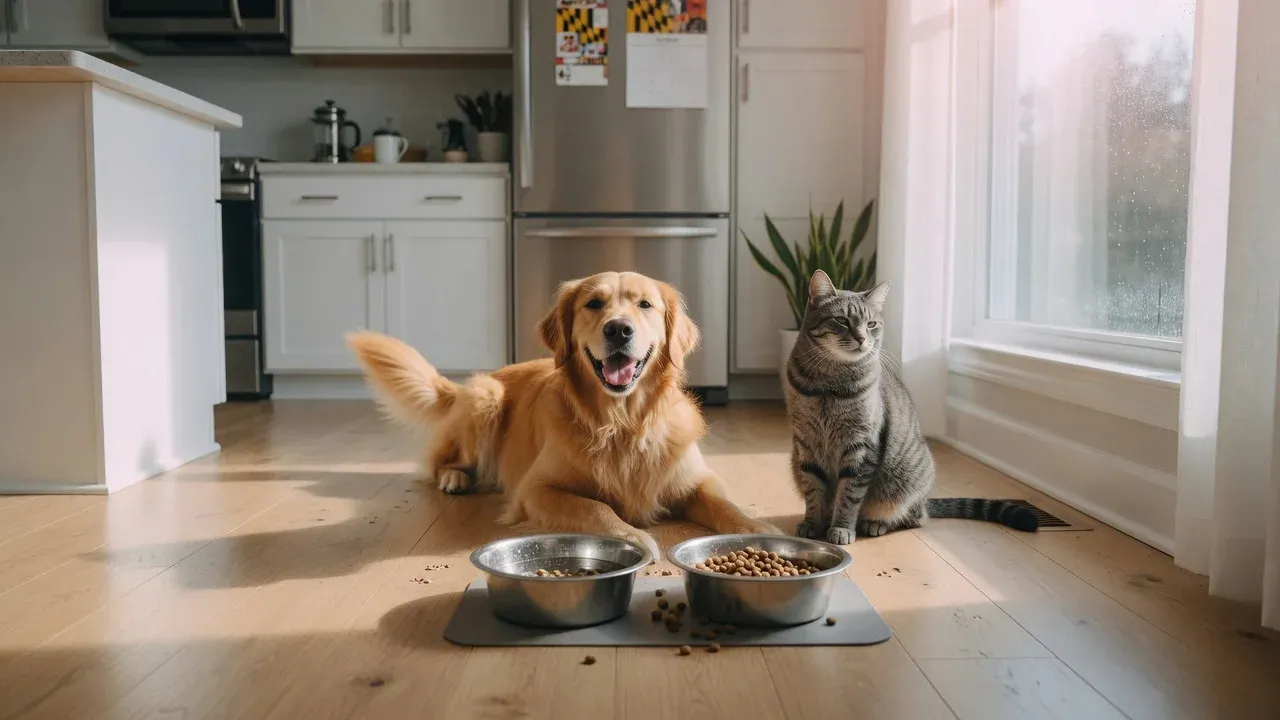
Here's an uncomfortable fact most pet owners have never heard: your dog or cat's food bowl is one of the germiest objects in your entire home. When the NSF (National Sanitation Foundation) swabbed 30 everyday items across 22 households, pet food bowls came in fourth — behind only the kitchen sponge, the sink, and the toothbrush holder. The bacteria they found routinely include the ones that make people sick, like Salmonella and E. coli.
The good news: the fix is simple and the guidance is clear. Two federal agencies — the FDA and the CDC — have straightforward recommendations for how often to clean pet bowls and toys, and almost nobody follows them. Here's the actual schedule, the right method for each item, and why the floor around the bowl matters as much as the bowl.
Why a Pet Bowl Gets So Dirty So Fast
Leftover food — especially wet food — is protein sitting at room temperature, which is exactly what bacteria need to multiply. On the water side, standing water grows biofilm: that slippery film you feel on the sides of a water bowl is a living, self-protecting layer of bacteria that a quick rinse slides right over. Left alone, bowls accumulate not just Salmonella and E. coli but yeast, mold, and in some studies even MRSA.
The tell: if you can feel a slick or slimy film when you run a finger inside the bowl, that's biofilm. It means a rinse isn't cutting it — that surface needs soap, hot water, and friction.
How Often to Clean What
A simple schedule, drawn from FDA guidance, covers everything at the feeding station:
Food bowl
After every meal
Hot water + dish soap, like your own plate. Never leave it to the next feeding.
Water bowl
Every day
Empty and scrub the whole inside surface — biofilm forms here fastest. Don't just top it up.
Bowls — disinfect
About weekly
Dishwasher hot cycle, or a soak in 1 tbsp unscented bleach per gallon of water, then rinse well.
Toys, mats & scoops
Weekly + after illness
By material: dishwasher or hot wash for hard toys, hot laundry cycle for rope and fabric.
How to Clean and Disinfect — Step by Step
The FDA + CDC routine
Wash food bowls after every meal
This is the FDA's baseline, and it's the single most important habit: wash your pet's food bowl with hot water and dish soap after each meal, exactly as you would your own dinner plate. Leftover kibble and wet food are protein — a perfect growth medium for bacteria at room temperature. A daily rinse under cold water is not enough; it moves food around without killing anything.
Scrub the water bowl daily
The water bowl is the one people forget, and it's the one that grows biofilm fastest — that slippery film on the sides is a living bacterial layer. Empty it, scrub the whole inside surface (not just a top-up) with soap and hot water every day, and refill with fresh water. If you can feel slime, a rinse won't remove it; it takes friction.
Disinfect bowls about once a week
On top of daily washing, disinfect weekly. The two FDA-endorsed options: run dishwasher-safe bowls through a normal hot cycle, or soak them in a solution of about one tablespoon of unscented bleach per gallon of water, then rinse thoroughly and let them air-dry. Rinsing well and air-drying removes any bleach residue, so nothing is left where your pet eats.
Clean toys by type — weekly, and after any illness
Hard rubber and nylon toys can go on the top rack of the dishwasher or get a hot, soapy hand-wash. Rope tugs and fabric toys go through a hot laundry cycle (skip fragranced detergent). Aim for weekly, and always clean every toy after your pet has been sick — toys are a common way an infection re-introduces itself to a recovering animal.
Wash your hands and keep the feeding zone separate
The CDC's reminders are for you, not just your pet: wash your hands right after handling pet food or bowls, and don't prep pet food — or wash the bowls — in the same spot where you prepare your family's meals, since Salmonella can transfer to counters and the sink. If you do use the kitchen sink, give it a wipe-down afterward.
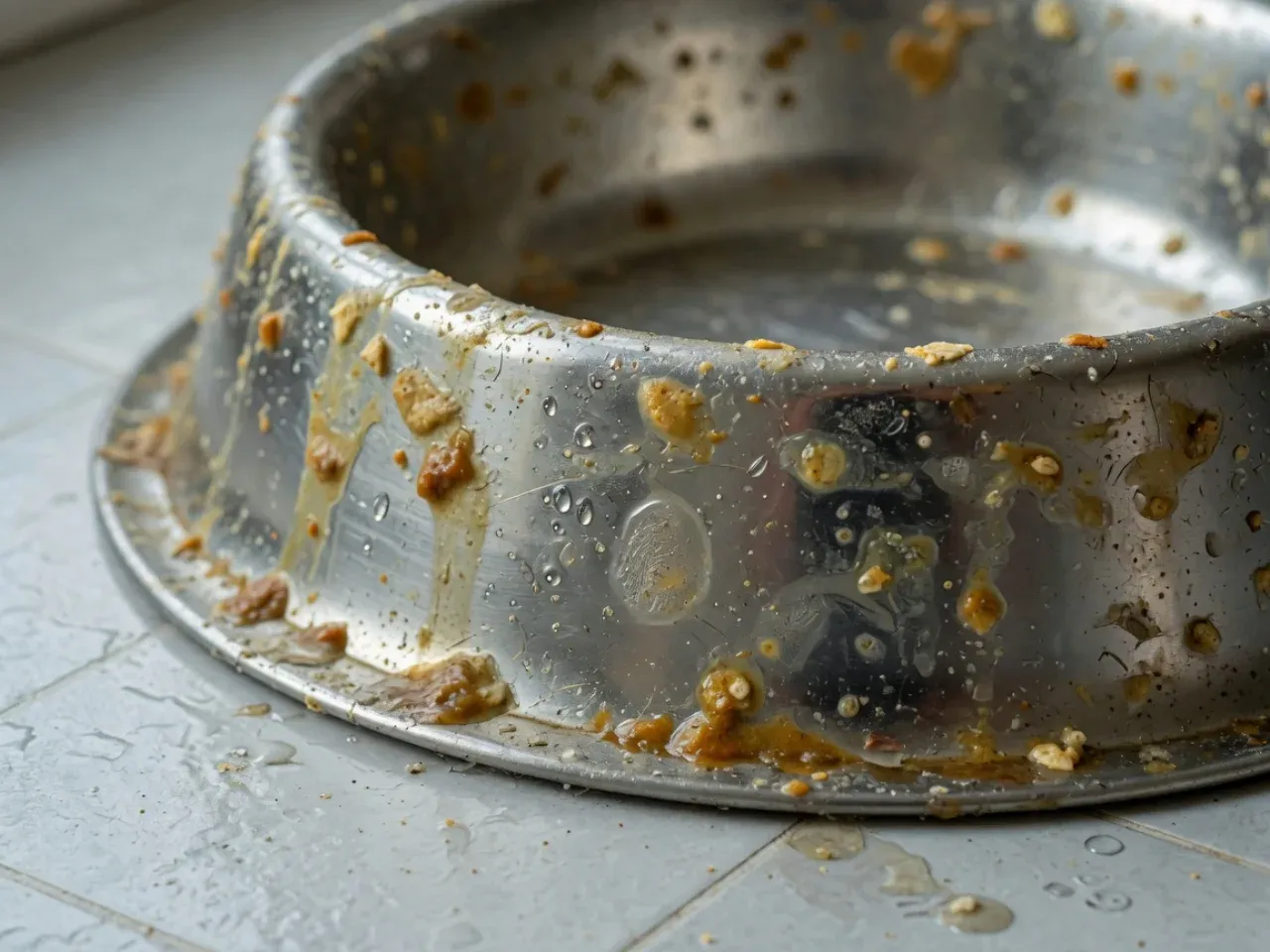
That slick film you feel on a water bowl is biofilm — a living bacterial layer that a quick rinse doesn't remove.
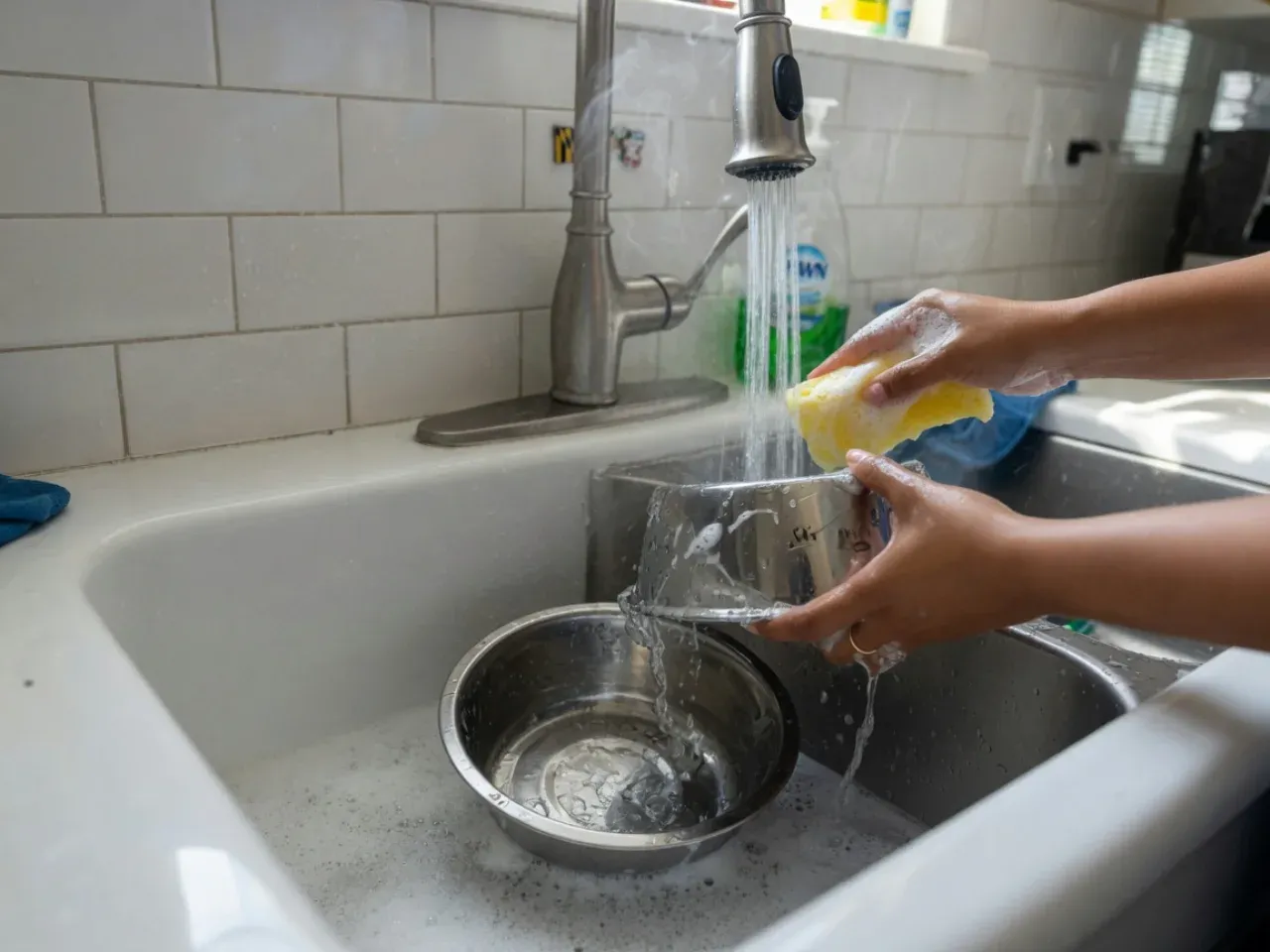
The FDA's baseline is simple: hot water and dish soap after every meal — the same standard you'd use for your own plate.
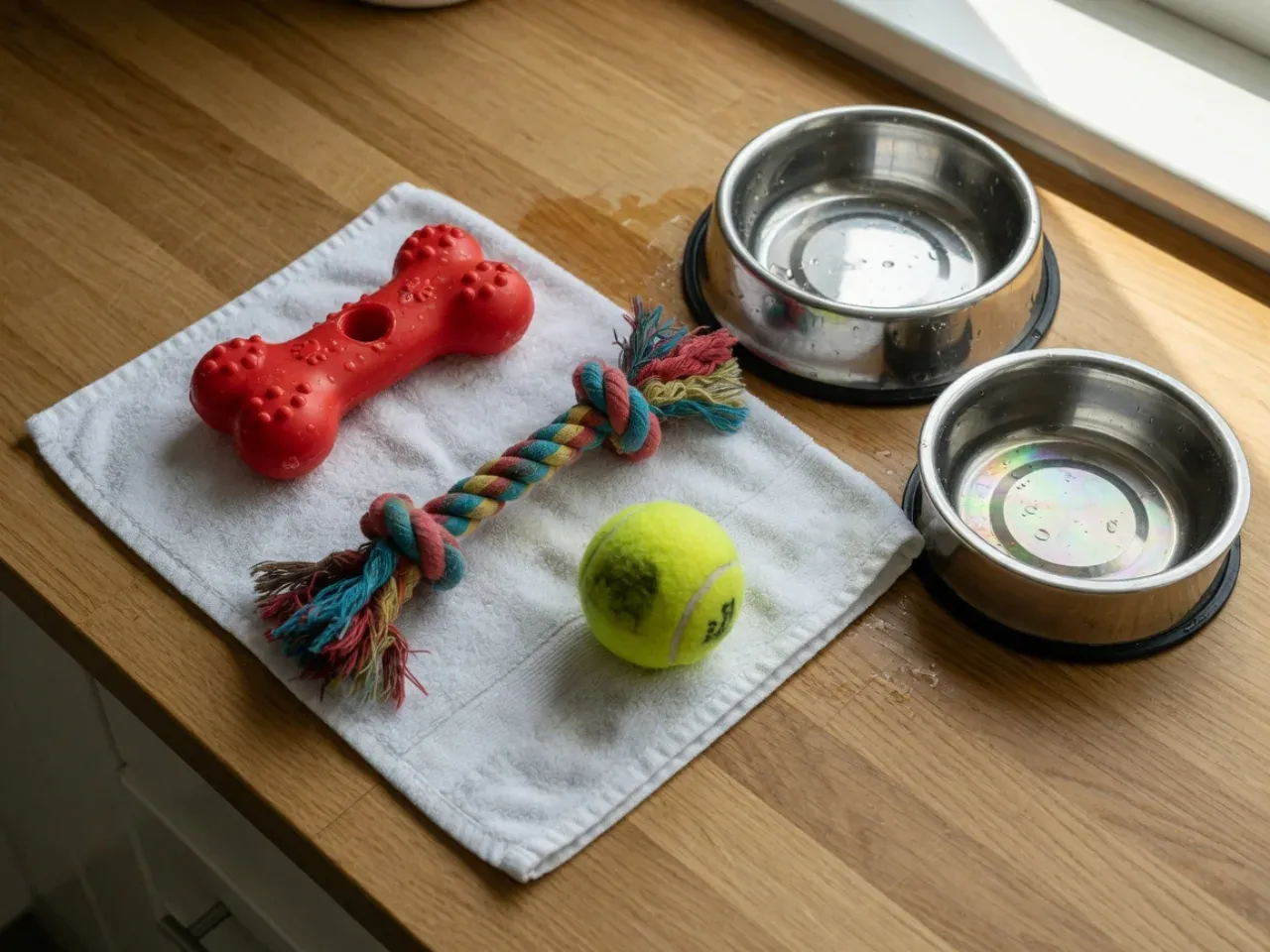
Toys need a schedule too — hard toys in the dishwasher, rope and fabric on a hot wash, weekly or after any illness.
Capital Clean Care
The bowl is on you — the rest of the room is on us
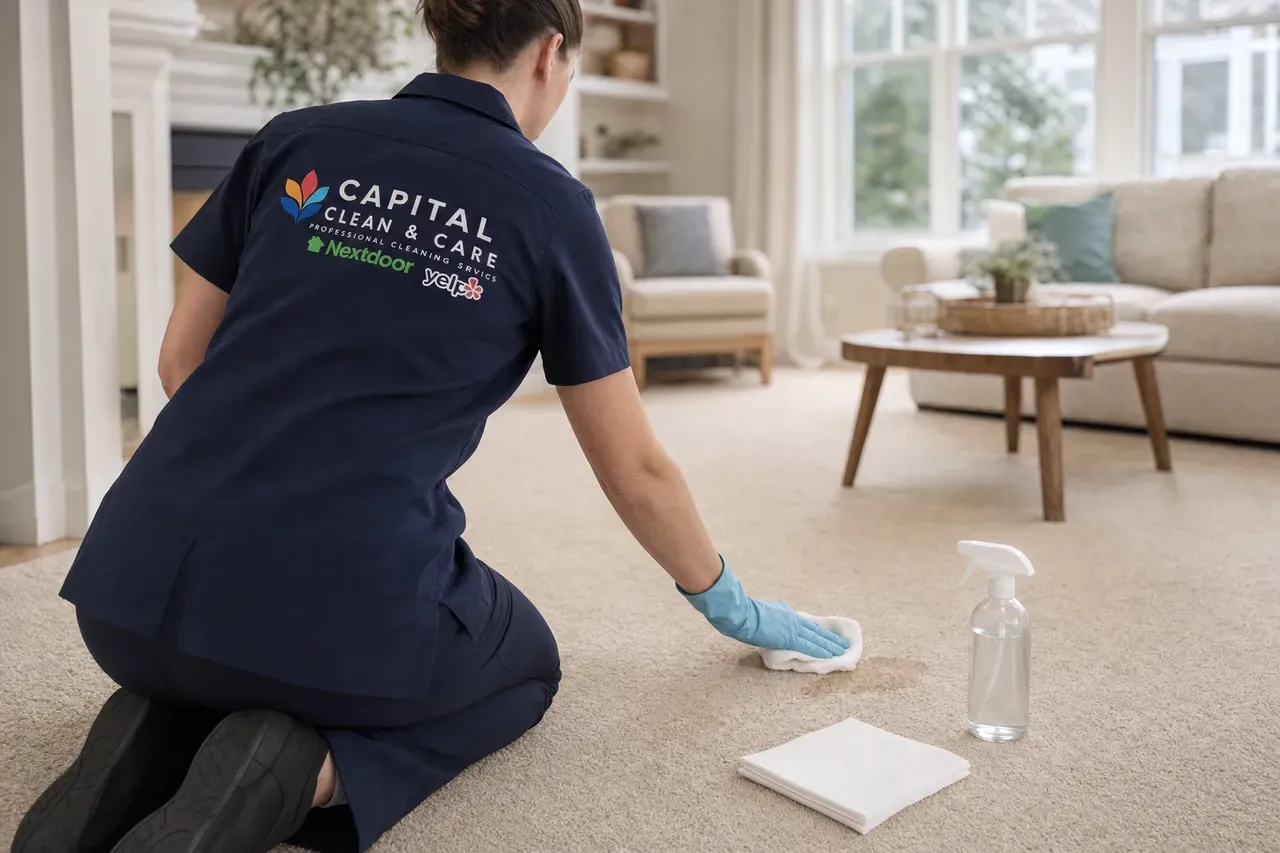
Capital Clean Care deep-cleans the floors, corners, and surfaces around your pet's feeding station with EPA Safer Choice–type, fragrance-free products — safe for the family member who eats off the floor. Across Bethesda, Rockville, Silver Spring, and Gaithersburg.
The Part Bowl-Washing Misses
You can scrub the bowl perfectly and still leave the problem behind — because the bacteria don't stay in the bowl. Every splash, dropped kibble, and wagging tail spreads them to the floor, the baseboard, the wall behind the station, and the mat underneath. That's the zone a daily bowl-wash never touches, and it's exactly where a pet lies down, licks its paws, and picks contamination back up.
This is the half we handle. A periodic deep cleaning resets those surfaces — and because we clean with pet-safe, fragrance-free products, nothing toxic is introduced right where your pet eats. If you're not sure what "pet-safe" really means on a label, that's worth a two-minute read.
This isn't only about the pet
The CDC flags some people as higher-risk for the germs pet bowls carry. In these households, the cleaning routine matters even more:
Frequently Asked Questions
A Cleaner Home for the Whole Family — Including the Four-Legged One
Capital Clean Care provides eco-friendly cleaning and deep cleaning for pet families across Maryland — Bethesda, Rockville, Silver Spring, Gaithersburg, and Potomac. Plant-based, fragrance-free, background-checked.
Licensed, insured, and locally owned. Montgomery County, MD.