
“The thoroughness and attention to detail was exceptional — the home was spotless and looked beautiful. Couldn't be happier. Highly recommend.”
Steph M.
Verified Google review
Book Your Free Post-Construction Assessment
(240) 704-2551From construction to a fresh start
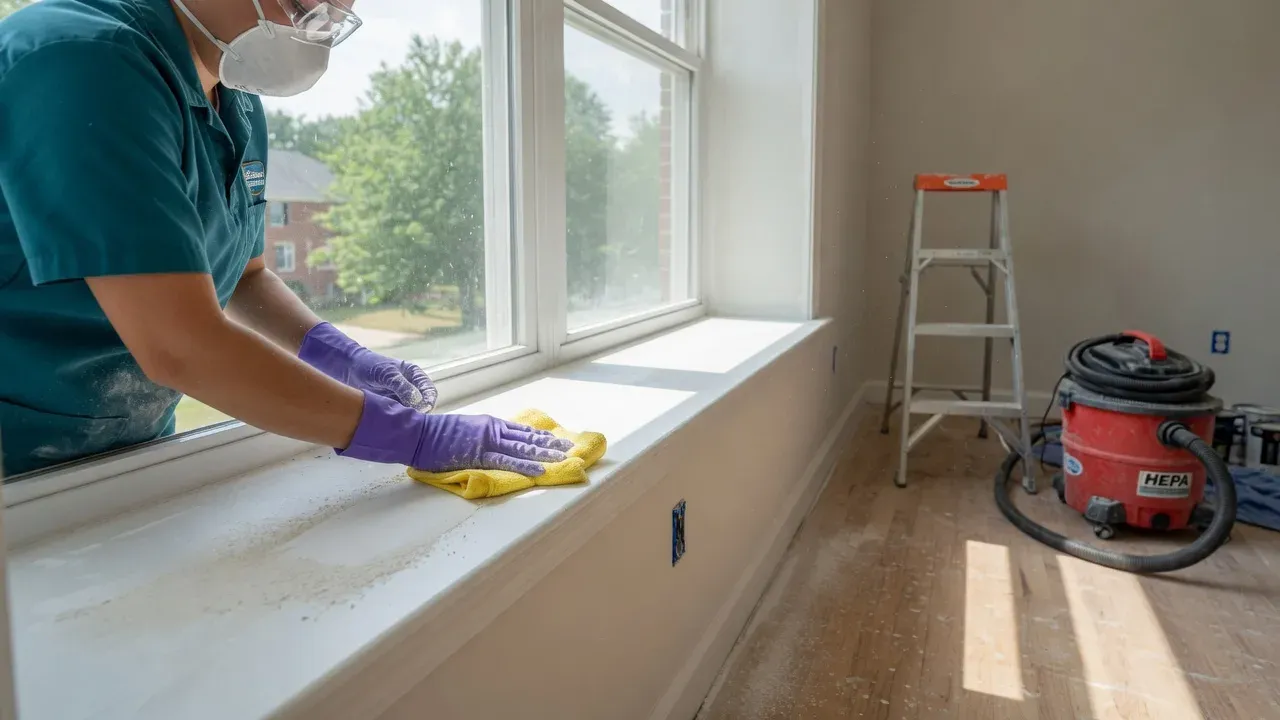
Specialized cleanup after renovations, removing construction dust, debris, and residue. We work ceiling to floor with sealed HEPA equipment and filter the air while we clean, because construction dust keeps settling for days after the crew leaves.
BBB AccreditedSince October 2026
Google VerifiedLocal Services Ads
EPA Safer Choice
24-Hour Re-Clean Guarantee

Filmed on a renovated townhouse in Washington, DC. Read the full project write-up for the room order, the HEPA air scrubbing and the bathroom protocol.
Post-construction cleaning is the detailed clean that takes a property from buildable to liveable after construction or remodeling work is finished. It removes fine dust from every surface, along with debris, paint and adhesive residue, protective film, label glue and grout haze. It is a different job from a regular house cleaning because of the dust: drywall compound, concrete and tile cutting produce particles fine enough to stay suspended in the air and keep settling for 48 to 72 hours after the crew leaves. Capital Clean Care is a post construction cleaning company serving Maryland, DC and Northern Virginia, and every job is quoted in writing after a free on-site assessment.
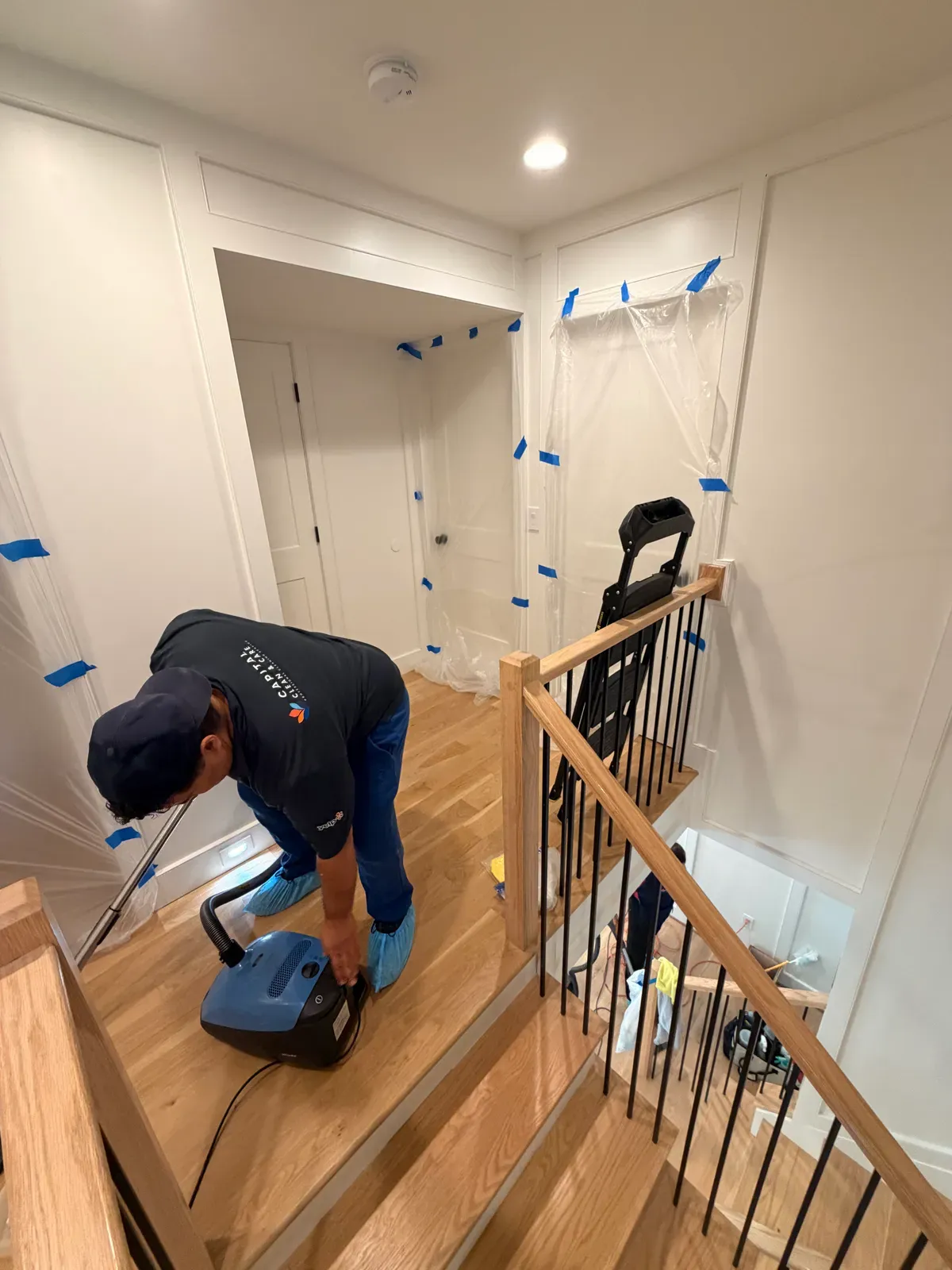
When the contractors leave, the dust stays. Renovations and new construction leave fine dust on every surface, plus debris, paint spatter, adhesive and the protective film the trades put on. Capital Clean Care's post-construction cleaning clears all of it before you move back in.
Construction dust is not household dust. Drywall, concrete and tile dust is finer, travels through the whole house with the air, and keeps settling for days. Our teams use HEPA vacuums and a HEPA air scrubber to capture it from surfaces, vents and corners instead of pushing it around.
We work in phases. The rough clean takes out bulk debris and the heavy dust. The detailed clean covers every surface, fixture and finish. The final pass goes over edges, corners and anything that settled again, so the home is ready to live in.
We clean after kitchen and bathroom remodels, additions and whole-house builds, for homeowners as well as contractors and developers across Maryland, DC and Northern Virginia.
Every surface we clean sends dust downward, so the order decides the result. Tap any step to read how it is actually done.
The scrubber runs before anyone wipes a surface, so lifted dust leaves the room instead of landing again.
Ceilings, ledges, corners, light fixtures, fans and HVAC register covers. Everything above head height first.
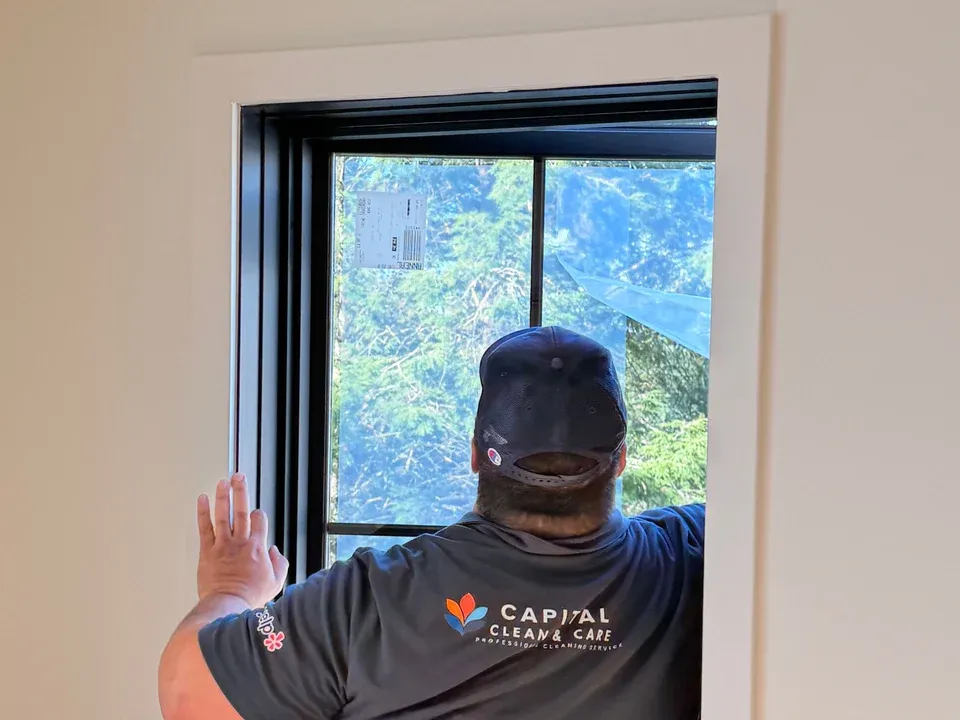
Walls, doors, frames, window glass, sills and tracks, including factory film and label adhesive.
Cabinets, closets, shelving and built-ins, inside and out, then trim, molding and baseboards.
The whole floor is HEPA vacuumed dry first. Only then does water come out, and only where the floor takes it.
Edges, corners and transitions get their own pass, then another wherever dust came back.
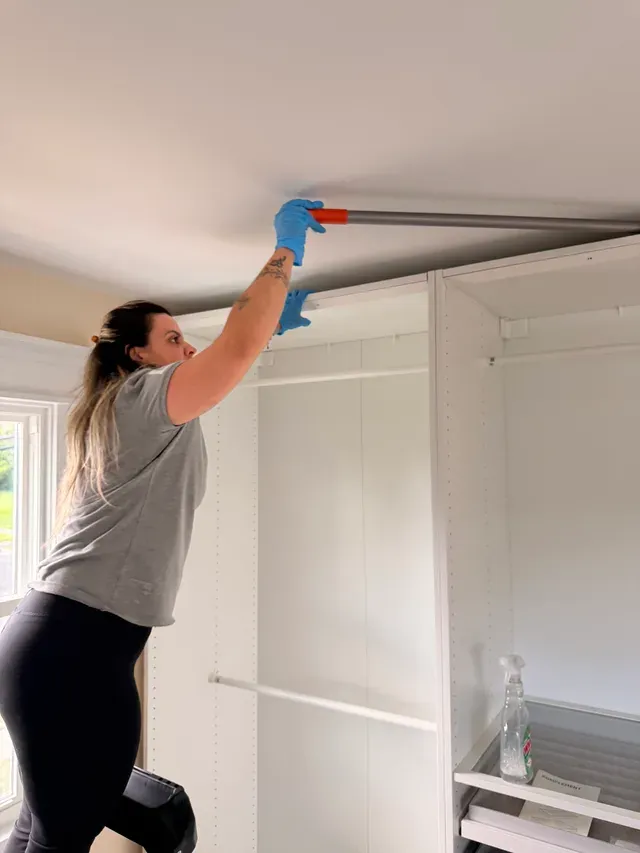
Four things decide the result: understanding how the dust behaves, working in the right order, filtering the air while the work happens, and leaving the floor until last.
Construction dust behaves differently from household dust, and the difference is measurable. Drywall compound, concrete, mortar and tile cutting all release respirable crystalline silica, which OSHA regulates on jobsites for that reason.
Because the finest particles keep settling for days, a house cleaned once on the day the crew finishes gets a grey film back on every horizontal surface two mornings later. Nothing was done wrong. The dust had not finished falling.
A standard vacuum makes it worse. The body is not sealed and the filter was never built for particles this small, so much of what it collects goes back out through the exhaust and the housing seams. The floor looks clean while the finest fraction moves into the air and onto the surfaces someone already wiped.
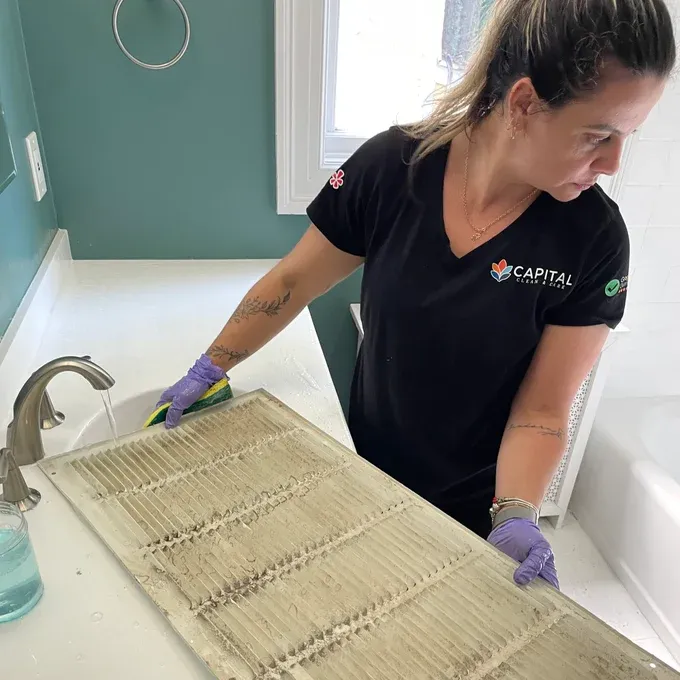
What wiping in place leaves behind
An HVAC return cover after a renovation. The face wipes clean in seconds. What sits between and behind the fins does not come out until the cover comes off and goes in the sink.
Every surface we clean sends dust downward, so the order decides the result. Work a room out of sequence and parts of it get cleaned twice. The floor is close to last for the same reason.

The sequence follows the same logic as the EPA's guidance for cleaning after renovation work, which also runs high to low, uses HEPA vacuuming and wet cleaning, and calls for re-inspecting while dust remains. We use that as a technical reference for how we work. It is not a certification, and we do not hold one.
Wiping a surface lifts part of its dust back into the room, where it drifts and lands again on everything already finished. So an air scrubber runs through the job rather than only cleaning surfaces.
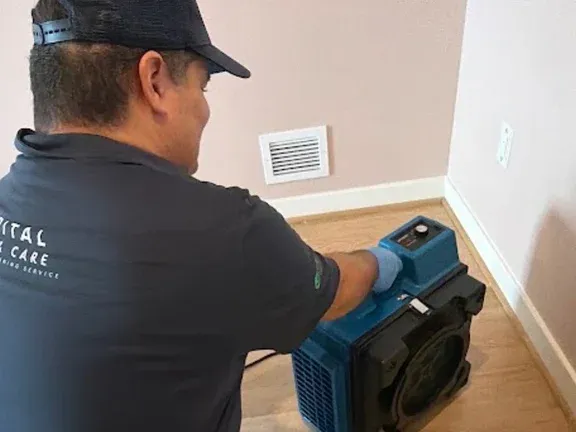
XPOWER X-2580
Placed to pull air across the room, and moved as the crew moves.
The outlet takes a duct, which lets us hold a room at negative pressure and vent filtered air away from the rooms already done. In each zone it usually runs about two hours while the detail work happens around it. That figure is our own operating protocol rather than a published standard, and room size, ceiling height and dust load all change it.
What “HEPA” actually means. HEPA rates a filter, not a company. There is no such thing as a HEPA-certified cleaning company, so treat that phrase as a warning sign. At 0.3 microns a filter is tested against the particle size it finds hardest to catch, not the smallest it can catch, so 99.97% describes it at its worst.
A wet-dry floor washer is built to vacuum and wash in one pass, and in a normal house that is exactly how it should be used. A house after construction carries far more dry particulate than the machine was designed to meet at once. Put water on that floor first and the fine dust turns into a slurry that spreads into grout lines, board seams and corners instead of leaving the room. So we split it in two.
The whole floor gets HEPA vacuumed dry, including wall transitions, corners, door jambs, closets, stair treads, cabinet toe kicks and the perimeter. Nothing gets wet until that is finished.
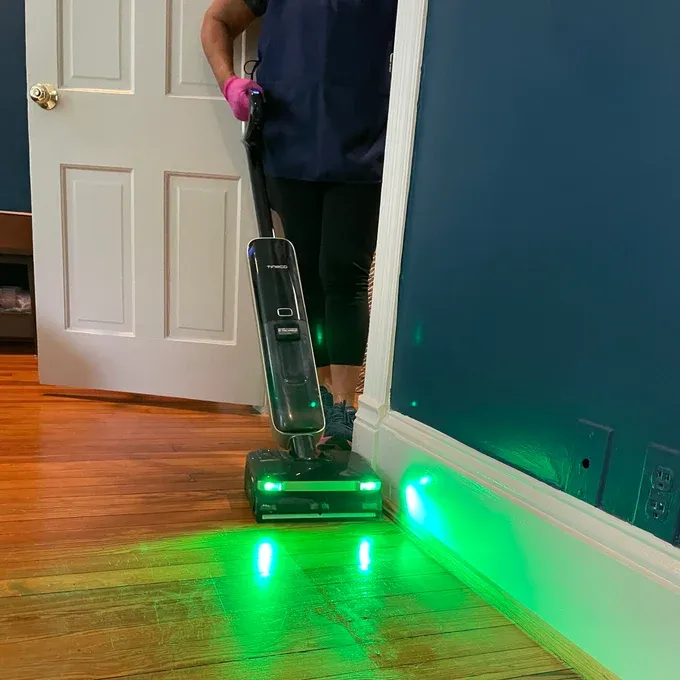
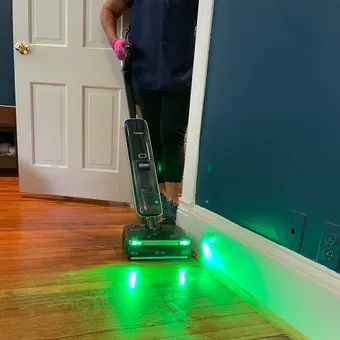
The floor washer's dust sensor lighting up a floor that already looked finished. That is what the dry pass is for.
Only then does water come out. For sealed hard floors we use a Tineco FLOOR ONE S7 Master, which pulls at 23,000 Pa, senses how dirty the floor is and adjusts as it goes, cleans against both edges, and keeps recovered dirty water in a separate tank from the clean solution.
Before any water goes down, someone identifies the floor. A renovated property often has three or four materials in it, and sealed hardwood, engineered wood, laminate, luxury vinyl, tile, porcelain and natural stone do not take the same moisture or the same machine. We do not flood wood.
Kitchens and bathrooms take the longest, and not because they are dirtier. They hold the most separate surfaces. Exact scope is confirmed in writing before the appointment, because a basement finish and a whole-house renovation are not the same job.
Some things stay outside our scope on purpose. We clean accessible register and return covers and the surfaces around them, which is not professional duct cleaning. Work requiring a licensed electrical, HVAC or mechanical trade is not part of a cleaning visit. We assess visually and by hand, and we do not perform measured air quality testing; an environmental testing service does that. For the longer read, see our post-renovation cleaning guide.
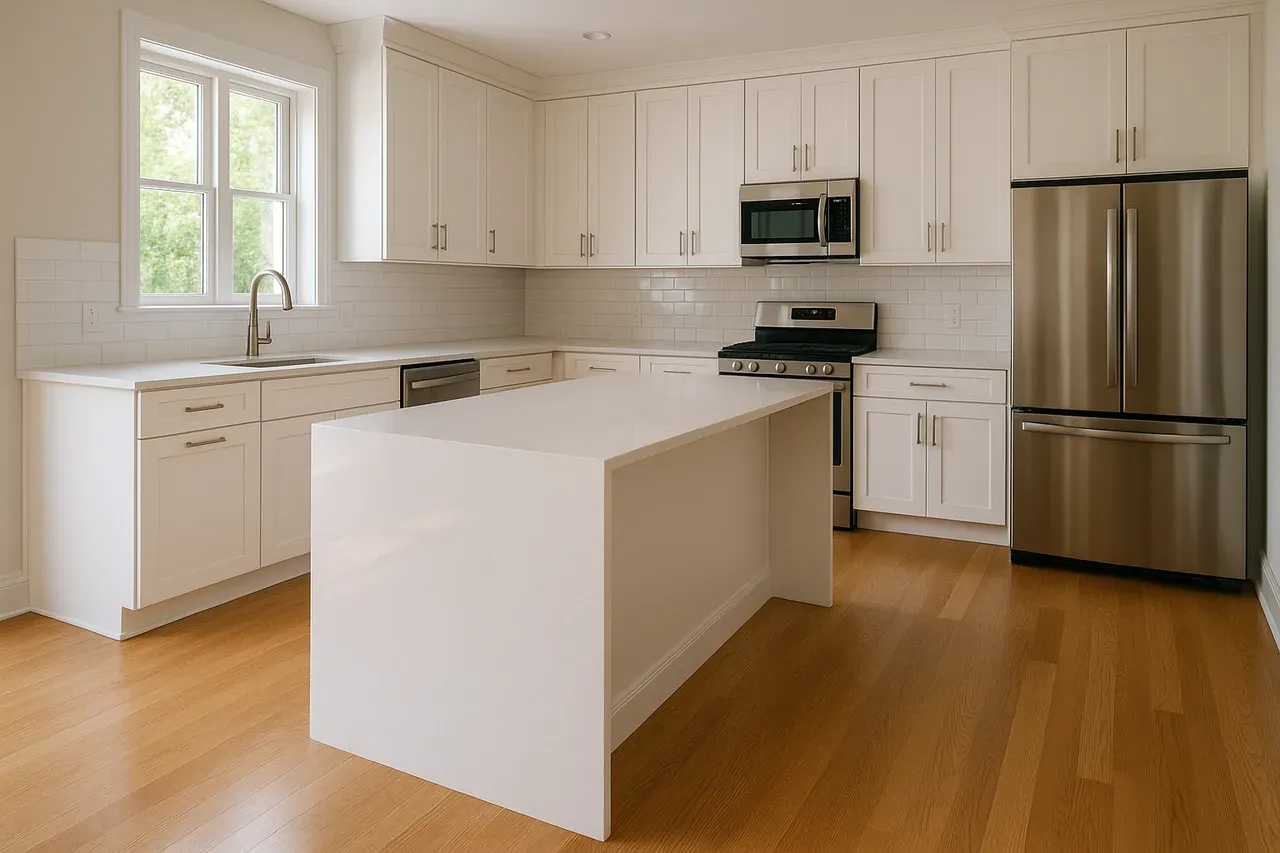
A construction contract usually ends at broom-clean: debris hauled out, floors swept. What comes after that is this, and arranging it is normally the owner's job.
We quote post-construction work after a technician has assessed the property, and we do not publish a price list for it. Two houses of identical size can take very different amounts of work depending on how the trades left them.
Quoting that from a phone call would mean padding the number to cover the unknown, or giving you a figure that changes once we are inside. The assessment costs you nothing, and what comes out of it is a written scope with the price attached before anyone starts.
How much settled, and how far it travelled through the property
Debris, packaging and protective film still on site
Paint spatter, adhesive, sealant and label glue
Material, condition, moisture tolerance, and how many separate surfaces the rooms hold
The contractors are out, the debris is gone, and every surface in the house carries a grey film. This is the clean that makes the work look finished.
New construction leaves protective film, label adhesive, grout haze and drywall dust in places you will not find until you unpack. Better to clear it before the furniture arrives.
A basement finish, a kitchen or a single bathroom still sends dust through the whole floor. The clean can be scoped to the work zone and the rooms it reached.

Final cleans on a schedule, coordinated around the punch list, with a written scope your client can see. We work alongside trades rather than around them.
If the property is also changing hands, a move-in or move-out clean usually runs alongside this one. If the dust is old rather than new, you may want deep cleaning instead.
Now booking final cleans across Maryland, DC & Northern Virginia

“The thoroughness and attention to detail was exceptional — the home was spotless and looked beautiful. Couldn't be happier. Highly recommend.”
Steph M.
Verified Google review
5.0 ★ average on Google
Read our Google reviews →Licensed & Insured
Background-Checked Teams
Products Chosen for Your Home
100% Satisfaction Guarantee
5-Star Rated
Serving the DMV Since 2015
Reviewed by Capital Clean Care · Updated October 11, 2026
Equipment specifications are the manufacturers' published figures. Dust behaviour and filtration standards reflect published guidance from the EPA, OSHA and the US Department of Energy, cited here as technical reference rather than certification. Scope and price for any property are confirmed in writing after an on-site assessment.
A technician reads the property, and you get a written scope with the price on it before any work starts.
Fast. Easy. No Obligation.
The price comes after a technician assesses the property, because two houses of the same size can be left in very different states. The assessment is free and the scope comes in writing.