Renovating your Germantown kitchen or finishing a Frederick County basement? Construction dust, debris, and adhesive residue don't disappear on their own. Post-renovation cleaning requires specialized techniques — here's your complete guide.
Why Post-Construction Cleaning is Different
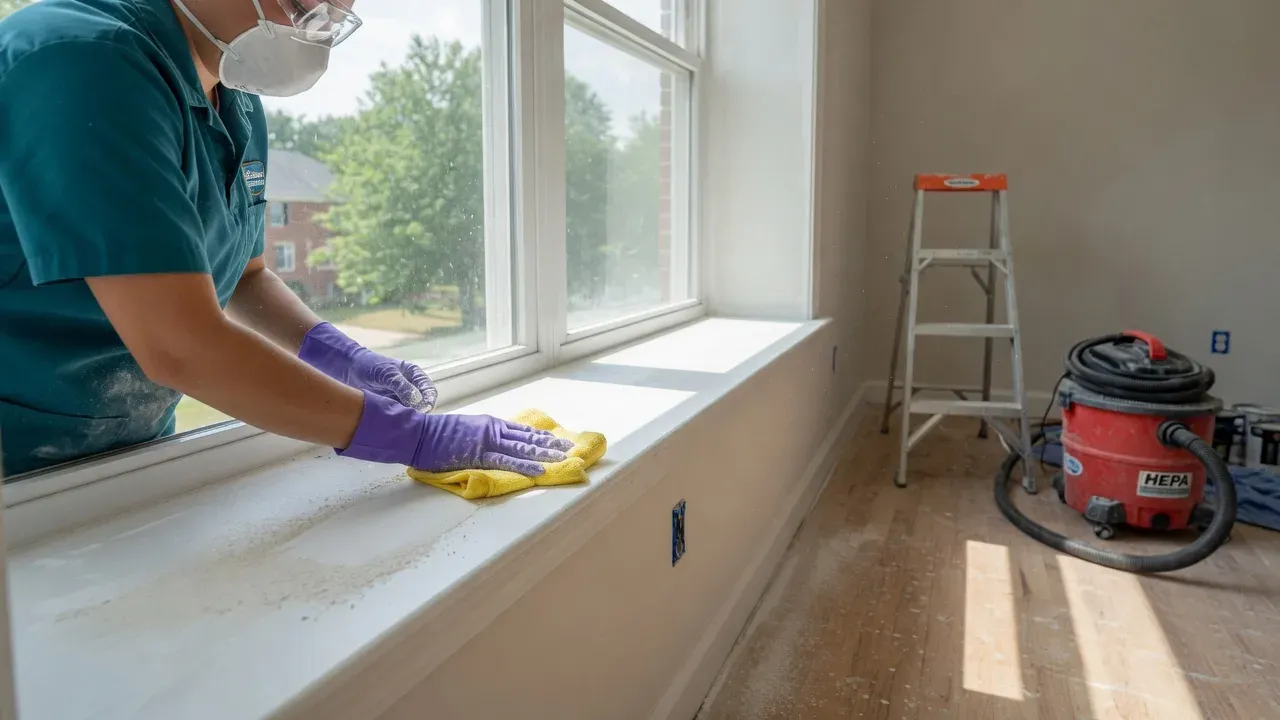
Standard cleaning products and methods can't handle construction dust. Fine particles from drywall, sawing, and sanding embed in HVAC systems, settle on every surface, and can irritate respiratory systems for weeks. A professional post-construction cleaning uses HEPA filtration and specialized techniques.
Phase 1: Rough Clean (Immediately After Construction)
- Remove all large debris, packaging, and leftover materials
- Sweep and vacuum all surfaces with industrial HEPA vacuum
- Wipe down walls and ceilings to remove dust film
- Clean HVAC vents and replace filters
- Remove paint splatters from floors, windows, and fixtures
Phase 2: Detailed Clean
- Wash all windows — interior and exterior glass, sills, and tracks
- Clean inside all cabinets, closets, and drawers
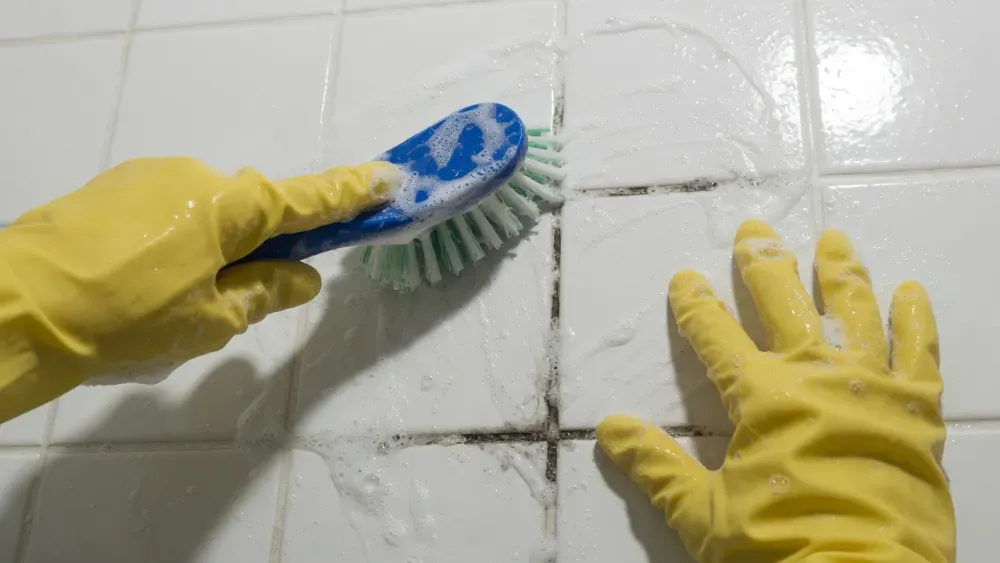
- Scrub tile grout and remove adhesive residue
- Polish all hardware — doorknobs, hinges, faucets
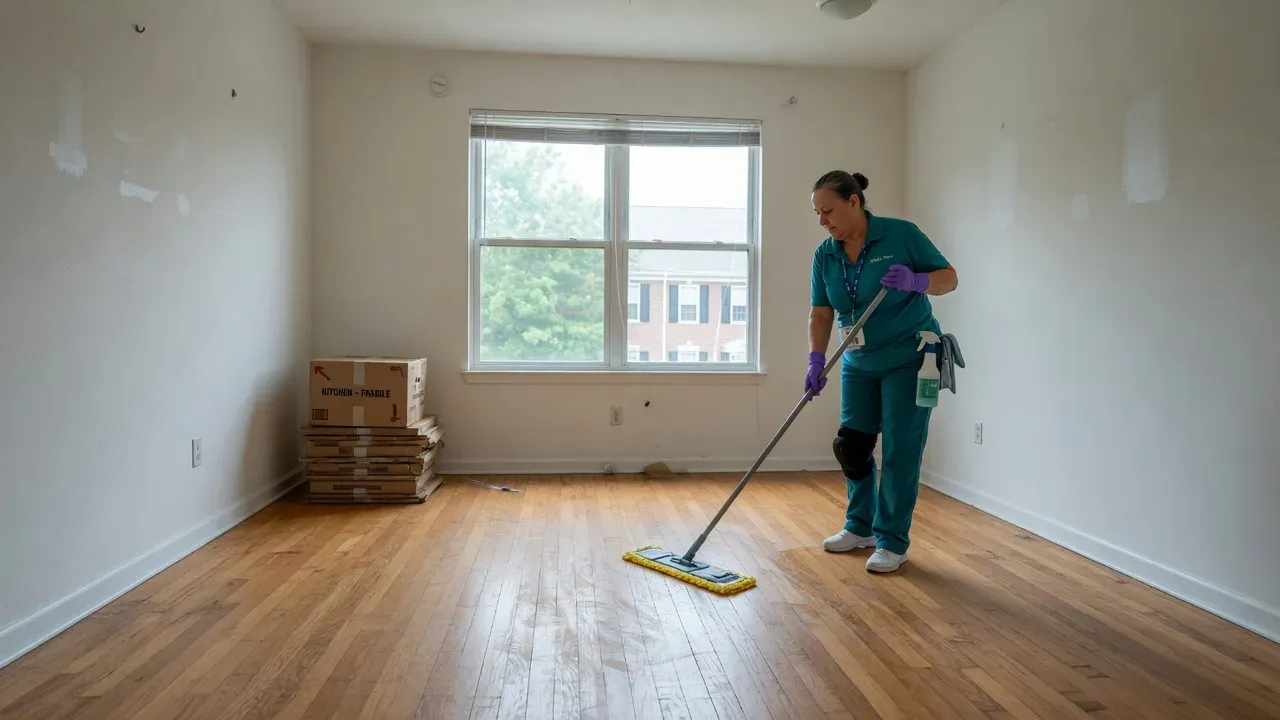
- Vacuum and mop all floors with appropriate solutions
- Clean light fixtures and ceiling fans
Phase 3: Final Touch
- Sanitize all bathrooms and kitchen surfaces
- Dust and polish all countertops and surfaces
- Final HEPA vacuum of entire space
- Spot-check all rooms for missed areas
- Air quality check — ensure dust levels are safe
Timeline and Costs
A typical post-renovation clean for a Maryland home takes 4-8 hours depending on scope. Costs start at $350 for a single room and scale with square footage. Use our price calculator for an instant estimate.
Post-renovation cleaning almost always runs longer than a standard deep cleaning of the same home, because construction dust doesn't come off in one pass — it settles back out of the air and needs multiple wipe-downs of the same surfaces. The single biggest variable is the amount of drywall and sanding work the remodel involved: a refinished basement or a gutted kitchen leaves far more fine dust than a single bathroom. For how condition and size affect a normal deep clean's timeline, see how long a deep cleaning takes.
DIY vs. Professional: What Maryland Homeowners Should Know
While you can handle surface-level cleanup, construction dust in HVAC systems and embedded in carpets requires professional equipment. Our teams serving Silver Spring, Gaithersburg, Potomac, McLean, and Washington DC use commercial HEPA vacuums and eco-friendly degreasers that won't damage new finishes. Meet our background-checked teams →
What Your Contractor Handles vs. What the Cleaning Team Handles
These are two different jobs, and knowing the split saves you money and confusion. In short: your contractor clears the construction, and the cleaning team clears the dust.
Your contractor should handle:
- Hauling away large debris, offcuts, and packaging
- Removing their own tools, drop cloths, and leftover materials
- Paint, caulk, and finish touch-ups
- Protecting fixtures and un-renovated rooms during the work
The cleaning team handles:
- Fine construction dust in HVAC vents, ducts, and on every surface, using commercial HEPA equipment
- Inside cabinets, drawers, and closets where dust settles
- Adhesive residue, grout haze, and paint specks on floors, glass, and fixtures
- Interior and exterior windows, sills, and tracks
- A final sanitize and an air-quality-focused HEPA pass
If your remodel was extensive, this is really a post-construction cleaning rather than a standard deep cleaning — it goes a step further on dust removal. Not sure which you need? See exactly what's included in a deep cleaning and how long a deep cleaning takes.
Capital Clean Care
Post-Renovation Cleaning Done Right
3-phase construction dust removal with HEPA filtration. Serving Germantown, Frederick, Gaithersburg, Potomac, McLean, Washington DC, and all of MD, DC & VA.
Book your post-renovation cleaning today — serving all of Maryland, DC & Northern Virginia.