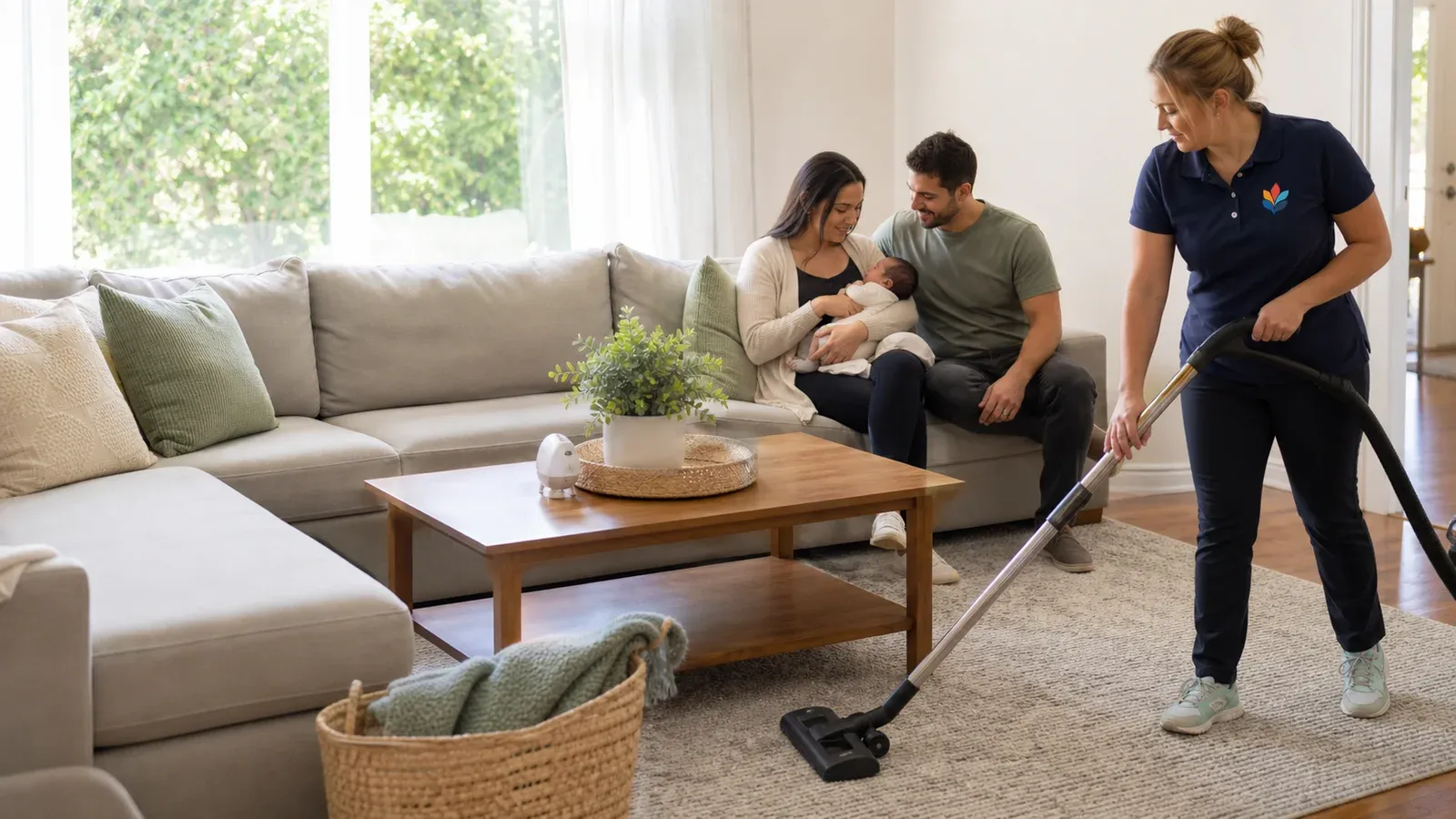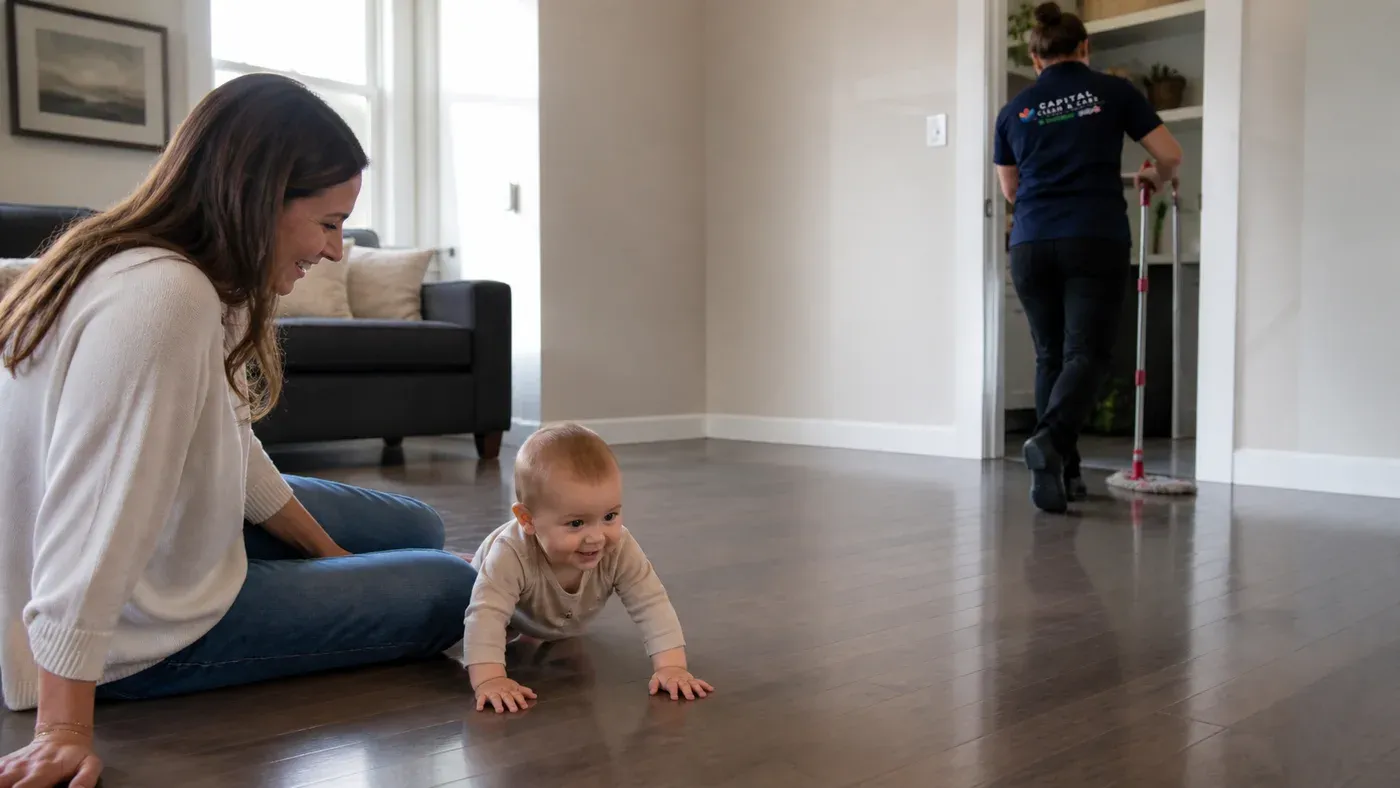
Quick answer: How often should you mop your floors once your baby starts crawling? There is no universal schedule. A practical routine is a quick daily pass on the busiest paths and a thorough mop a few times a week—adjusted for floor type, pets, spills, shoes, and visible soil. Clean first, follow every product and floor label, and disinfect only when it is truly needed.
When your baby learns to crawl, the floor stops being just a floor. It becomes the surface your baby moves across, touches, and puts their hands on before those hands go to the mouth. That is why the crawling stage is a natural time to rethink how—and how often—you clean your floors.
The goal is not a sterile home. It is a clean, manageable floor routine that fits real life with a baby. This guide covers how often to clean by floor type, how to choose a safer cleaner by reading the label, the difference between cleaning and disinfecting, and when handing the heavy work to a professional makes sense. It is general household information—not medical advice. Ask your pediatrician about your baby's individual needs. If you're in Montgomery County, Maryland, Washington DC, or Northern Virginia, Capital Clean Care can handle the floors while your family focuses on the baby.
What Changes When Your Baby Starts Crawling?
Before crawling, a baby spends most of the day held, in a bassinet, or on a blanket. Once they are mobile, they explore the floor directly—palms down, often heading straight for the spot you just wiped. Hand-to-mouth behavior is normal at this age, so the floor effectively becomes a high-touch surface.
That shifts the priorities:
- Crumbs, spills, and small objects matter more because they end up in little hands.
- The paths your family walks most collect tracked-in soil and pet hair.
- Cleaning products need to be chosen and stored with a curious, mobile baby in mind.
- Low surfaces—not just floors—come within a crawler's reach.
If you are earlier in the journey, our cleaning during pregnancy guide and bringing baby home guide cover the earlier stages. This article picks up once your baby is on the move.
Cleaning vs. Sanitizing vs. Disinfecting
These three words are often used interchangeably, but they are different tasks:
- Cleaning removes dirt, crumbs, and impurities using soap or detergent, water, and physical action. It is the everyday step.
- Sanitizing reduces germs on a surface to a level considered safe by public-health standards.
- Disinfecting uses a product intended to kill germs on a surface after it has been cleaned.
The CDC notes that routine cleaning is enough in most household situations. For daily floor care with a crawling baby, cleaning first—and cleaning consistently—usually matters more than reaching for a disinfectant.
How Often Should You Mop Your Floors?
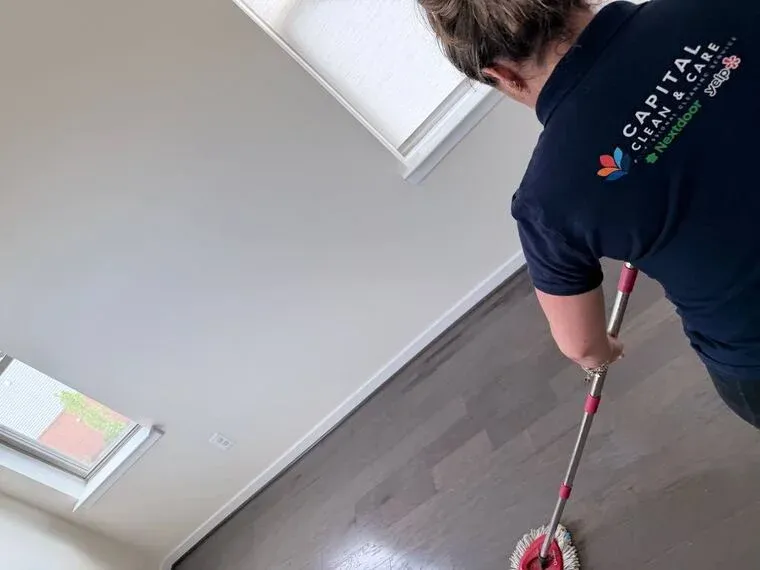
There is no single correct number. How often you mop depends on your floor type, foot traffic, whether the household is shoes-off, pets, and how much the baby is on the floor. A realistic pattern for most homes is a light daily reset plus a deeper clean a few times a week.
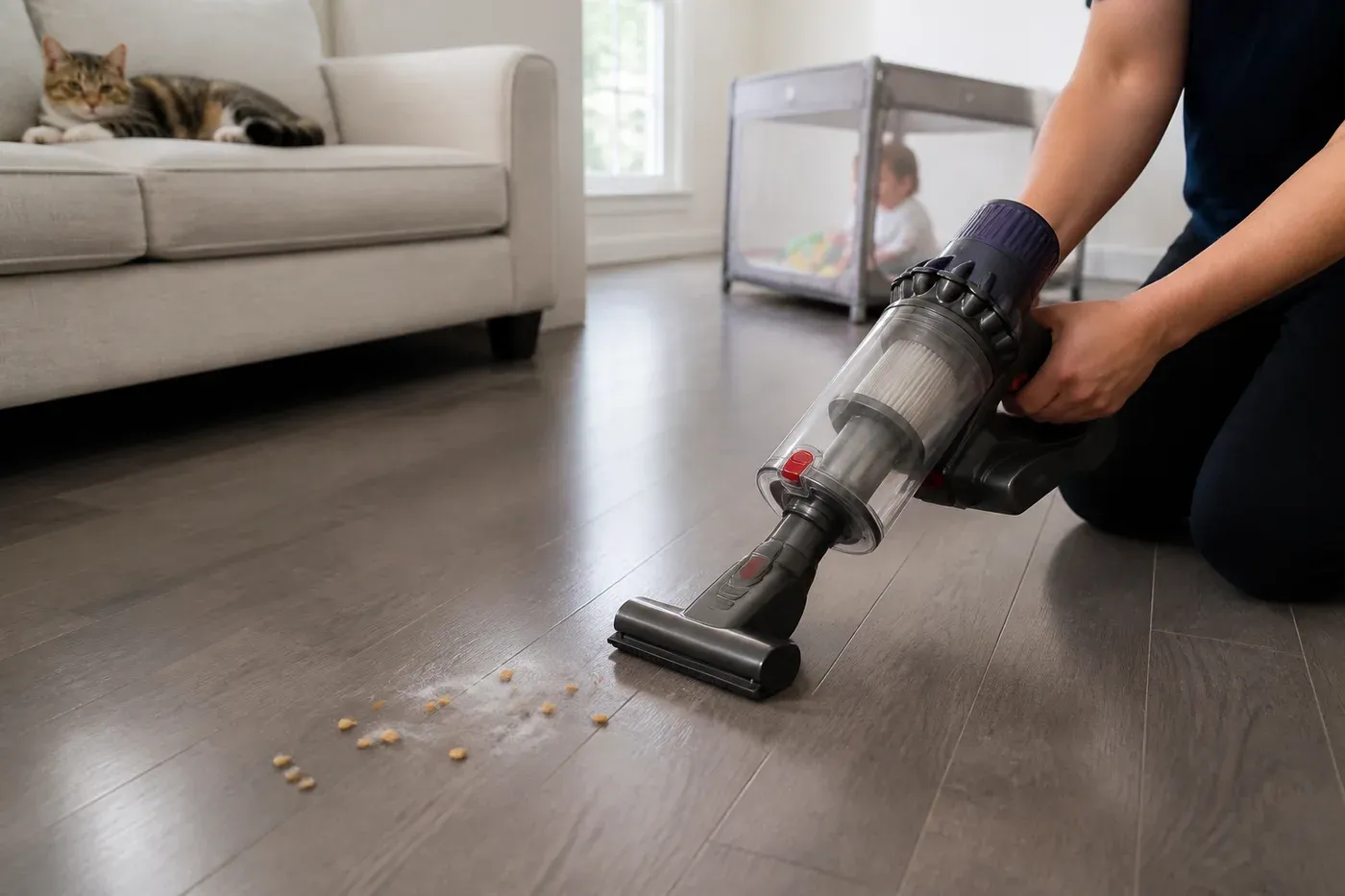
Try a five-minute daily floor reset:
- Do a quick sweep or dry dust-mop of the main crawling and walking paths.
- Wipe up visible spills right away, before they spread or dry.
- Pick up small objects and crumbs within the baby's reach.
- Spot-mop one high-use area if it needs it.
- Reset one clear, safe path through the room the baby uses most.
If the baby needs you halfway through, stop. A short routine done most days protects the floor better than an ambitious plan that never happens.
Where the Mess Actually Comes From
Floors rarely get dirty on their own. Targeting the real sources keeps the routine short:
- Crumbs and food from feeding, snacks, and older siblings.
- Spills—milk, water, and everyday drips—that attract more soil if left.
- Pet hair and dander, especially in the rooms where the baby plays.
- Shoes and tracked-in soil from entryways and visitors.
- Higher activity from guests, deliveries, and daily comings and goings.
A simple habit—shoes off near the door, a mat at each entry, and prompt spill cleanup—reduces how often the whole floor needs a deeper clean.
How Often to Clean Each Floor Type
Frequency and method depend on the surface. Use this as a starting point, and always defer to your flooring manufacturer's instructions—the wrong product or too much water can void a warranty or damage the floor.
| Floor type | Everyday | Deeper clean | Product note |
|---|---|---|---|
| Sealed hardwood | Dry dust-mop or sweep the busiest paths | Damp-mop 1–2× a week with a well-wrung mop | Use a hardwood-specific cleaner; avoid excess water and steam unless the manufacturer allows it. |
| Laminate | Sweep or dry-mop crumbs | Lightly damp-mop about once a week | Never soak it—standing water can swell the boards. Follow the laminate maker's cleaner. |
| Vinyl / LVP | Sweep or vacuum debris | Damp-mop 1–2× a week | Tolerates more moisture; use a pH-neutral cleaner per the product label. |
| Tile | Sweep or vacuum | Mop 1–2× a week; address grout as needed | Rinse if the label requires it, and keep the baby off the floor until it is dry. |
| Carpet & rugs | Spot-clean spills promptly | Vacuum play areas often; deep-clean periodically | Let treated areas dry fully; follow the carpet or product instructions. |
For real wood specifically, see our guide on how to clean hardwood floors naturally for gentler, low-moisture methods.
How to Choose a Baby-Safe Floor Cleaner
"Baby-safe" and "newborn-safe" are marketing phrases, not a substitute for reading the label. No product is safe if it is used on the wrong surface, in the wrong amount, or stored where a crawler can reach it. And never call any product "chemical-free"—water, soap, and every cleaning ingredient are chemicals.
For routine floor cleaning, one useful signal is the EPA Safer Choice label, where the EPA reviews a product's intentionally added ingredients against its human-health and environmental criteria. The label does not mean a product can be used carelessly or that it fits every surface.
Practical rules for the crawling stage:
- Match the product to your floor type and the task.
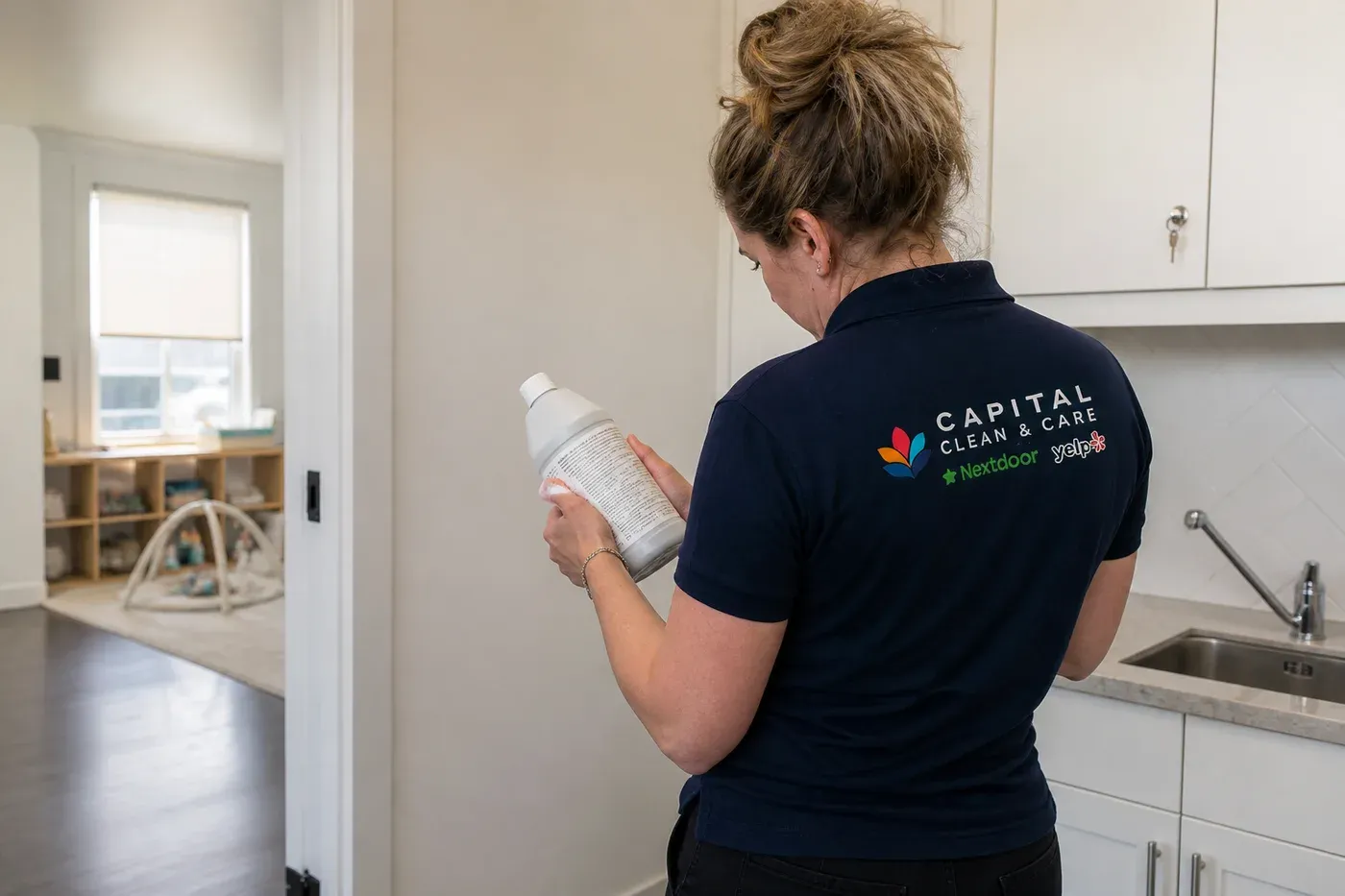
- Read the label: follow dilution, ventilation, contact-time, and rinse directions.
- Ventilate the room, and keep the baby out until the floor is dry or rinsed.
- Use only the amount directed—more product does not mean a cleaner floor.
- Never mix cleaning or disinfecting products.
- Store every product closed, labeled, and out of reach—up high or in a latched cabinet.
- Do not treat "natural" or "non-toxic" as an absolute guarantee.
If disinfecting is genuinely needed—illness or a contaminated surface—clean first, then use an EPA-registered disinfectant exactly as its label directs, including contact time and any rinse step, and keep the baby away during use.
For safe storage and childproofing as your baby becomes mobile, the American Academy of Pediatrics childproofing guidance recommends locking away cleaners and medicines. Save your regional Poison Control number—in the U.S., call Poison Control at 1-800-222-1222 for a suspected exposure, and 911 for an emergency.
Beyond Floors: High-Touch Surfaces at a Crawler's Reach
A crawler explores more than the floor. As part of the same routine, give a light, regular wipe to the low surfaces small hands find:
- Coffee-table edges, chair and table legs, and low shelves.
- Cabinet and drawer pulls within reach.
- Baseboards and door frames along crawling paths.
- Toy bins, gates, and the tray or rails of play equipment.
- Low door handles and light switches.
Routine cleaning is usually enough for these surfaces. Follow the product and surface instructions, and pair the wipe-down with childproofing—covers, latches, and moving hazards up and out of reach.
What About Play Mats, Rugs, and Robot Vacuums?
Once a baby is crawling and putting hands to mouth, the mats, rugs, and gear they play on get more contact than the rest of the floor. Clean them the way you clean floors: remove debris, wipe spills, follow the manufacturer's directions, and let everything dry. The American Academy of Pediatrics' green-cleaning guidance is a helpful reference for choosing and storing products as your baby becomes more mobile.
Play mats
Shake off or vacuum loose debris, then wipe spills and visible soil with a cleaner the manufacturer approves for that material. Rinse if the label calls for it, and let the mat dry completely before the baby is back on it. Do not assume a play mat tolerates disinfectant—foam and fabric can be damaged, and residue is left right where hands and mouths go.
Rugs and carpet
Vacuum play-area rugs and carpet as often as debris and pets require, and spot-clean spills before they set. Use a product suited to the rug's material and follow the label; over-wetting can leave residue or take too long to dry. Let treated areas dry fully before the baby crawls back over them.
Robot vacuums and robot mops
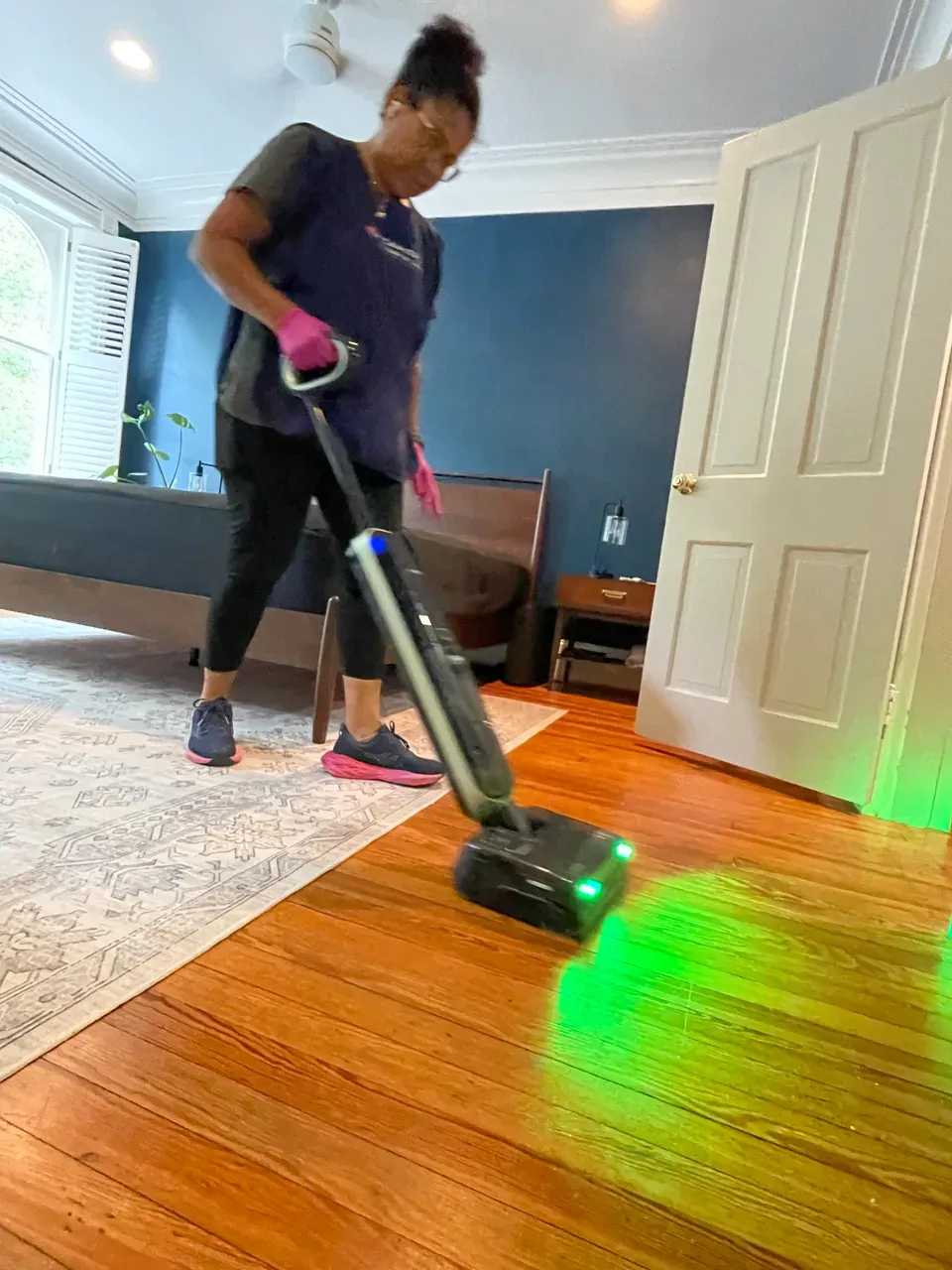
A robot vacuum or mop can help with day-to-day maintenance, but run it while the baby is in another safe, supervised area—not crawling alongside it. Keep the dock, cords, and any small parts out of reach; empty and maintain the unit so it actually picks up debris; and remember it does not replace prompt spill cleanup or the approved wet cleaning your floors need.
Capital Clean Care
Get the deep floor work off your plate
Capital Clean Care keeps floors, bathrooms, kitchens, and high-touch surfaces consistently clean while your family focuses on the baby. Serving Maryland, DC & Northern Virginia.
Weekly Floor & Crawl-Space Checklist
Use this as a flexible menu. It does not need to be finished in one day.
Every day or as needed
- Sweep or dry-mop the main crawling and walking paths
- Wipe up visible spills right away
- Pick up crumbs and small objects within reach
- Reset one clear, safe path through the busiest room
- Wipe an obviously dirty low surface
A few times each week
- Damp-mop the floors that allow it, per the manufacturer
- Vacuum play areas and spots where pet hair collects
- Wipe low shelves, table legs, and reachable handles
- Clean entryway mats and shake out small rugs
- Check that cleaning products are stored out of reach
Weekly or when manageable
- Deeper-clean the most-used floors and baseboards
- Deep-vacuum or refresh rugs and carpet in play areas
- Clean less-used floors and lower cabinet fronts
- Restock supplies and check that latches and covers work
- Delegate postponed deep-cleaning tasks
Common Floor-Cleaning Mistakes With a Crawling Baby
A few habits create more work—or more risk—without making floors any safer. The most common ones:
- Trying to sterilize everything, every day. Routine cleaning removes most germs; whole-floor disinfecting is a situational step for illness or contamination, not a daily requirement.
- Using too much product—or mixing products. More cleaner does not mean cleaner floors, and it can leave residue right where hands and mouths go. Never mix cleaning or disinfecting products.
- Assuming "natural," "baby-safe," "fragrance-free," vinegar, or steam works on any floor. None of these are guarantees or universal methods. Match the product and method to your floor type and follow the manufacturer's directions—steam and acids can damage some surfaces.
- Letting the baby back before the floor is dry or rinsed. Wet floors are a slip and exposure risk. Keep the baby off until the surface is dry and any label-required rinse is finished.
- Cleaning the whole house instead of the zones that matter. Prioritize crawling paths, entryways, and the spots that collect food and pet hair before the rooms the baby rarely touches.
When Recurring Cleaning Gives You Time Back
Daily tidying is one thing; keeping up with deeper floor care, bathrooms, and dust on little sleep is another. Recurring cleaning can be worth it when:
- Deeper floor and bathroom cleaning keeps getting postponed.
- You want consistent upkeep without adding hours to your week.
- Fatigue, work, or other children make a full reset hard to reach.
- You would rather spend that time resting or with the baby.
Capital Clean Care offers recurring cleaning, house cleaning, deep cleaning, and eco-friendly cleaning for families across Montgomery County, Maryland—including Bethesda, Silver Spring, Rockville, and Takoma Park—as well as Washington DC and Northern Virginia. A recurring plan can handle floors, bathrooms, kitchens, and accumulated dust so the household work does not pile up during the crawling stage.
Frequently Asked Questions
How often should you mop floors when you have a crawling baby?
What is a baby-safe floor cleaner?
Do you need to disinfect floors every day for a crawling baby?
How long should a baby stay off a freshly cleaned floor?
How do you handle pet hair on floors with a crawling baby?
How often should you clean different floor types?
Is recurring house cleaning worth it once the baby is crawling?
Can you use a robot vacuum around a crawling baby?
How should you clean a baby play mat?
Are vinegar or steam mops safe for floors with a crawling baby?
A Floor Routine That Fits Life With a Crawler
You do not need a spotless floor at every hour of the day. Keep the crawling paths clean, wipe spills quickly, choose products by reading the label, store them out of reach, and let a professional handle the heavy, repetitive work when it helps.
Keep the Floors Handled—Focus on the Baby
If floors, bathrooms, and recurring cleaning are taking time away from rest and your baby, Capital Clean Care can help. Request a free quote for professional house cleaning in Bethesda, Silver Spring, Rockville, and other areas of Montgomery County, Maryland, as well as Washington DC and Northern Virginia.
Next in the family life-stage series: once your child is walking, eating more independently, and spreading small messes from room to room, use our realistic cleaning schedule for working parents with toddlers.

Rodrigo Reis
Founder & Owner, Capital Clean Care
Rodrigo founded Capital Clean Care in 2015 and still runs it as a family-owned, Latino-operated business. Over 10+ years his team has cleaned 500+ homes across Montgomery County and the wider DMV, and the pricing and checklists in these guides come from the real quotes and jobs they run every week, not national averages. Read our story →