To clean a child's backpack and lunch box safely, begin with each item's care label—not a universal internet recipe. Empty both items daily, remove food and wet contents promptly, clean visible soil with a method approved for the material, and leave every compartment fully open until dry.
A preschool backpack can carry home crumbs, paper, art supplies, damp clothing, sand, and the occasional forgotten snack. That does not mean the family needs a nightly disinfection ritual. It calls for a short unloading system that separates food safety, item care, handwashing, and ordinary home cleaning.
The five-minute answer
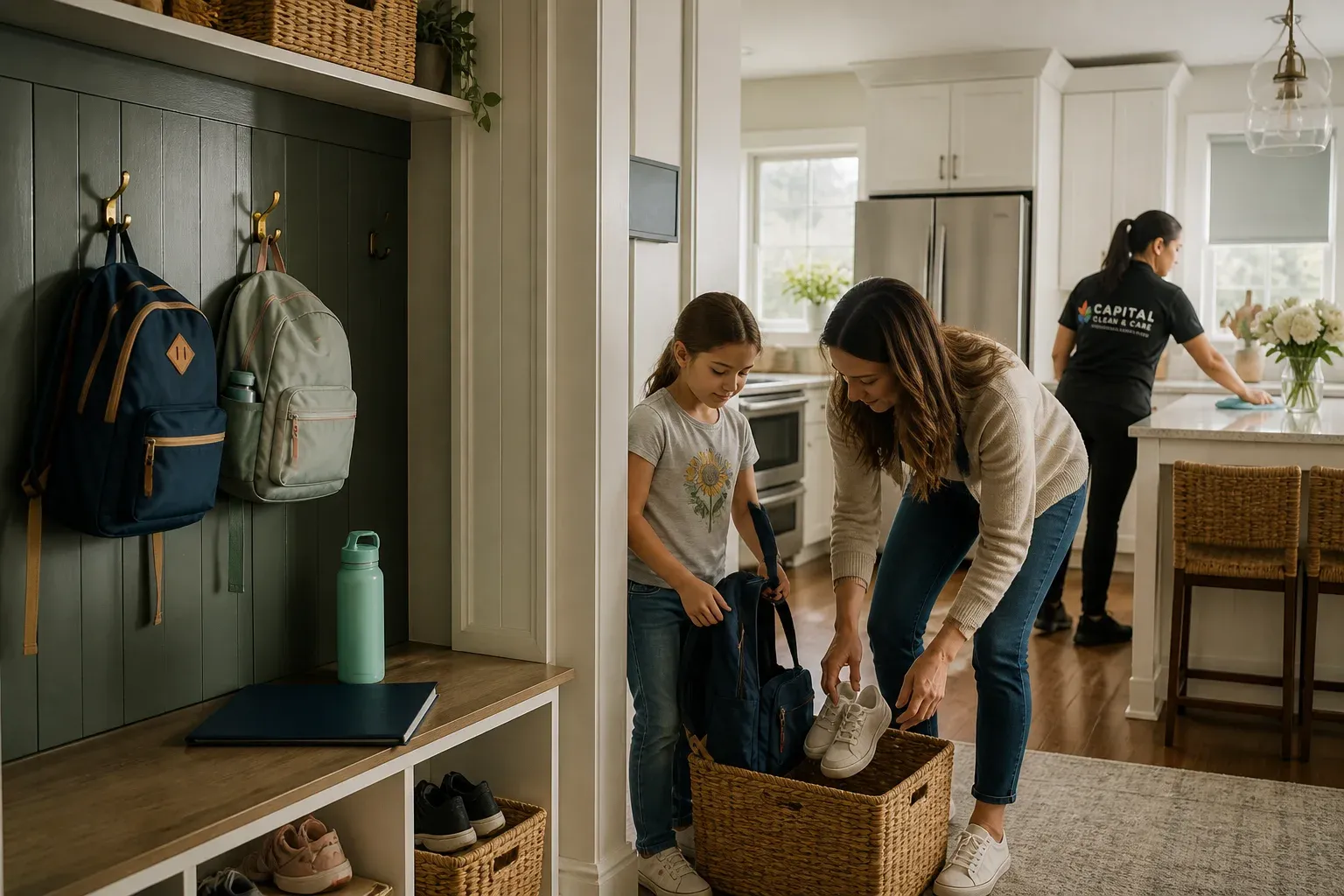
Create one landing zone near the entry. Have an adult empty the lunch box, discard unsafe leftovers and used packaging, move reusable containers to the sink, check every backpack pocket for food or wet clothing, and separate school papers. Clean spills now; let cosmetic dirt wait. Hang the backpack and lunch box open so trapped moisture can escape, then wash hands. Once a week—or when visible soil, odor, or a leak requires it—follow the item's care label for a fuller clean. This routine manages the things moving between preschool and home; it does not replace ordinary kitchen, bathroom, floor, or whole-home maintenance.
Why Preschool Changes the Cleaning Routine
The previous toddler-stage guide organizes recurring mess across the whole home. Preschool adds a daily transfer point: belongings now move between a shared learning environment, the car, the entryway, and the kitchen. The useful question is not “How do I sanitize everything?” but “How do I unpack, clean, dry, and reset these items without creating another impossible job?”
- Food safety: handle leftovers, containers, and cold-storage needs separately from fabric care.
- Visible soil: remove crumbs, spills, mud, paint, and damp items before they settle into seams.
- Moisture control: do not zip damp insulated bags or padded pockets closed.
- Hand hygiene: make handwashing part of arrival rather than treating the backpack as the only concern.
- Home maintenance: contain shoes and bags at the entry, then clean floors according to actual traffic and soil.
The Daily Preschool-to-Home Unloading Routine
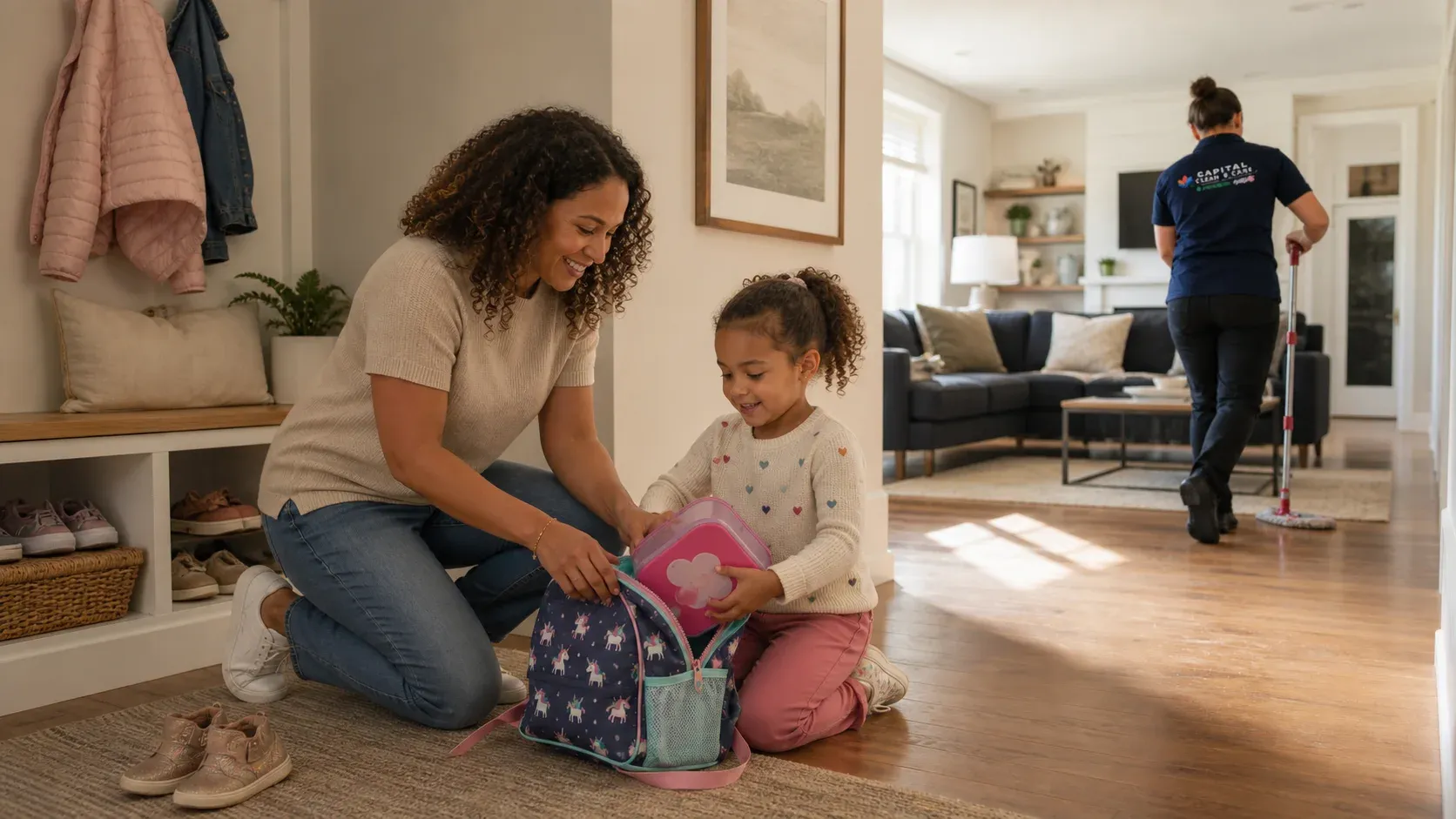
- Land in one zone. Put shoes, outerwear, backpack, and lunch box in a consistent washable or easy-to-vacuum area.
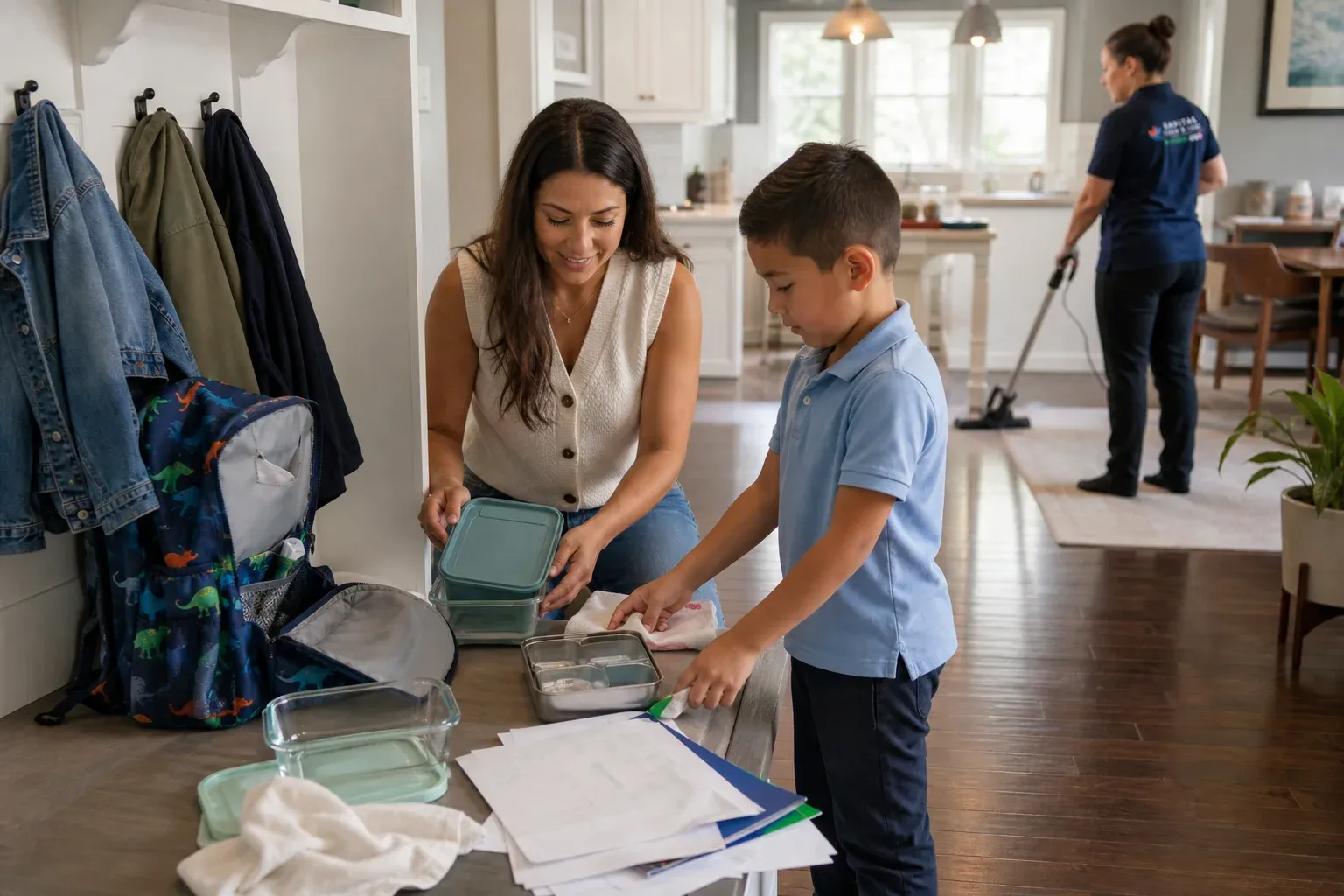
- Open the lunch box first. An adult should remove leftovers and used packaging. USDA recommends using cold sources for perishable lunches and discarding leftovers and used disposable packaging after lunch.
- Move reusable pieces to washing. Keep food-container cleaning separate from wiping the bag itself and follow each container's instructions.
- Check every backpack pocket. Look for food, wet clothing, leaking bottles, art materials, and teacher notes—not just the main compartment.
- Respond to the problem you found. Blot a leak, remove loose soil, or isolate a stained item. A clean, dry bag does not need a daily deep wash.
- Dry before repacking. Prop open compartments so seams, padding, and insulation can release moisture.
- Wash hands. CDC identifies school hand-hygiene programs as an important health practice; cleaning a bag is not a substitute.
Read the full USDA bag-lunch safety guidance and CDC school and early-care hand-hygiene guidance for the separate food-safety and handwashing steps.
Capital Clean Care
Let the daily reset stay small
Capital Clean Care can maintain the floors, bathrooms, kitchen, dust, and common areas while your family handles backpacks, lunch boxes, and tomorrow's school essentials.
How to Clean a Backpack Without Damaging It
The care label is the decision-maker. “Backpack” is not one material: padding, waterproof coatings, leather trim, reflective details, printed decoration, glued seams, rigid frames, and electronics change what the item can tolerate.
- Empty every pocket and remove detachable inserts or accessories only as the maker directs.
- Shake out or vacuum dry crumbs and grit before adding moisture.
- Spot-test a label-approved cleaner in an inconspicuous area.
- Treat visible stains without scrubbing coatings or printed details aggressively.
- Hand-wash or machine-wash only when the care instructions permit it.
- Open pockets and air-dry completely; avoid heat unless the label explicitly allows it.
Never combine cleaners or improvise with bleach, vinegar, essential oils, or another “natural” recipe without confirming compatibility. A method that works on plain canvas may damage insulation, dyes, water-resistant finishes, or hardware.
How to Clean a Lunch Box or Insulated Lunch Bag
Emptying the lunch box daily matters more than applying the strongest product. Remove loose crumbs, clean food residue from the interior, seams, corners, zipper track, handle, and exterior using the manufacturer's method, then dry the bag fully open.
| What you find | What to do | What not to assume |
|---|---|---|
| Dry crumbs | Empty or vacuum; wipe as the label permits | A full wash is automatically required |
| Fresh leak | Remove residue, clean promptly, inspect seams, dry open | Fragrance means the source is gone |
| Forgotten food | Discard safely, clean containers and bag separately | The food is safe because it looks normal |
| Persistent odor or damaged lining | Re-clean per label; contact maker or replace if needed | More product will solve trapped contamination |
Do not submerge an insulated bag or put it in a washing machine unless the label says you can. If a liner is cracked, foam remains wet, visible growth cannot be removed, or odor returns after appropriate cleaning and drying, replacement may be safer and more practical.
Do You Need to Disinfect Everything After Preschool?
No—not as an automatic daily rule. Cleaning removes dirt and many germs; sanitizing and disinfecting are different processes with different product directions. CDC says cleaning is usually enough in most homes unless someone is sick or there is a specific contamination concern. Spraying a backpack without checking compatibility can expose a child to residue and damage the item without addressing hand hygiene or food safety.
For illness or a known exposure, follow the preschool's instructions, the item's manufacturer, and applicable public-health guidance. The American Academy of Pediatrics explains the distinction among cleaners, sanitizers, and disinfectants. If using a product, follow its label for surface type, ventilation, contact time, rinsing, and child access.
- Never mix cleaning products or transfer them to food or drink containers.
- Keep products in original labeled containers, locked and out of sight and reach.
- Keep children away while a product is used and until the label says the area or item is ready.
- Use the EPA Safer Choice database to find products evaluated against its criteria—but still follow the label.
- For a suspected exposure in the United States, contact Poison Control at 1-800-222-1222 or Poison.org.
Sources: CDC home cleaning and disinfecting guidance, EPA Safer Choice products, and Poison Control. This is general household information, not medical advice.
Keep the Entryway and Home Routine Realistic
The backpack system works best when the surrounding home has a stable baseline. Use a washable mat, hooks at adult and child height, one paper inbox, and a bin for items returning to school. Sweep or vacuum tracked-in grit based on visible soil and traffic—not because preschool creates a universal floor schedule.
| Handle daily | Handle as needed | Good to delegate |
|---|---|---|
| Food, wet clothes, leaks, containers, papers, handwashing | Backpack wash, lunch-bag detail, entry mat, visible floor soil | Recurring floors, bathrooms, kitchen, dusting, and common areas |
Professional cleaning should not promise to “germ-proof” a family. Its real value is time and consistency. Capital Clean Care's recurring cleaning maintains the repeat work around the routine; kitchen cleaning and house cleaning give parents a clearer baseline; and families interested in our approach can explore eco-friendly cleaning services.
We serve families across Montgomery County, Maryland—including Bethesda, Rockville, Silver Spring, Gaithersburg, and Germantown—as well as Washington, DC, and Northern Virginia.
Where This Fits in the Family Life-Stage Series
When babies begin moving, our crawling-stage floor guide focuses on floor type, product labels, and realistic frequency. The working-parents' toddler schedule expands to food, toys, bathrooms, pets, and weekly zones. This preschool guide adds the school-to-home transition; the next step is our realistic cleaning routine for families with school-age kids, including age-appropriate chores and a flexible weekly plan.
Frequently Asked Questions
Can you wash a backpack in the washing machine?
Only if the backpack's care label allows it. Empty every pocket, remove detachable parts, close or protect hardware as directed, and use the specified cycle and detergent. Backpacks with leather, rigid frames, electronics, coatings, or delicate decoration may require spot or hand cleaning instead. Air-dry completely unless the manufacturer explicitly permits a dryer.
How do you clean a backpack without ruining it?
Start with the care label. Empty and shake or vacuum out debris, test any cleaner on a hidden area, and use the least aggressive label-approved method. Avoid soaking foam, coatings, leather, electronics, or glued details unless the maker permits it. Do not mix products, and let every pocket and seam dry fully before repacking.
How often should you clean a child's backpack?
There is no universal medical schedule. Empty it daily, address food, liquids, wet clothing, and visible soil promptly, and give it a fuller clean when visibly dirty, odorous, or allowed by its care instructions. Household routine, spills, weather, and the backpack's material matter more than an arbitrary weekly rule.
How do you clean a lunch box or insulated lunch bag?
Empty it after each use and follow its care label. Remove crumbs and food residue, clean seams, corners, zipper areas, and the interior with a material-appropriate method, then leave it fully open to air-dry. Wash reusable food containers separately according to their instructions.
Can a lunch box go in the washing machine?
Some soft lunch bags can, but many insulated liners, rigid inserts, printed finishes, and glued seams cannot. Check the manufacturer's label or website before machine washing. When instructions are unavailable, use a cautious surface-cleaning method, avoid saturating insulation, and air-dry the bag fully open.
How do you remove odor from a backpack or lunch box?
First remove the source: discarded food, residue, damp fabric, or a spill hidden in a seam or pocket. Clean with the label-approved method and provide full airflow until completely dry. If odor persists, the lining is damaged, or contamination cannot be removed safely, replacement may be the more practical choice.
What should you do if food was forgotten in a lunch box?
Discard unsafe leftovers and used disposable packaging, as USDA advises for bag lunches. Remove residue without touching other food-preparation items, wash reusable containers, clean the bag according to its care label, and let it dry fully open. Replace a damaged liner or item that cannot be cleaned adequately.
Do you need to disinfect a backpack every day after preschool?
Usually, no. Routine cleaning and handwashing are the everyday foundation; disinfecting is a separate step for specific illness or contamination situations and must be compatible with the item. Follow school guidance, product labels, and the backpack manufacturer's instructions rather than spraying the bag automatically each day.
How do you prevent mildew in a lunch box or backpack?
Empty wet items promptly, clean spills, avoid closing damp pockets or insulated compartments, and dry the item fully open with good airflow. Do not repack until seams and padding are dry. If visible growth remains or a damaged lining traps moisture, consult the manufacturer or replace the item.
Can cleaning backpacks and lunch boxes prevent preschool illnesses?
No cleaning routine can promise to prevent illness. Cleaning removes soil and food residue, while hand hygiene and food-safety practices address different risks. Follow CDC guidance and your school's health policies, and ask your child's pediatrician about illness-prevention guidance specific to your child or setting.
Reset the School Items. Let Us Reset the Home.
Request a free quote for recurring house cleaning in Montgomery County, Washington, DC, or Northern Virginia.