
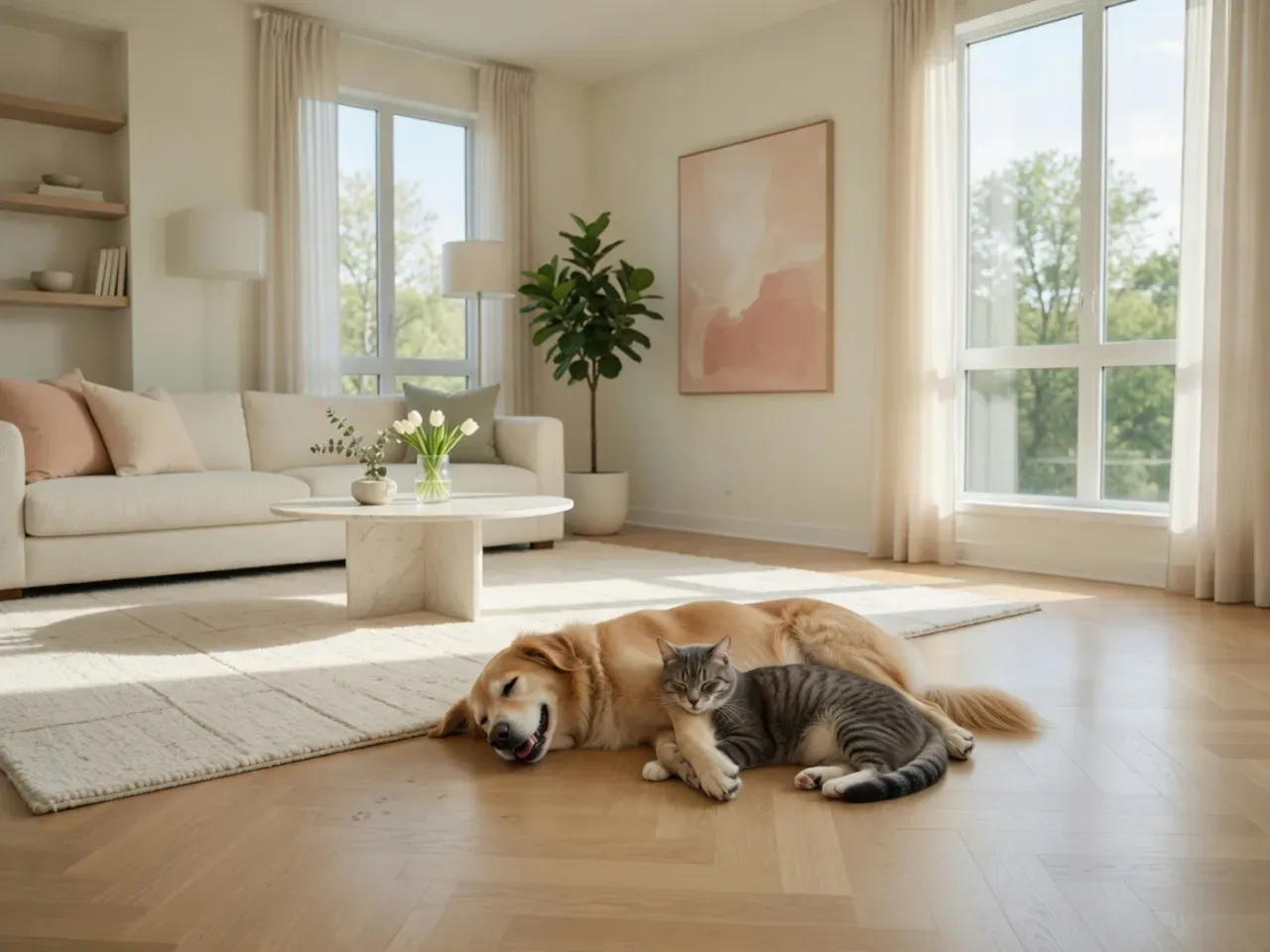
If someone in your home sneezes through allergy season, or your pet scratches and coughs no matter what you try, the house itself is usually part of the story. Homes with dogs and cats accumulate four main allergens — pet dander, dust mites, pollen, and mold — and they build up in predictable places. The encouraging part: every one of them responds to routine. You can't make a pet home literally allergen-free, but you can make it allergen-controlled, and the difference is night and day.
This is the complete guide: the four allergens and where they hide, the four habits that lower them the most, a clear cleaning cadence you can actually follow, and when to bring in a deep clean. It pulls together the details from our companion guides on pet dander and air quality, household dust and your pet's lungs, and pet skin allergies and carpet.
The Four Allergens in Every Pet Home
Pet dander
Microscopic skin flakes (2.5–10 microns) carrying saliva and skin-oil proteins. Light enough to stay airborne for hours and coat every surface — the breed doesn't matter, the cleaning does.
Dust mites
Tiny organisms that live in carpet, bedding, and upholstery, feeding on shed dander. Their waste is a leading allergen and they thrive above 50% humidity.
Pollen
Tracked in on paws and fur, it settles into fibers and doesn't break down — which is why indoor pets and people can react to 'outdoor' allergens year-round.
Mold spores
Flourish in damp, humid spots — bathrooms, basements, around windows. Spores ride the same air currents as dander and dust.
They share one weakness — humidity. Three of the four (dust mites, mold, and the dust that carries dander and pollen) are suppressed by keeping indoor humidity at 30–50%. It's the highest-leverage setting in the whole house.
Where Allergens Hide — Room by Room
The bedroom
Mattresses, your bedding, and the pet bed are the most concentrated dust-mite and dander reservoirs in the house — and you breathe them for hours each night. Highest priority for hot-water washing and HEPA filtration.
Living-room soft surfaces
Sofas, throw pillows, drapery, and area rugs trap dander and dust deep in their fibers. Vacuuming the floor but skipping the couch leaves most of the load in place.
Carpet and along baseboards
Deep-pile carpet is the biggest single reservoir; allergens also drift and bank up along baseboards and in corners where airflow drops.
Damp zones
Bathrooms, basements, laundry areas, and around leaky windows grow mold. Ventilation and humidity control matter as much as scrubbing here.
The HVAC system
A neglected furnace filter and dusty ducts recirculate every allergen through the entire home. The filter is cheap leverage most people forget.
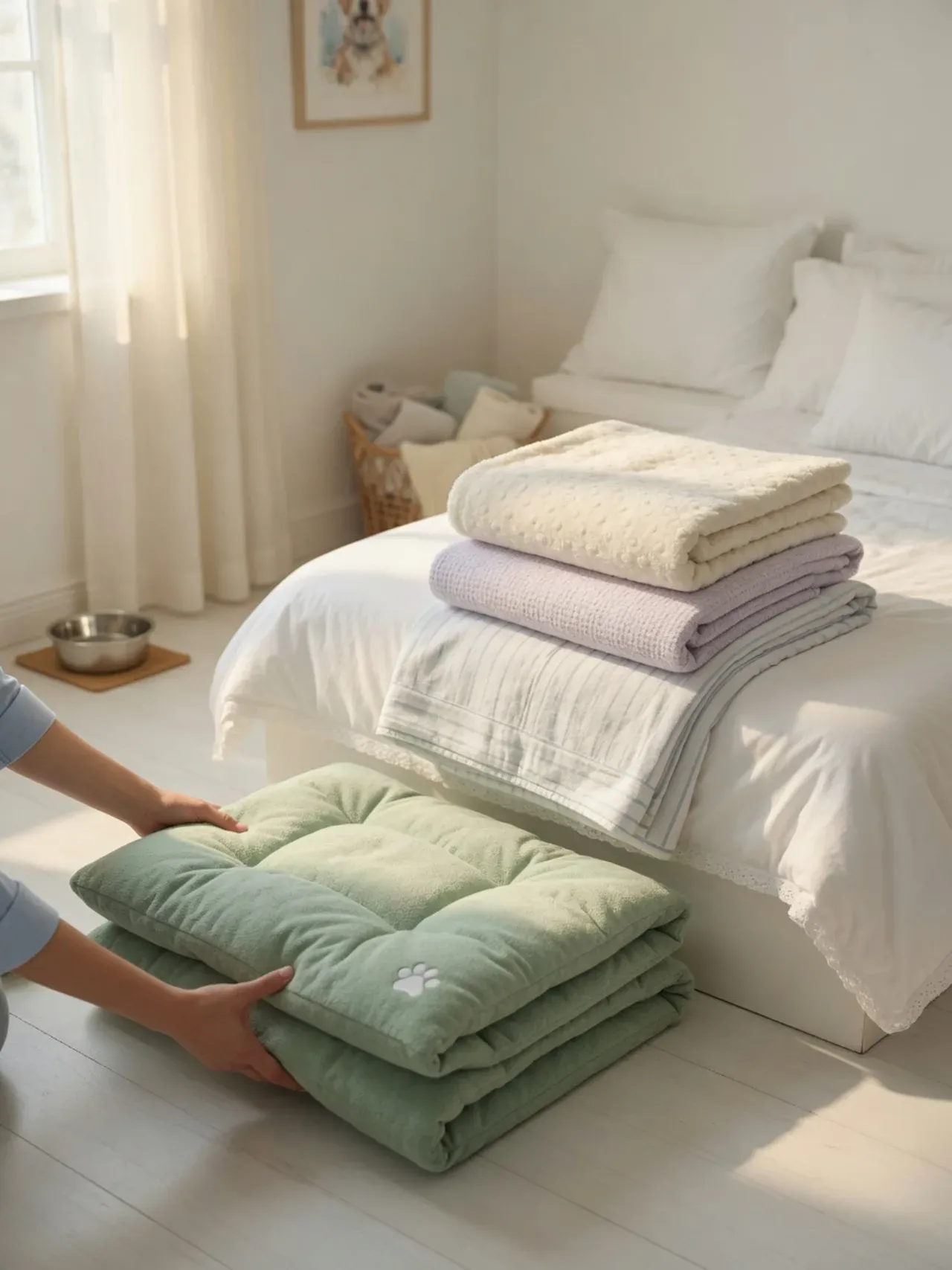
Pet bedding is the #1 allergen reservoir — hot-water washing weekly is the highest-impact habit in the whole guide.
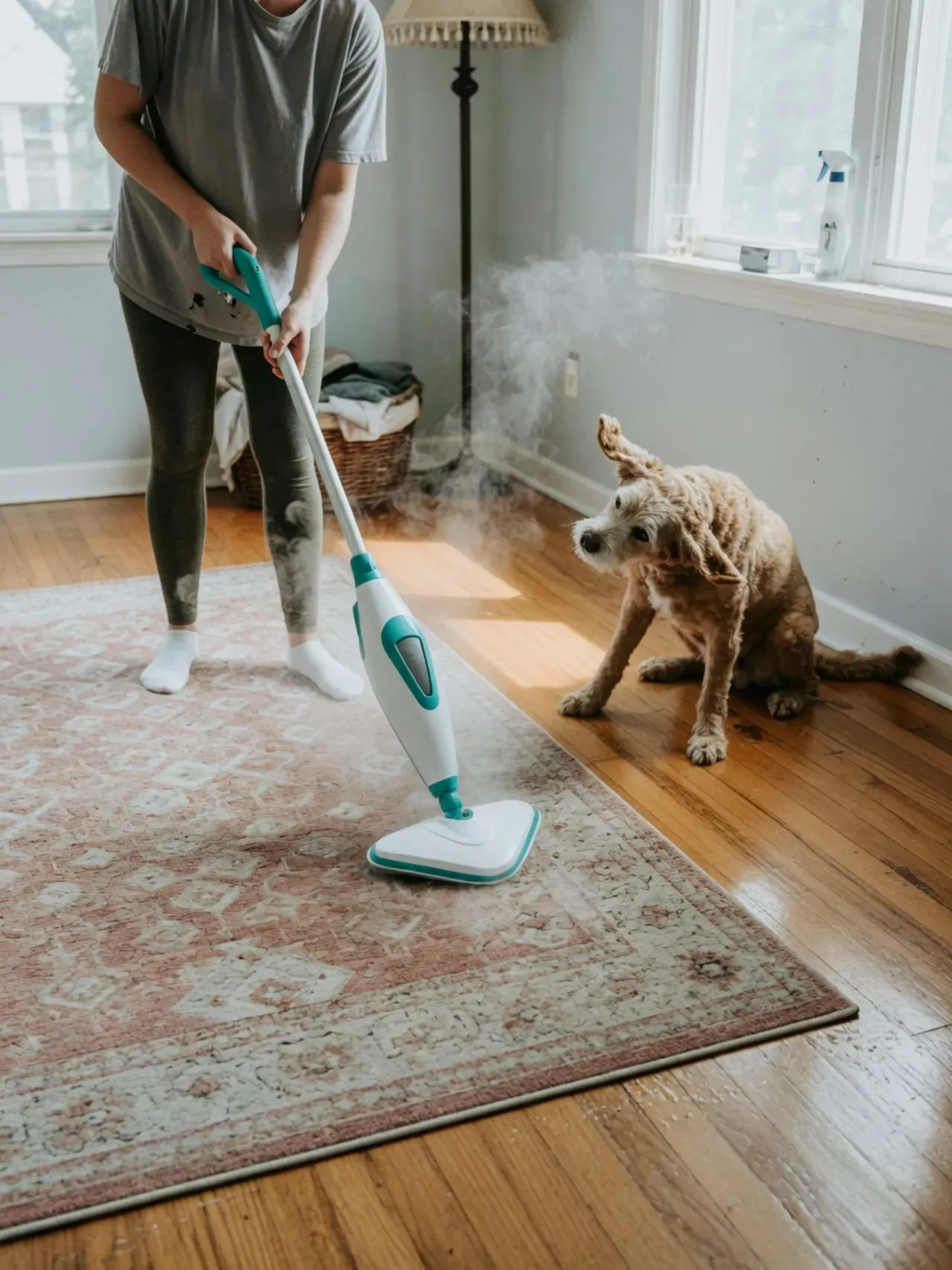
Hard floors and low-pile rugs that get steam-cleaned hold far fewer allergens than deep carpet left uncleaned.
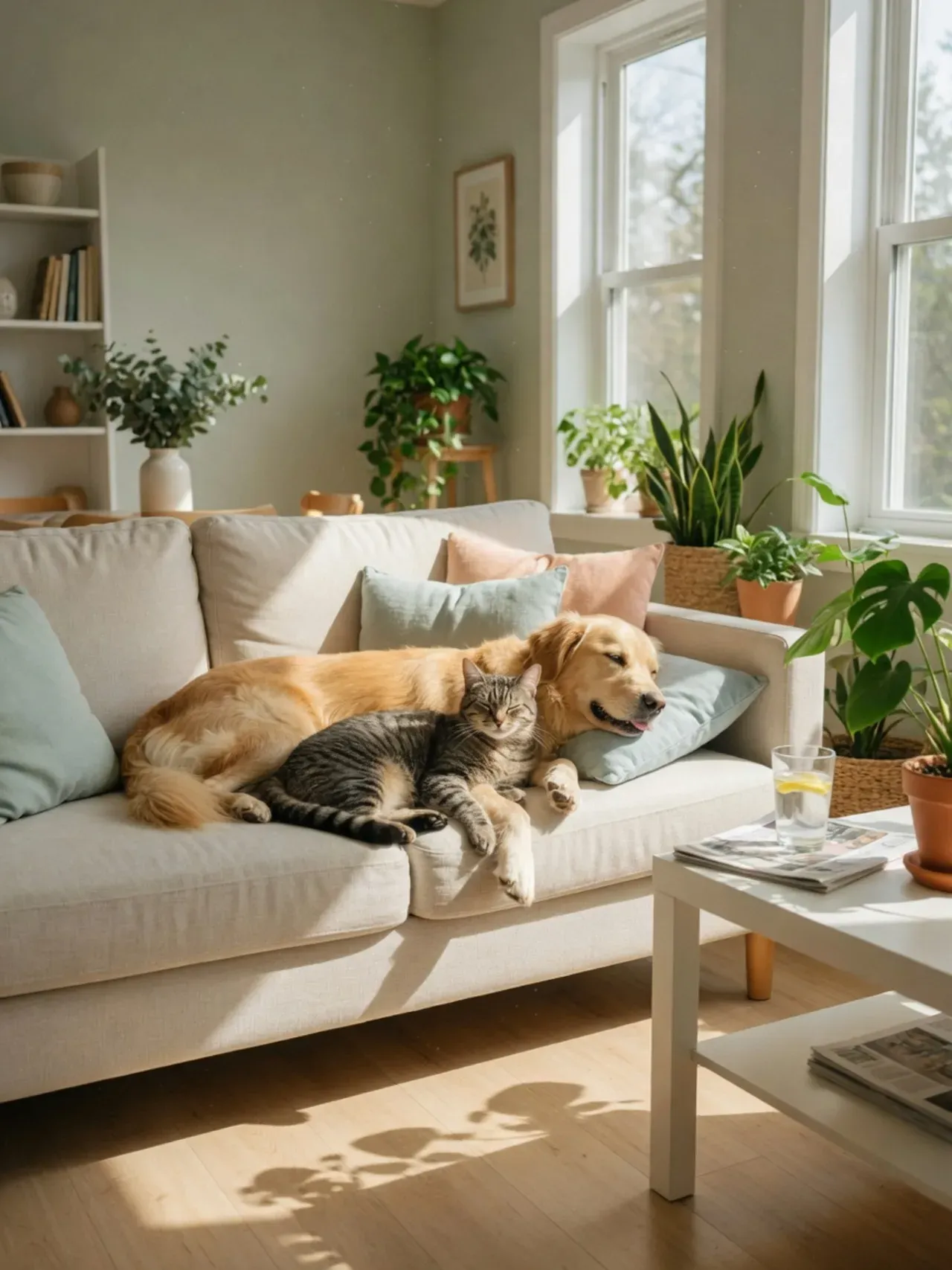
The payoff: a calmer, lower-allergen home for the whole household — humans and pets alike.
The Four Habits That Lower Allergens Most
In order of impact
Control humidity to 30–50% to starve dust mites
Dust mites — a top allergen — can't survive in dry air. Run AC or a dehumidifier to hold indoor humidity between 30 and 50%, and use bathroom and kitchen exhaust fans. In the humid DMV summer this single setting quietly suppresses mite populations in carpet, bedding, and upholstery across the whole house.
Attack the bedding — yours and your pet's — weekly in hot water
Pet beds, blankets, and the throws on furniture your pet uses hold the most concentrated dander and dust-mite allergen anywhere in the home. Wash them weekly in hot water (130°F+) and dry fully; consider allergen-impermeable covers on mattresses and pet beds. This is the highest-return habit in the entire routine.
Choose hard floors or steam-cleaned low-pile carpet
Bare floors (hardwood, tile, vinyl) hold the fewest allergens and wipe clean. If you keep carpet, low-pile is far easier to keep allergen-low than deep plush — and the key is genuine deep cleaning: hot-water extraction every 3–4 months pulls out the embedded dander and mite matter that vacuuming leaves behind. Vacuum 2–3 times a week with a sealed HEPA machine in between.
Filter the air and clean with fragrance-free products
Run true-HEPA air purifiers in the bedroom and main living area, replace HVAC filters on schedule, and damp-wipe hard surfaces instead of dry-dusting. Throughout, use only plant-based, fragrance-free, low-residue cleaners — your pet lies on the floor and licks their paws, so scented residue and harsh chemicals become a new irritant on already-sensitive skin and airways.
Your Allergen-Control Cleaning Cadence
Daily / every other day
HEPA-vacuum the rooms your pet uses; wipe food-area floors; quick lint-roller on favorite furniture.
Weekly
Hot-water wash pet bedding, blankets, and throws; damp-wipe hard surfaces, sills, and baseboards; HEPA-vacuum all soft furniture.
Monthly
Wash or replace HVAC filter; launder curtains or wipe blinds; rotate and wash removable couch covers; clean air-purifier pre-filters.
Every 3–4 months
Deep clean: hot-water carpet extraction and upholstery cleaning to empty the embedded dander and dust-mite reservoir.
Capital Clean Care
The quarterly deep clean is the hard part — let us handle it
Capital Clean Care resets the embedded allergen reservoir with hot-water carpet and upholstery extraction, using pet-safe, fragrance-free products across Bethesda, Rockville, Silver Spring, and Gaithersburg. Background-checked, eco-certified teams.
Mistakes That Quietly Undo Your Work
- Letting humidity drift above 50% — it re-grows dust mites and mold no matter how much you clean
- Cleaning floors but never the pet bed, couch, or drapery — that's where most of the allergen load lives
- Using a filterless vacuum — it re-aerosolizes everything you just tried to remove
- Masking with scented sprays and 'fresh' powders — fragrance and residue irritate sensitive skin and airways
- Forgetting the HVAC filter — it recirculates allergens through the whole house between cleanings
Pet-safe products are non-negotiable in a pet home
An allergen-control routine fails if the cleaning itself adds irritants. Because your pet lies on the floor and licks their paws, our eco-friendly cleaning uses only plant-based, fragrance-free, low-residue products — safe for the family member closest to every surface.
When to Bring in Help
- Symptoms (yours or your pet's) persist despite a consistent routine — embedded reservoirs in carpet and upholstery are the likely holdout
- A pet with diagnosed allergies, asthma, or recurring ear/skin infections — keep the environmental trigger load as low as possible alongside vet care
- Carpet or upholstery that hasn't been hot-water extracted in over a year — there's a deep reservoir to reset
- You can't keep the weekly and quarterly tasks going on your own — a professional deep clean handles the heavy reset
Capital Clean Care's deep cleaning service resets the allergen load in carpet, upholstery, and pet areas with pet-safe protocols across Maryland, DC, and Northern Virginia.
Frequently Asked Questions
An Allergen-Controlled Home, Without the Heavy Lifting
Capital Clean Care provides deep cleaning and eco-friendly cleaning for pet families across Maryland — Bethesda, Rockville, Silver Spring, Gaithersburg, and Potomac. Pet-safe, fragrance-free, background-checked.
Licensed, insured, and locally owned. Montgomery County, MD.