
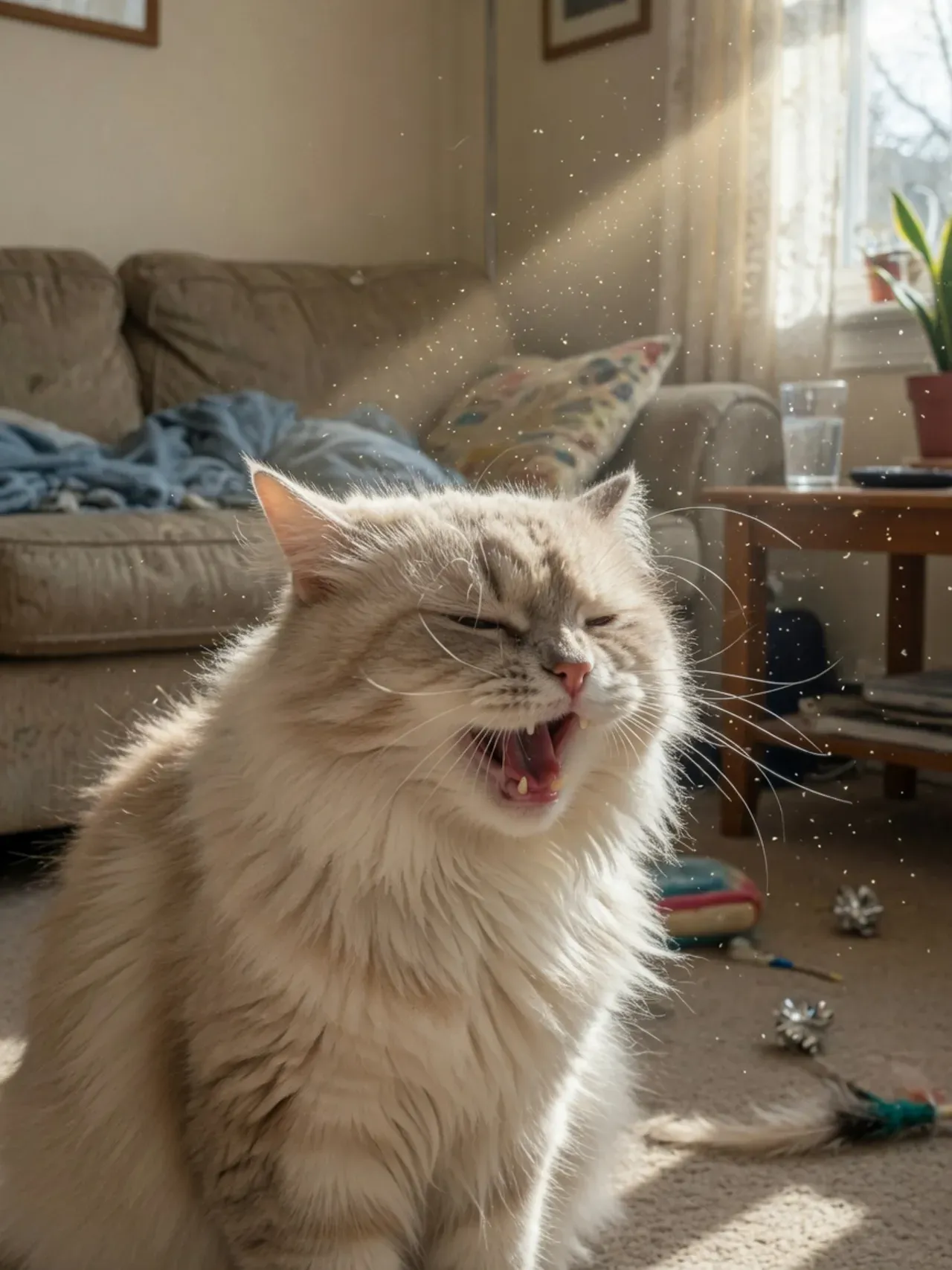
An occasional sneeze from a dog or cat is normal. But a pet that sneezes in bouts, snorts, sniffles, or develops a dry, hacking cough may be reacting to something you can't see — the house dust settled at their level. Pets live low to the ground, where dust concentrates, so they breathe a heavier dose of it than anyone standing up in the same room.
That "dust" isn't just dirt. It's a mix of dust-mite waste, pet dander, pollen, and mold spores — all of which veterinarians recognize as inhalant allergens for dogs and cats. For some pets it means sneezing and runny eyes; for cats especially, airborne irritants can trigger or worsen feline asthma. Here's how to read the signs, when it's a vet visit, and the cleaning that lowers what your pet is breathing.
What's Really in the Dust Your Pet Breathes
Dust-mite waste
Microscopic mites live in carpet, bedding, and upholstery, feeding on shed skin and dander. Their waste particles are one of the most common inhalant allergens — and they thrive in humid Maryland summers.
Dander & pollen
Your pet's own dander plus pollen and mold tracked in on paws and fur settle into the same low surfaces, building a fibrous reservoir of airway irritants right where they rest.
It sits low
Dust drifts downward and concentrates near the floor — at nose height for a dog or cat. Standing humans breathe far less of it than the pet napping on the rug.
The humidity link: dust mites can't survive in dry air. Keeping indoor humidity between 30–50% is one of the most effective, least obvious ways to cut the airway allergens your pet inhales — especially through a humid DMV summer.
Sneeze, Reverse Sneeze, or Cough? How to Read It
Not all of these mean the same thing. Knowing the difference helps you decide what needs a vet now versus what dust control can ease:
Occasional sneezing
A normal nose-clearing reflex. If it spikes in dusty conditions or after sweeping, it's likely irritant-driven and responds well to lowering the dust load.
Reverse sneezing (snorting fits)
Sudden, repeated snorting inhales — most common in dogs and often set off by dust or strong scents. Usually brief and harmless, but frequent episodes are worth mentioning to your vet.
Runny eyes or nose
Clear discharge can accompany inhalant allergies. Colored or thick discharge, though, points to infection and needs veterinary attention.
A dry, hacking cough — especially in cats
A crouched, neck-extended cough that produces no hairball can be feline asthma, not digestion. This is the sign to take seriously.
Wheezing or labored breathing
Any open-mouth breathing (in cats), wheezing, or visible effort to breathe is urgent — see a vet right away.
This is not a diagnosis. Feline asthma, chronic bronchitis, infections, and other conditions share these signs. Persistent coughing, wheezing, or any breathing difficulty needs a veterinarian. Cleaning lowers the controllable triggers alongside whatever treatment your vet prescribes.
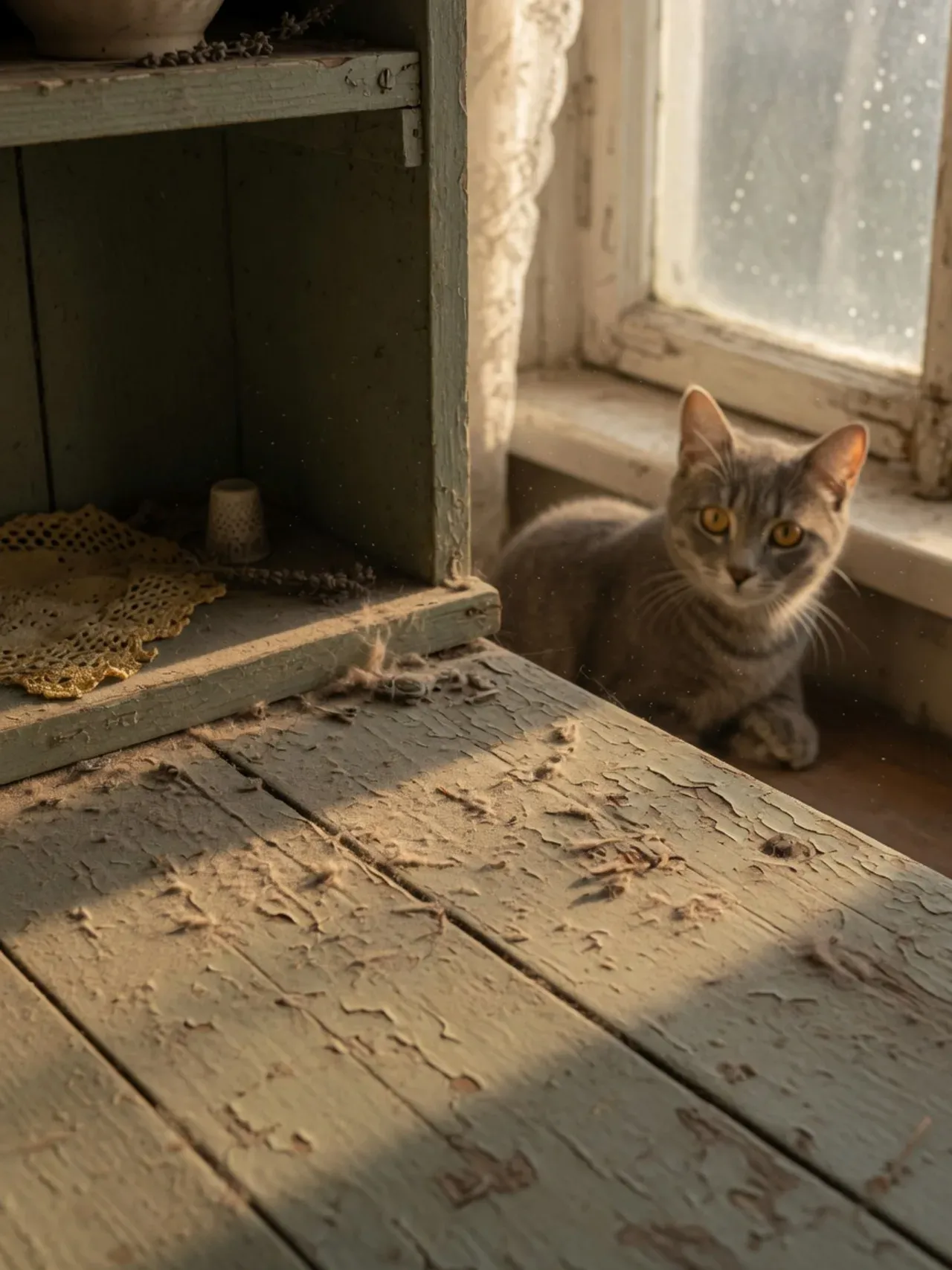
House dust is a mix of dust-mite waste, dander, and pollen — and it concentrates low to the ground, right at pet-breathing height.
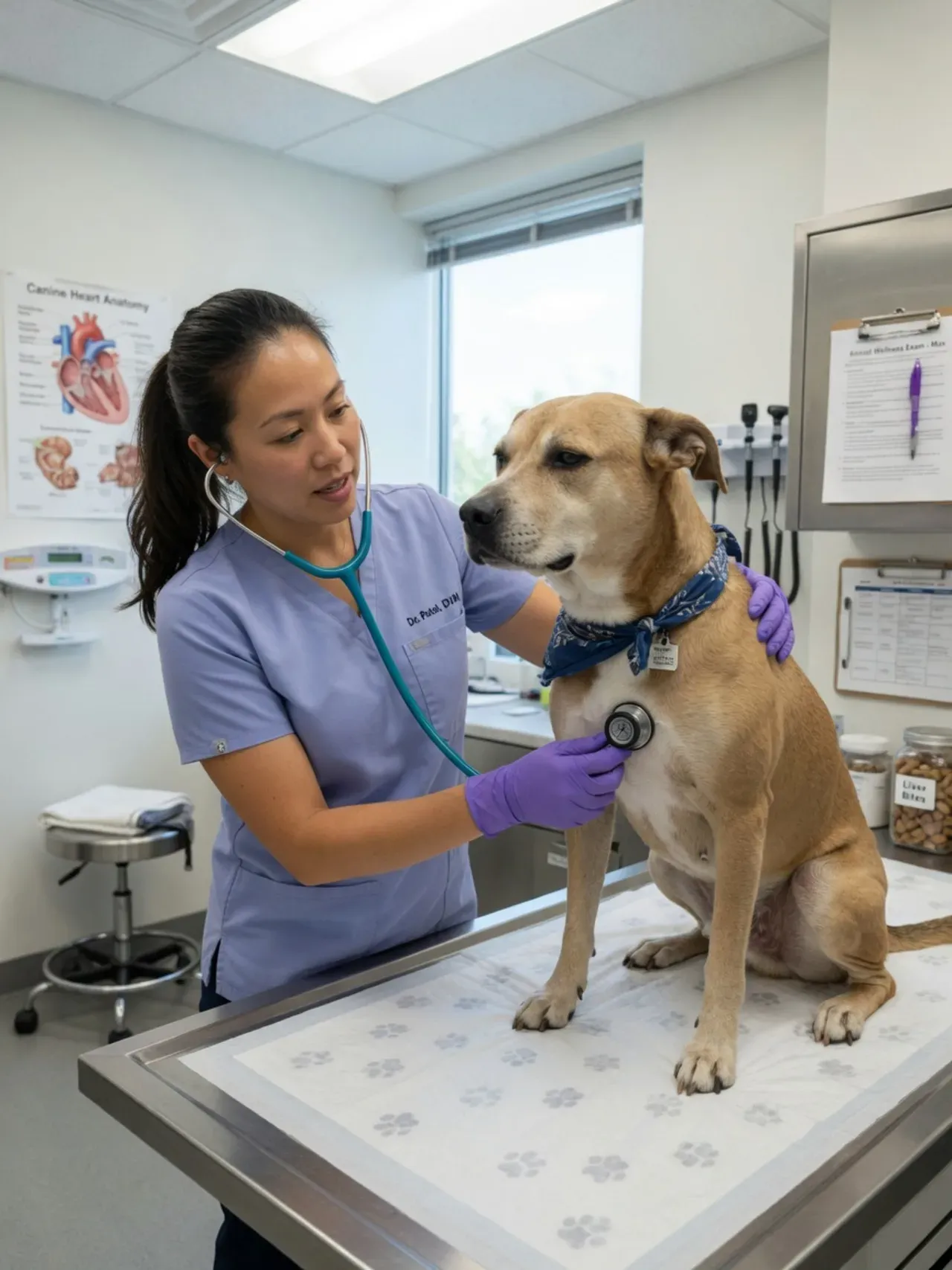
Persistent coughing, wheezing, or reverse sneezing always warrants a vet visit — dust control supports treatment, it doesn't replace it.
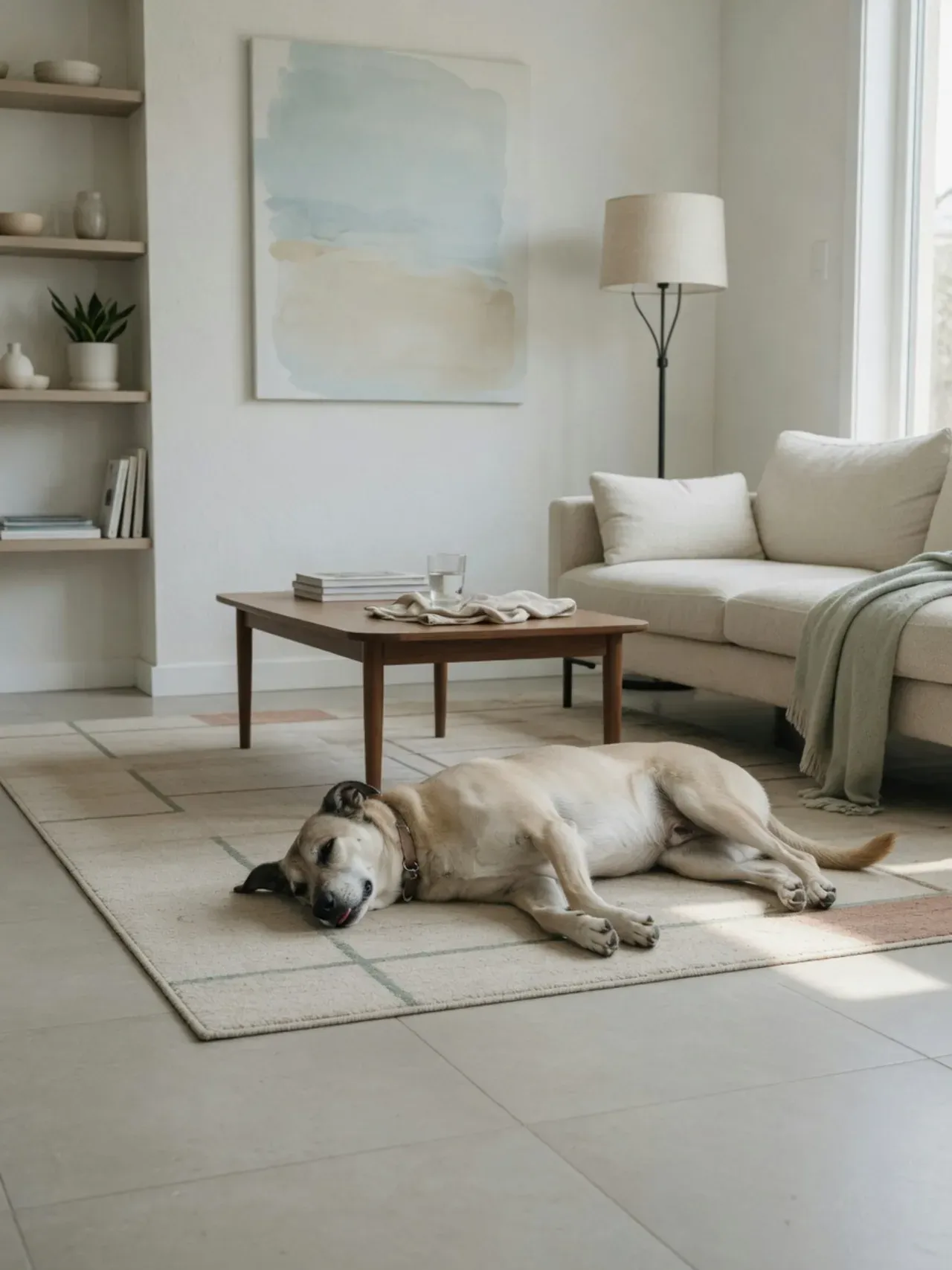
A low-dust home is one of the few respiratory triggers you can directly control for your pet.
The Cleaning Routine That Helps Your Pet Breathe
Lower the dust at pet level — and keep it low
Vacuum low surfaces daily during flare-ups with a HEPA vacuum
House dust settles low — exactly where your pet breathes, sleeps, and plays. During a flare, vacuum floors, rugs, and low upholstery daily (every other day otherwise) with a sealed HEPA vacuum so the fine dust is captured instead of blown back into the air. Pay attention to the spots your pet favors: their bed, the base of the couch, and along baseboards where dust drifts and collects.
Wash pet bedding weekly in hot water and cut the humidity
Your pet's bed is the most concentrated source of dust-mite allergen in the house. Wash it — plus blankets and any soft toy they sleep with — weekly in hot water (130°F+) to kill mites, and dry fully. Keep indoor humidity at 30–50% with AC or a dehumidifier, because dust mites can't survive in dry air. In humid Maryland summers, humidity control alone meaningfully drops the mite load your pet inhales.
Filter the air your pet breathes
Run a true-HEPA air purifier in the room where your pet spends the most time and sleeps, and replace your HVAC filter on schedule with a higher-rated filter your system supports. A true-HEPA unit captures 99.97% of particles down to 0.3 microns — well below the size of dust, dander, and pollen — so it pulls the inhalant triggers out of the air rather than recirculating them.
Reduce dust reservoirs and use only fragrance-free products
Dust hides in soft, fibrous things: heavy drapery, clutter, deep-pile rugs, and never-cleaned upholstery. Reduce what you can, damp-wipe hard surfaces instead of dry-dusting, and deep-clean carpets and upholstery periodically. Critically, avoid scented sprays, plug-ins, and harsh cleaners — fragrance and VOCs are themselves airway irritants for a pet with sensitive lungs. Clean with plant-based, fragrance-free products.
Capital Clean Care
A low-dust home is one trigger you can actually control
Capital Clean Care deep-cleans carpets, upholstery, and the dust reservoirs near pet level — with pet-safe, fragrance-free products — across Bethesda, Rockville, Silver Spring, and Gaithersburg. Background-checked, eco-certified teams.
Habits That Make Your Pet's Breathing Worse
- Dry-sweeping or feather-dusting — it kicks settled dust back into the air your pet is breathing
- Letting humidity climb above 50% — it lets dust mites multiply, especially in summer
- Skipping the pet's bed — it's the single most allergen-dense spot they breathe all night
- Using scented sprays, plug-ins, or harsh cleaners near a coughing pet — fragrance and VOCs are airway irritants
- Assuming a cat's cough is 'just hairballs' — it can be asthma that needs treatment
Fragrance-free matters most for sensitive lungs
For a pet with airway sensitivity, the wrong cleaner adds irritation instead of removing it. That's why our eco-friendly cleaning uses only plant-based, fragrance-free, low-residue products. Related reading: how pet dander wrecks your air quality.
When to Get Help
- Coughing, wheezing, or any labored breathing — see your vet promptly; this needs medical evaluation
- A cat with a recurring crouched, hacking cough — rule out feline asthma
- Symptoms that ease when you're away from home and return indoors — a strong environmental-trigger signal
- Carpet and upholstery that haven't been deep-cleaned in months — the dust reservoir likely needs a reset
Capital Clean Care's deep cleaning service lowers the dust and allergen load in carpet, upholstery, and pet areas with pet-safe protocols across Maryland, DC, and Northern Virginia — so your vet's plan has the best chance to work.
Frequently Asked Questions
Help Your Pet Breathe Easier
Capital Clean Care provides deep cleaning and eco-friendly cleaning for pet families across Maryland — Bethesda, Rockville, Silver Spring, Gaithersburg, and Potomac. Pet-safe, fragrance-free, background-checked.
Licensed, insured, and locally owned. Montgomery County, MD.