
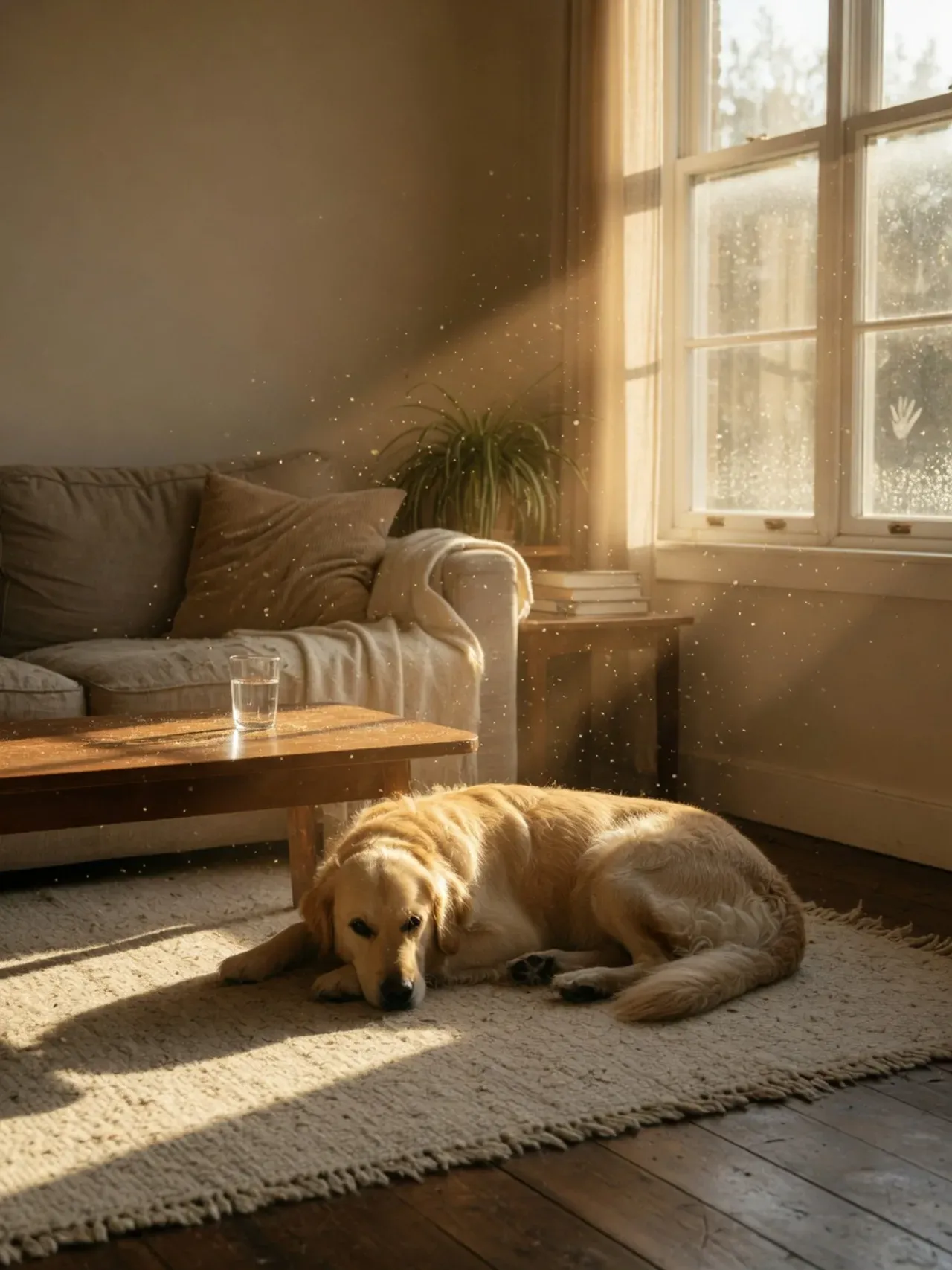
Hold a beam of afternoon sunlight in a room where a dog or cat lives and you'll see it: a slow, drifting haze of fine particles that never quite settles. Most of it is pet dander — and it's the single biggest reason the air in a pet home feels different, smells different, and triggers allergies even when every surface looks spotless.
The reason dander is so hard to beat comes down to size. Pet dander is roughly 2.5 to 10 microns — for comparison, a human hair is about 70 microns wide. Particles that small are so light they stay airborne for hours, ride every air current, and get pulled through your HVAC system into rooms your pet has never even entered. Here's what dander actually is, why it dominates your indoor air, and the routine that genuinely lowers it.
What Pet Dander Actually Is (and Why Hair Isn't the Problem)
It's skin, not hair
Dander is microscopic flakes of dead skin your pet sheds constantly — coated with the proteins from saliva and skin oils that are the actual allergen. You can vacuum up hair; dander floats.
It's smaller than dust
At 2.5–10 microns, dander is far smaller than what the eye sees as 'dust.' It slips past cheap filters, stays suspended for hours, and recirculates through your air handler again and again.
It sticks to everything
Dander's proteins are slightly sticky, so it clings to walls, upholstery, drapery, and HVAC ducting — building an invisible reservoir that re-seeds the air every time the room is disturbed.
Why "hypoallergenic" breeds don't solve it: the allergen is the dander and saliva protein, not the fur — so even low-shedding dogs and cats produce it. The dander load in your home is controlled by how you clean, not by the breed you own.
How Dander Quietly Degrades Your Air
Dander rarely acts alone. It mixes with dust mites, pollen, and mold into one airborne load — and because it's the lightest of them, it's the part that keeps everything else circulating. Here's where it shows up:
Allergy symptoms that flare indoors
Sneezing, congestion, itchy eyes, or a scratchy throat that's worse at home — especially in the bedroom — is a classic dander signature, because you spend hours breathing settled-and-relaunched particles overnight.
A 'pet smell' that comes back fast
Odor molecules cling to the same dander and oils coating your soft surfaces. Spraying air freshener masks it; it returns because the source — the dander reservoir — is still there.
Dust that reappears a day after cleaning
If visible dust returns almost immediately, fine dander is being relaunched from upholstery and ducts that a surface clean never reached.
Your pet's own breathing
Dander, dust mites, and mold are inhalant allergens for animals too. Cats in particular can develop feline asthma, with coughing and labored breathing tied to airborne irritants.
If a person or pet has asthma, dander isn't just a comfort issue — it's a recognized respiratory trigger. Persistent coughing, wheezing, or breathing trouble (in people or pets) deserves a medical or veterinary evaluation; cleaning lowers the trigger load alongside that care.

Dander is so light it can stay airborne for hours — which is why a 'clean-looking' room can still be full of it.
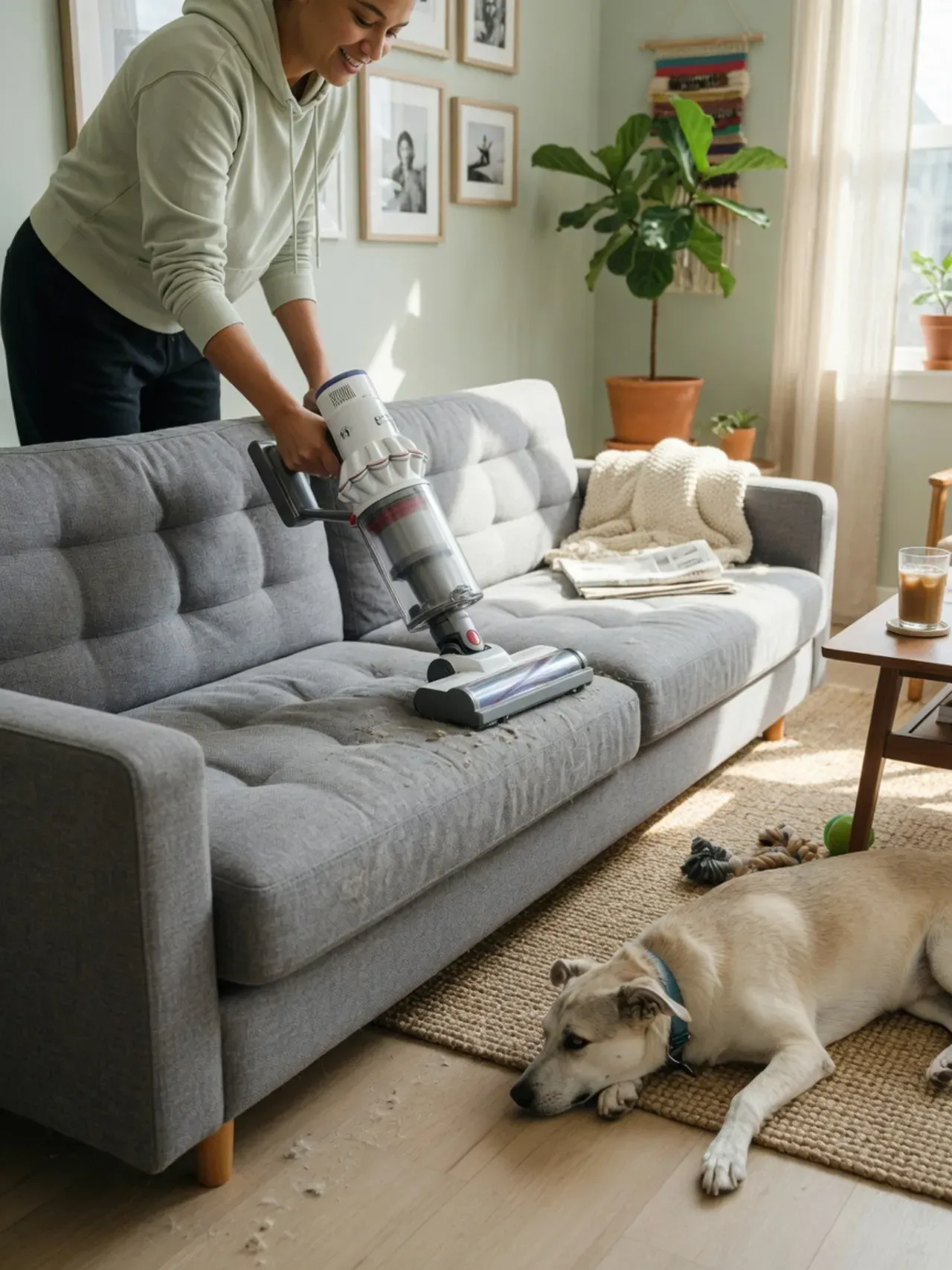
Dander hides in upholstery, drapery, and air returns — not just the floor. A sealed HEPA system is what actually traps it.
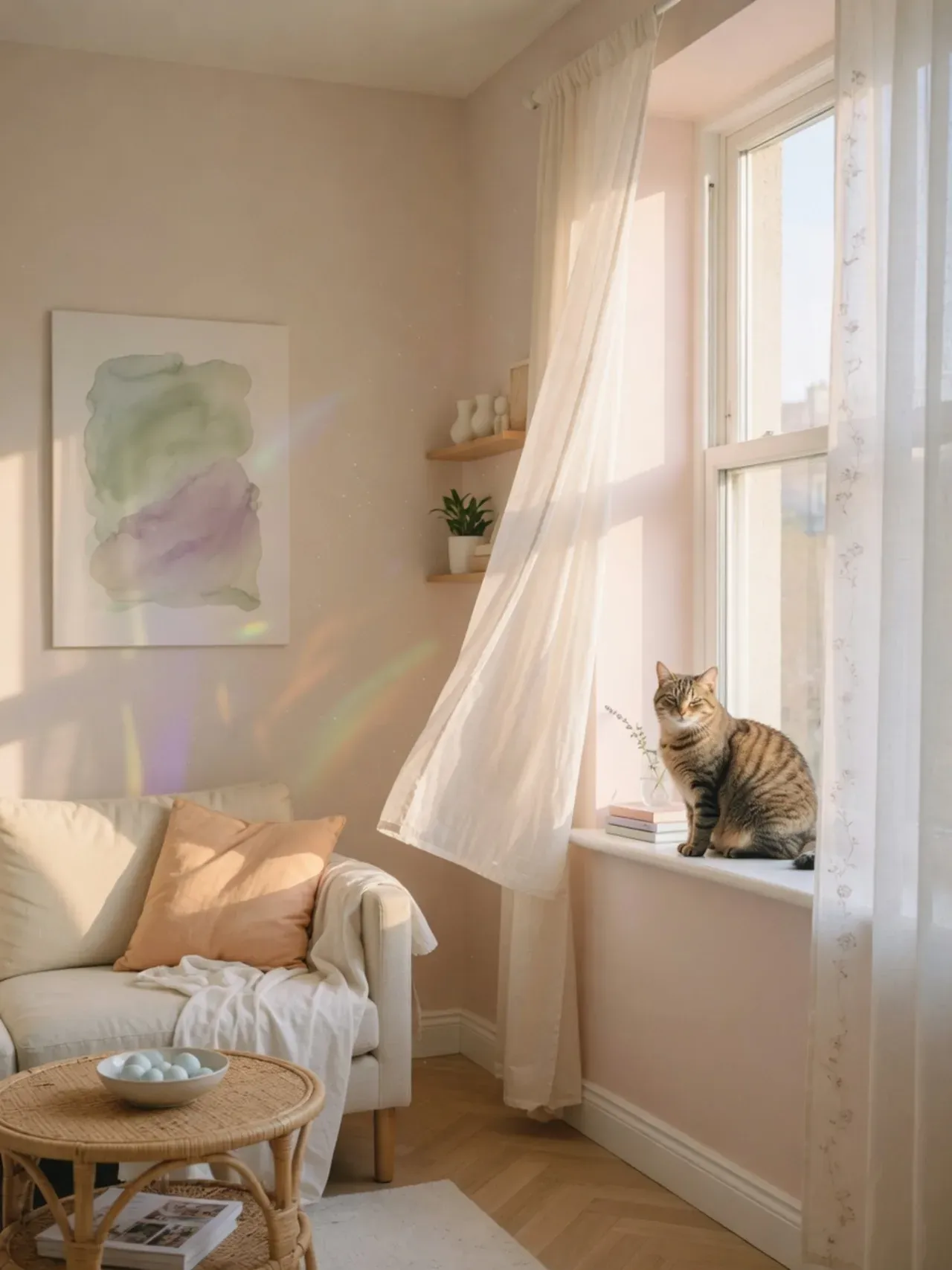
The goal: lower the dander load at the source so the air everyone breathes — including your pet — is genuinely cleaner.
How to Actually Eliminate Pet Dander
Capture it at the source, then filter what's left in the air
Vacuum surfaces — not just floors — twice a week with a true HEPA vacuum
Because dander is only 2.5–10 microns and feather-light, it settles on every horizontal surface, not just the carpet: sofas, curtains, bookshelves, and the tops of baseboards. A vacuum without sealed HEPA filtration pushes those fine particles straight back into the air through the exhaust. Use a true-HEPA vacuum with a brush and upholstery tool, and go over soft furniture and drapery — the upholstery is a dander reservoir most people never touch.
Wipe hard surfaces with a damp microfiber cloth — don't dry-dust
Dry dusting and feather dusters just relaunch dander into the air. A slightly damp microfiber cloth captures and holds the particles instead. Wipe shelves, window sills, baseboards, door tops, and electronics weekly. Microfiber's split fibers grab particles far smaller than a paper towel can, and you rinse the dander down the drain rather than scattering it.
Run a true-HEPA air purifier in the rooms your pet uses most
Cleaning removes settled dander; an air purifier captures what's still floating. A true-HEPA unit removes 99.97% of particles down to 0.3 microns — and pet dander is much larger than that, so a properly sized purifier excels at it. Place one in the bedroom and the main living area, run it continuously, and pair HEPA with an activated-carbon stage if odor is also a concern (carbon, not HEPA, is what neutralizes smell).
Wash bedding and control humidity to starve dust mites
Dander is also the food supply for dust mites, whose waste is a second airborne irritant. Wash pet beds, blankets, and your own bedding weekly in hot water (130°F+), and keep indoor humidity between 30–50% with AC or a dehumidifier — Maryland's humid summers otherwise let mites thrive. Lowering humidity and laundering on a schedule cuts both the dander and the mite load at once.
Capital Clean Care
Dander hides where a weekly vacuum can't reach
Capital Clean Care deep-cleans carpets, upholstery, and the spots dander collects — with pet-safe, fragrance-free products — across Bethesda, Rockville, Silver Spring, and Gaithersburg. Background-checked, eco-certified teams.
Mistakes That Keep Dander Airborne
- Using a vacuum without sealed HEPA filtration — it exhausts fine dander straight back into the room
- Dry-dusting or using a feather duster — it relaunches dander instead of capturing it
- Only cleaning floors — upholstery, drapery, and bedding hold more dander than the carpet does
- Ignoring the HVAC — a clogged or low-grade furnace filter recirculates dander through the whole house
- Masking the smell with sprays and scented plug-ins — fragrance adds VOCs without removing a single particle
Why we clean dander with fragrance-free products
Scented sprays and harsh cleaners add irritants to air that's already carrying dander — the opposite of what a sensitive person or pet needs. That's why our eco-friendly cleaning uses only plant-based, fragrance-free, low-residue products. Dealing with allergies too? See how your pet's skin allergies can start in the carpet.
When to Bring in Help
- Allergy symptoms persist even though you vacuum and run a purifier — settled dander in upholstery and ducts is likely the source
- There's wall-to-wall carpet that hasn't been hot-water extracted in over a year
- A household member or pet has asthma and reacts indoors — lowering the airborne load matters most here
- You simply can't keep up with HEPA vacuuming soft surfaces every week — a deep clean resets the reservoir
Capital Clean Care's deep cleaning service resets the dander load in carpet, upholstery, and pet areas with pet-safe protocols across Maryland, DC, and Northern Virginia — so the air everyone breathes is cleaner.
Frequently Asked Questions
Cleaner Air for Your Family — and Your Pet
Capital Clean Care provides deep cleaning and eco-friendly cleaning for pet families across Maryland — Bethesda, Rockville, Silver Spring, Gaithersburg, and Potomac. Pet-safe, fragrance-free, background-checked.
Licensed, insured, and locally owned. Montgomery County, MD.