
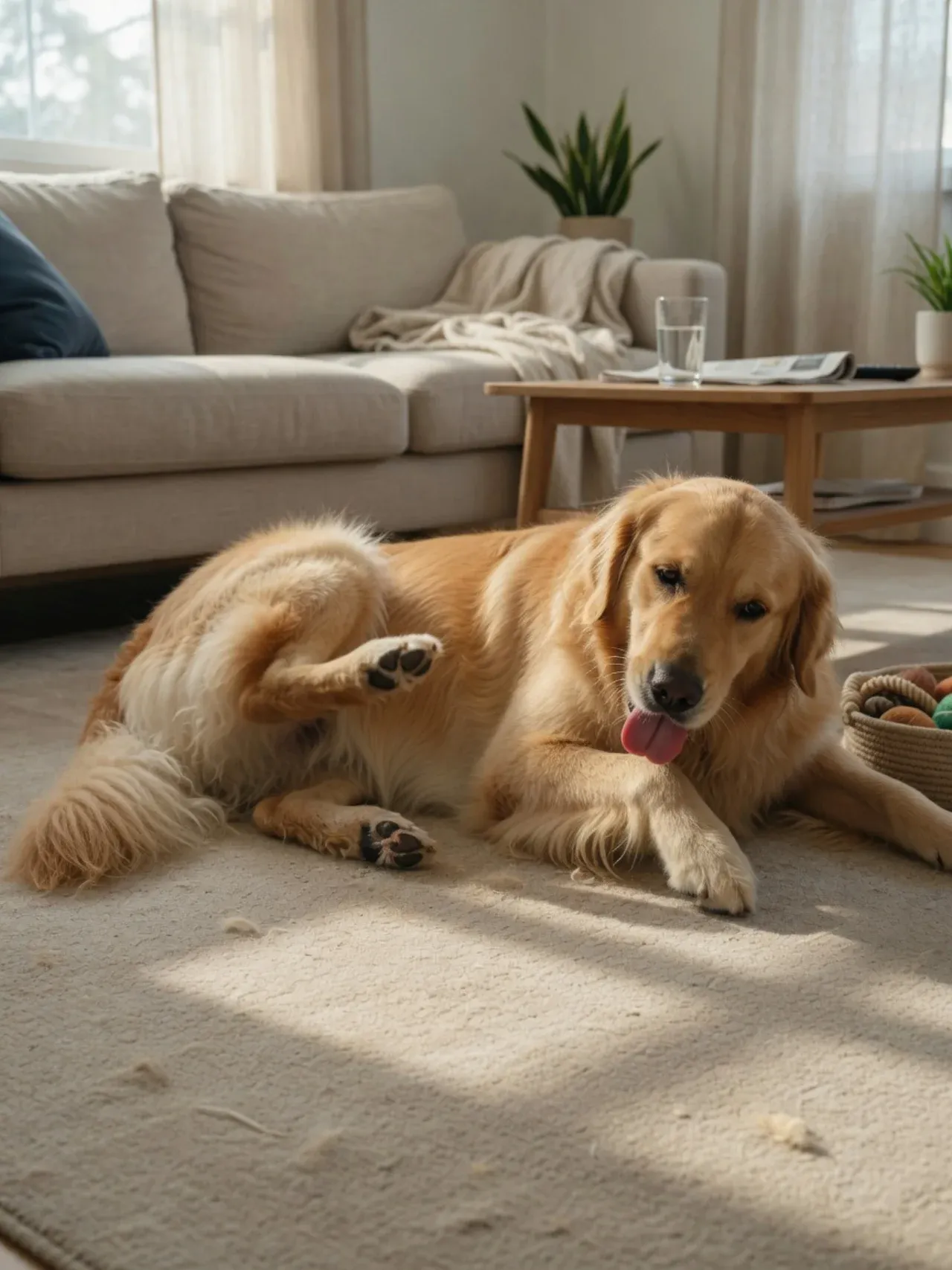
The licking starts at night. Then you notice the reddened paws, the chewing at the belly, the scratching that never quite stops. You change the food, you try a new shampoo — and the itch keeps coming back. For a huge number of dogs and cats, the reason is hiding somewhere most owners never think to look: the carpet they lie on every single day.
Carpet acts like a giant filter. It traps pet dander, dust-mite debris, pollen, and mold spores deep in its fibers — and unlike a real air filter, nobody ever changes it. Every time your pet flops down, naps, or rolls around, they're pressing their skin and face into a reservoir of the exact things their immune system overreacts to. Here's how it works, what it looks like on your pet, and the cleaning routine that actually lowers the load.
Why Your Carpet Is an Allergen Reservoir
Pet dander & saliva proteins
The actual allergen in cats and dogs isn't the hair — it's proteins in their dander (dead skin flakes) and dried saliva. These are microscopic and feather-light, so they sink past the carpet surface and accumulate in the pile over months.
Dust mites
Dust mites thrive in warm, humid carpet and bedding, feeding on the very dander your pet sheds. Their waste particles are a top trigger of atopic dermatitis in pets — and Maryland's humid summers are ideal conditions for them.
Pollen & mold
Pollen and mold spores ride in on paws and fur and settle into the fibers. They don't break down — they just build up, which is why an indoor pet can react to 'outdoor' allergens year-round.
The re-seeding problem: these particles are so light that every footstep, fan, or opening door lifts them back into the air — where they land on your pet again and re-trigger the skin. Cleaning isn't a one-time fix; it's about keeping the reservoir empty.
How It Shows Up on Your Pet
Environmental (atopic) allergies have a recognizable pattern. If several of these sound familiar, the home environment is worth investigating:
Licking and chewing the paws
The most classic sign. Pets walk through and lie on the allergens, so the paws take a constant dose. Reddish-brown staining on the fur between the toes is a tell-tale of chronic licking.
Scratching the belly, armpits, and face
Thin-skinned, low-to-the-ground areas press directly into the carpet and react first.
Recurring ear infections
Allergic inflammation often shows up as repeated, itchy ear infections — a frequently missed allergy symptom.
Year-round or seasonal flare-ups
Dust-mite reactions tend to run all year (worse in humid months); pollen-driven ones spike with the seasons. Both are concentrated indoors by carpet.
Secondary skin infections
Constant scratching breaks the skin barrier, letting bacteria and yeast take hold — which makes the itch even worse in a vicious cycle.
This article isn't a diagnosis. Persistent itching always warrants a vet visit — food allergies and fleas cause overlapping signs. Cleaning removes one of the biggest controllable triggers so that whatever your vet recommends works better.
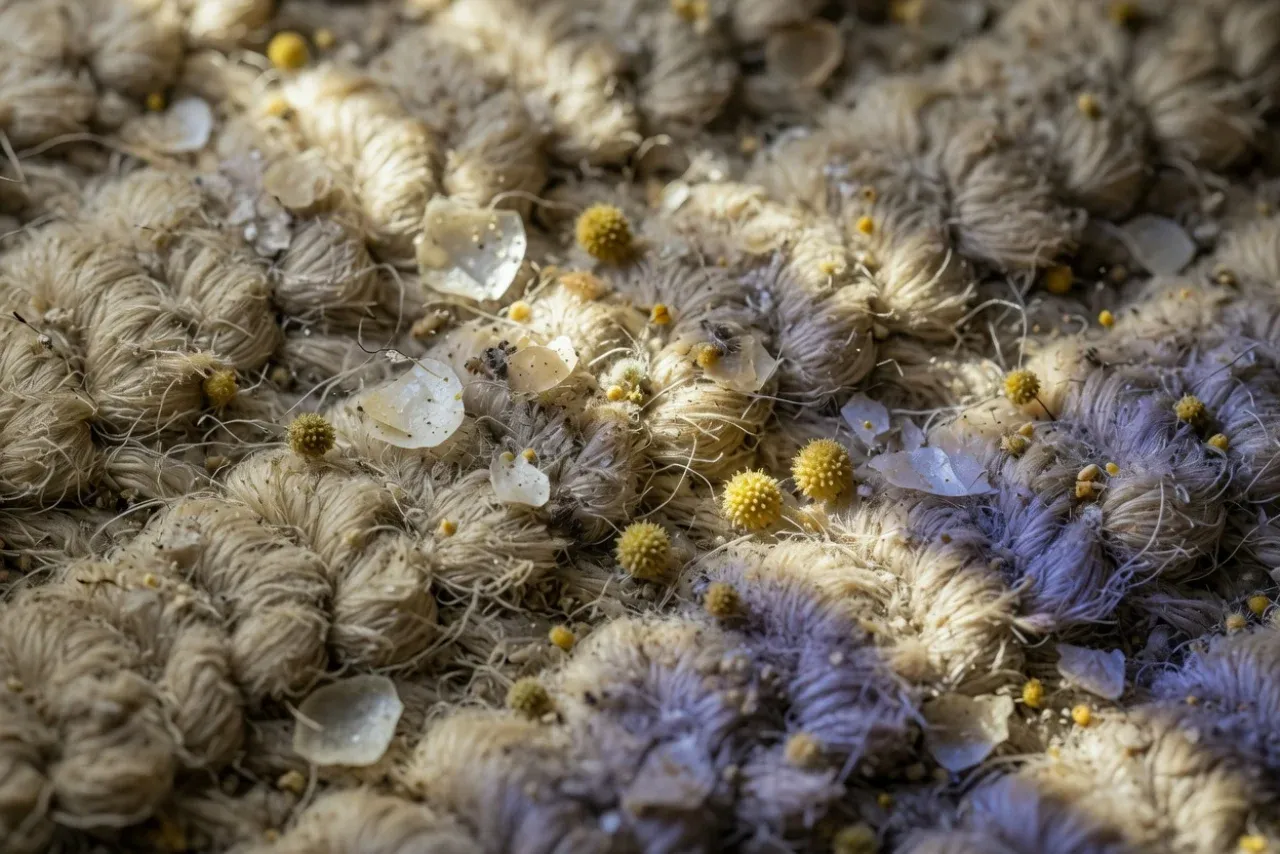
What's really in the carpet: dander, dust-mite debris, and pollen settle below the surface where a normal vacuum can't reach.
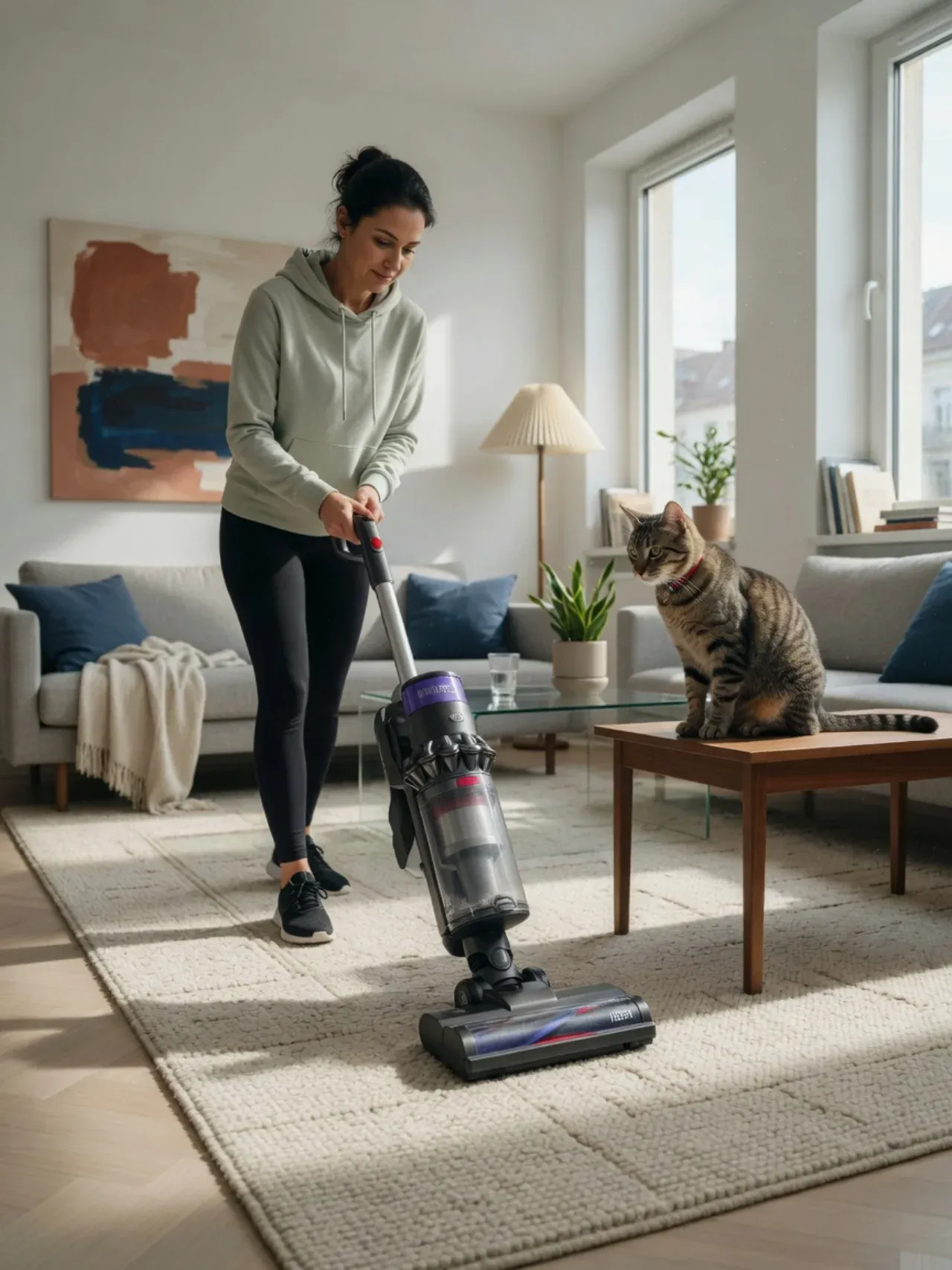
A true HEPA vacuum captures the fine particles a standard vacuum just blows back into the air.
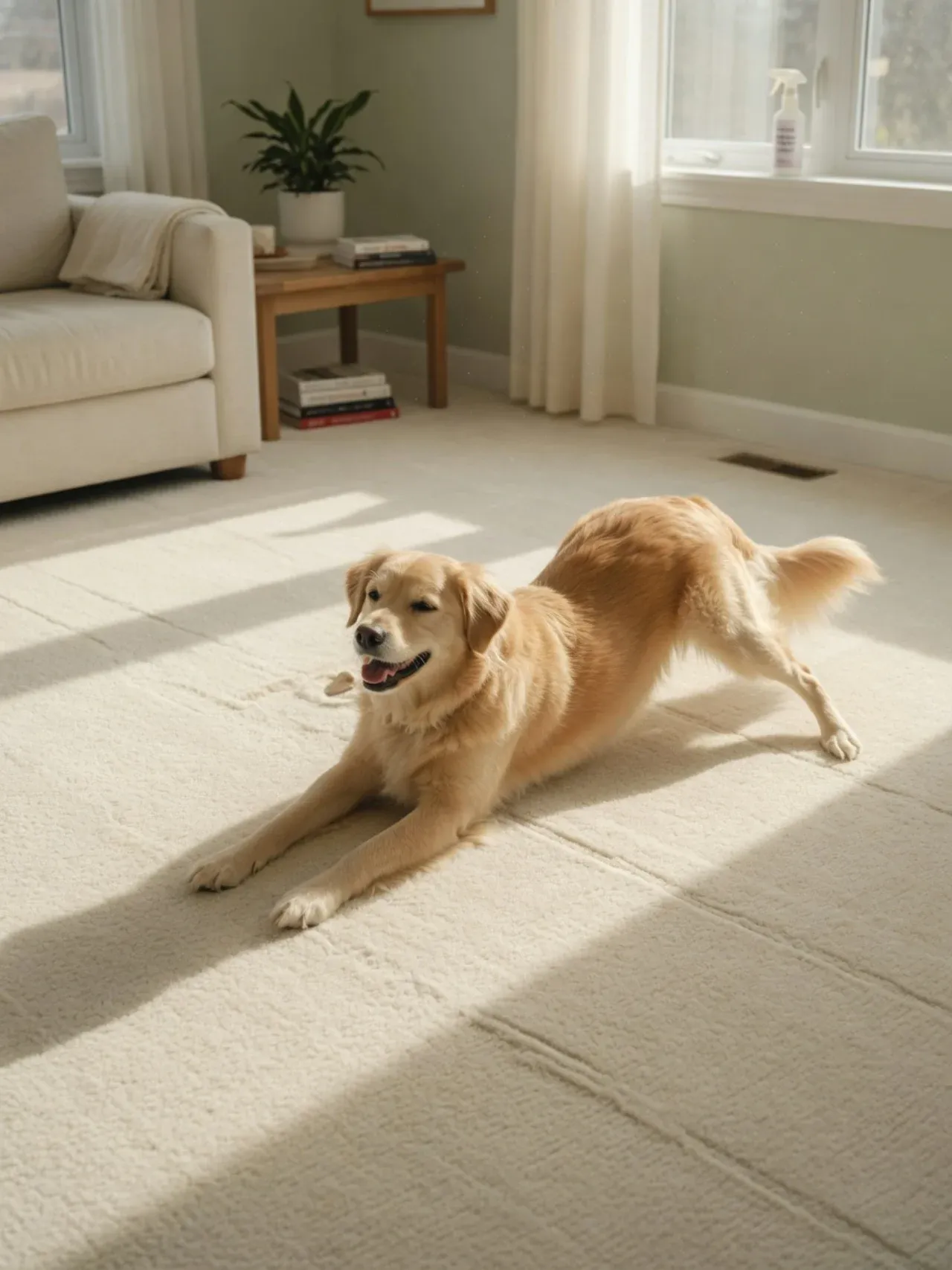
The goal: a low-allergen floor your pet can lie on without paying for it later in itchy paws.
The Cleaning Routine That Actually Lowers the Load
Allergen reduction, not a quick spritz of air freshener
Vacuum with a true HEPA vacuum 2–3 times a week
Pet dander and dust-mite debris are light and re-settle constantly, so weekly isn't enough in a home with animals. Use a vacuum with a sealed HEPA filtration system — an ordinary vacuum lacks the filtration to hold microscopic allergens and actually flings them back into the air, making the problem worse for a sensitive pet. Go slowly with overlapping passes, especially along baseboards and under furniture where dander collects.
Deep-clean (steam-extract) carpets every 3–4 months
Vacuuming only removes what sits near the surface. Hot-water extraction (steam cleaning) reaches deep into the pile and pulls out the embedded dander, dust-mite matter, and pollen that vacuuming leaves behind — the reservoir that keeps re-exposing your pet. In homes with shedding breeds or seasonal allergies, every 8–12 weeks keeps allergen levels genuinely low rather than just managed.
Wash pet bedding and soft furnishings weekly in hot water
Your pet's bed, blankets, and the rug they nap on hold more concentrated dander and dust mites than almost anywhere else in the house. Launder them weekly in hot water (130°F+ kills dust mites) and dry fully. Throw blankets over couches and chairs your pet uses, and wash those on the same schedule — it's the single highest-impact habit for an itchy pet.
Use only pet-safe, fragrance-free cleaning products
Harsh carpet chemicals and scented 'fresh' products can leave residues that irritate already-inflamed skin and paws — the same paws your pet licks and walks on. Choose fragrance-free, plant-based, low-residue products designed to be safe around animals. The cleaning that's meant to help your pet's skin shouldn't introduce a new irritant in the process.
Capital Clean Care
Too much carpet — or too little time — to deep-clean it yourself?
Capital Clean Care deep-cleans carpets and pet areas with pet-safe, fragrance-free products across Bethesda, Rockville, Silver Spring, and Gaithersburg. Background-checked, eco-certified teams.
Mistakes That Make a Pet's Skin Worse
- Using a cheap or filterless vacuum — it aerosolizes allergens instead of trapping them, spiking exposure right after you 'clean'
- Vacuuming only once a week in a home with shedding pets — dander rebuilds faster than that
- Skipping the pet's bed and blankets — the single most allergen-dense spot in the house
- Masking odor with scented sprays and 'fresh' carpet powders — fragrance and residue irritate inflamed skin
- Using bleach or ammonia-based cleaners on floors pets lie on — harsh on paws and respiratory systems alike
Why pet-safe products matter here especially
Your pet is the family member who lies directly on the floor and licks their paws — so cleaning residue goes straight onto already-sensitive skin and into their mouth. That's the whole reason our eco-friendly cleaning uses only plant-based, fragrance-free, low-residue products. For more on pet hair and odor control, see our guide to removing pet hair and odors in DMV homes.
When to Get Help
- The itching is constant, the skin is raw, or there's hair loss — see your vet; this needs medical treatment alongside cleaning
- Recurring ear or skin infections — a sign of underlying allergy that a vet should manage
- You can't keep up with HEPA vacuuming and quarterly deep cleans yourself — a professional deep clean resets the allergen load
- Carpet that hasn't been deep-extracted in over a year — there's likely years of embedded dander to remove
Capital Clean Care's deep cleaning service resets the allergen load in carpet and pet areas with pet-safe protocols across Maryland, DC, and Northern Virginia — so your vet's plan has the best possible chance to work.
Frequently Asked Questions
A Cleaner Floor, A More Comfortable Pet
Capital Clean Care provides deep cleaning and eco-friendly cleaning for pet families across Maryland — Bethesda, Rockville, Silver Spring, Gaithersburg, and Potomac. Pet-safe, fragrance-free, background-checked.
Licensed, insured, and locally owned. Montgomery County, MD.