
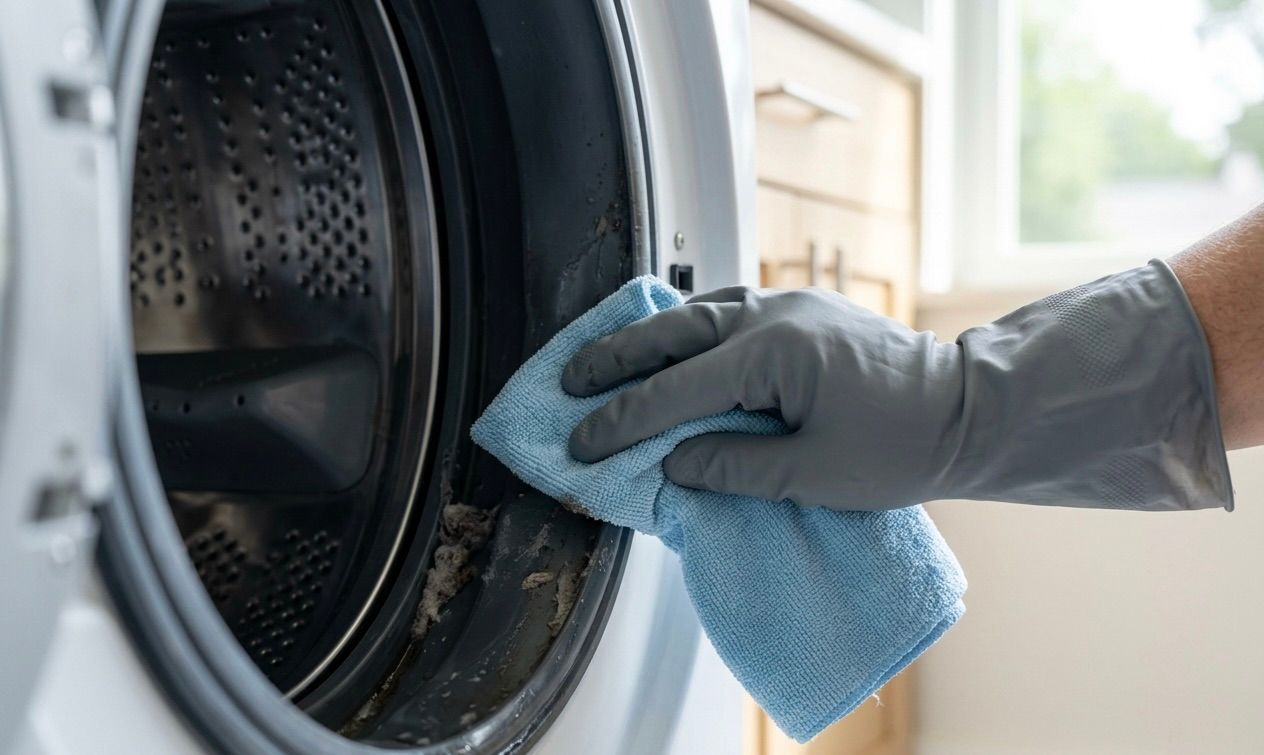
If your laundry in Rockville or Bethesda comes out of the washer smelling faintly musty — like mildew, not clean cotton — the problem isn't your detergent. It's your washing machine itself. Washing machines get dirty, and most households never clean them.
The fix is simple, costs almost nothing, and uses two ingredients you already have: white vinegar and baking soda. No bleach, no chemical tablets, no residue on your clothes. This guide covers front-loaders, top-loaders, and every part in between.
Why Washing Machines Get Dirty
Your washer cleans everything you put in it — but nothing cleans the washer itself. Three things accumulate over time:
Biofilm
A thin, slimy layer of bacteria and mold that grows wherever warm, damp surfaces are never fully dried. Front-loaders are especially prone because the tight rubber gasket traps moisture after every cycle.
Hard water mineral deposits
WSSC water in Montgomery County runs at approximately 150–200 mg/L hardness. That mineral content leaves calcium and magnesium scale on drum walls and heating elements — reducing efficiency and trapping odors.
Detergent residue
Excess detergent — especially regular (non-HE) detergent in high-efficiency machines — doesn't rinse out completely. The leftover film coats the drum interior and feeds mold growth.
Maryland homeowner note: Hard water accelerates mineral buildup in washers. If you're in Rockville, Gaithersburg, or Potomac, your machine likely needs cleaning more often than the manufacturer's generic recommendation. Monthly is the right frequency.
What You'll Need
No specialty products required. Everything below is safe for eco-conscious homes, septic systems, and sensitive skin.
Distilled white vinegar
2 cups (front-loader) / 4 cups (top-loader)
Baking soda
½ cup
Microfiber cloths
2–3 clean cloths
Old toothbrush
For grout and gasket folds
Spray bottle
For 1:1 vinegar + water solution
Small bowl or bucket
For soaking the detergent drawer
Front-Loader Full Clean Cycle
Front-load washers are more water-efficient but require more attentive cleaning — the horizontal drum and tight door seal create ideal conditions for mold.
Run an empty hot cycle with white vinegar
Add 2 cups of distilled white vinegar directly to the drum (not the drawer). Set the machine to the hottest, longest cycle available. Start the cycle.
Pause and soak for 30 minutes
After the drum fills and agitates for a few minutes, pause the cycle. Let the vinegar solution soak for 30 minutes — this dissolves mineral deposits and kills odor-causing bacteria.
Resume the cycle, then add baking soda
Let the vinegar cycle complete fully. Then immediately run a second short hot cycle with ½ cup of baking soda in the drum. The baking soda neutralizes any remaining vinegar smell and scrubs residue off the drum walls.
Wipe the drum interior
With the machine still warm, use a clean microfiber cloth dampened with a 1:1 white vinegar and water solution to wipe the entire inner drum, door glass, and the inner edge of the door seal.
Leave the door open to dry completely
After cleaning, leave the door ajar for at least 1–2 hours. This is the single most important maintenance habit — moisture trapped in a closed drum is the root cause of musty smell.
Capital Clean Care
Want a professionally cleaned home — from washer to windows?
Capital Clean Care serves Montgomery County with eco-certified products and background-checked teams. New clients get 15% OFF their first visit.
Top-Loader Full Clean Cycle
Top-loaders are simpler to clean because you can fill the drum and let it soak. The method is the same — vinegar first, baking soda second — just applied differently.
Fill with hot water and add vinegar
Set the machine to the hottest, largest load setting. As the drum fills, add 4 cups of white vinegar. Let it agitate for 1–2 minutes, then pause the cycle.
Soak for 1 hour
Let the vinegar-water solution sit for a full hour. This is the working phase — the vinegar is dissolving mineral scale, killing bacteria, and loosening the detergent film coating the drum walls.
Resume cycle, then run baking soda rinse
Let the vinegar cycle drain and spin completely. Then run a second short hot cycle — this time add 1 cup of baking soda directly to the drum. The baking soda scrubs residue and deodorizes.
Wipe down and air dry
Wipe the inner drum, agitator (if present), and the underside of the lid with a damp microfiber cloth. Leave the lid open for a few hours after every wash — not just cleaning day.
Clean the Gasket / Door Seal (Front-Loaders)
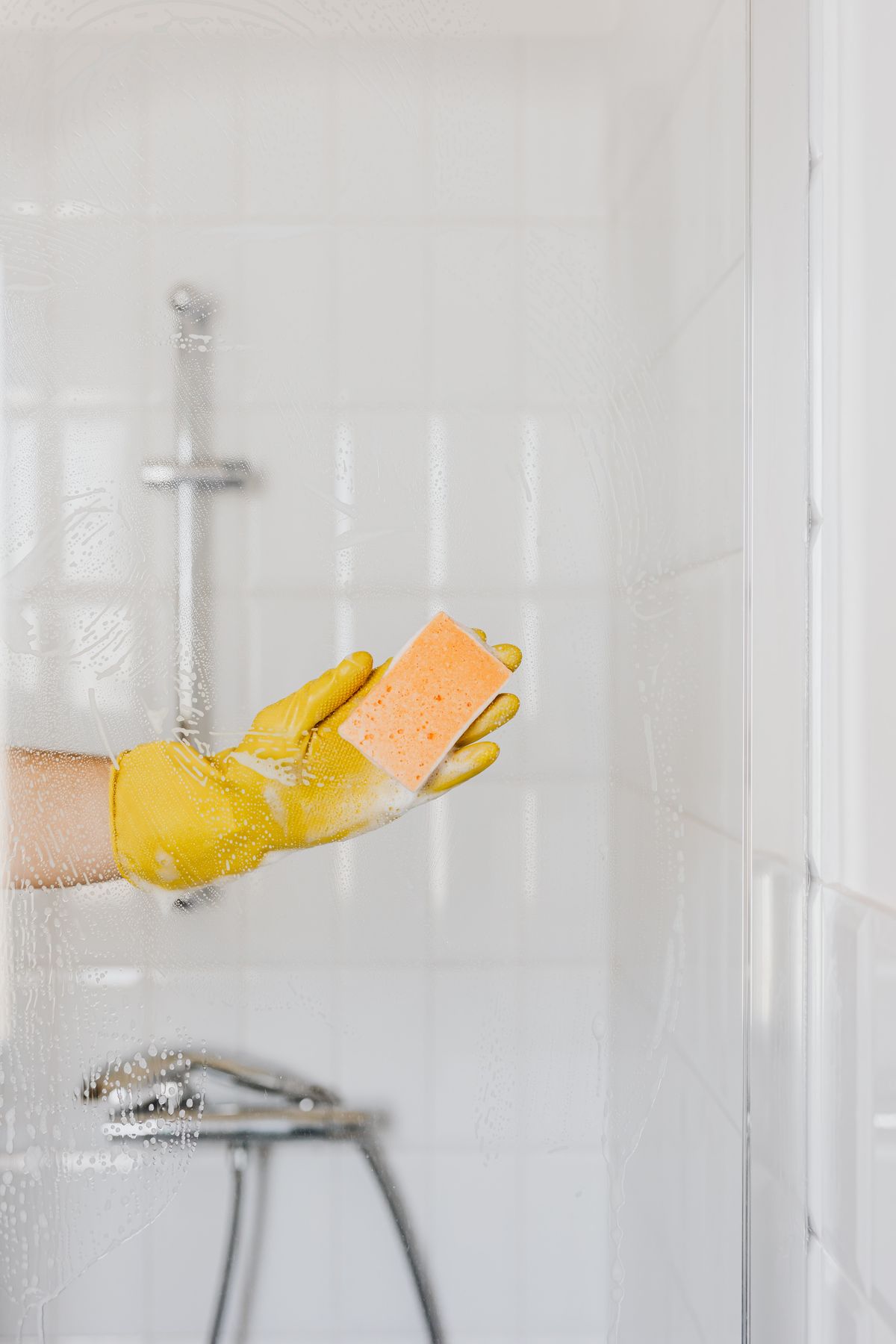
The rubber gasket fold is the single dirtiest part of a front-loader — and the most overlooked. Black mold accumulates in the hidden fold that most people never peel back.
Peel back the fold and inspect
Pull the rubber seal gently outward all the way around the drum opening. Look for black or gray mold spots, lint, coins, and accumulated grime in the crease.
Scrub with vinegar solution and toothbrush
Spray the fold generously with 1:1 white vinegar and water. Use an old toothbrush to scrub the entire gasket, paying extra attention to the bottom where moisture pools. For established black mold, apply undiluted vinegar and let sit for 10 minutes before scrubbing.
Wipe and dry thoroughly
Wipe the gasket clean with a microfiber cloth. Then dry it completely — a damp gasket starts molding again within 24 hours. This step needs to be part of your routine after every wash, not just cleaning day.
Clean the Detergent Drawer
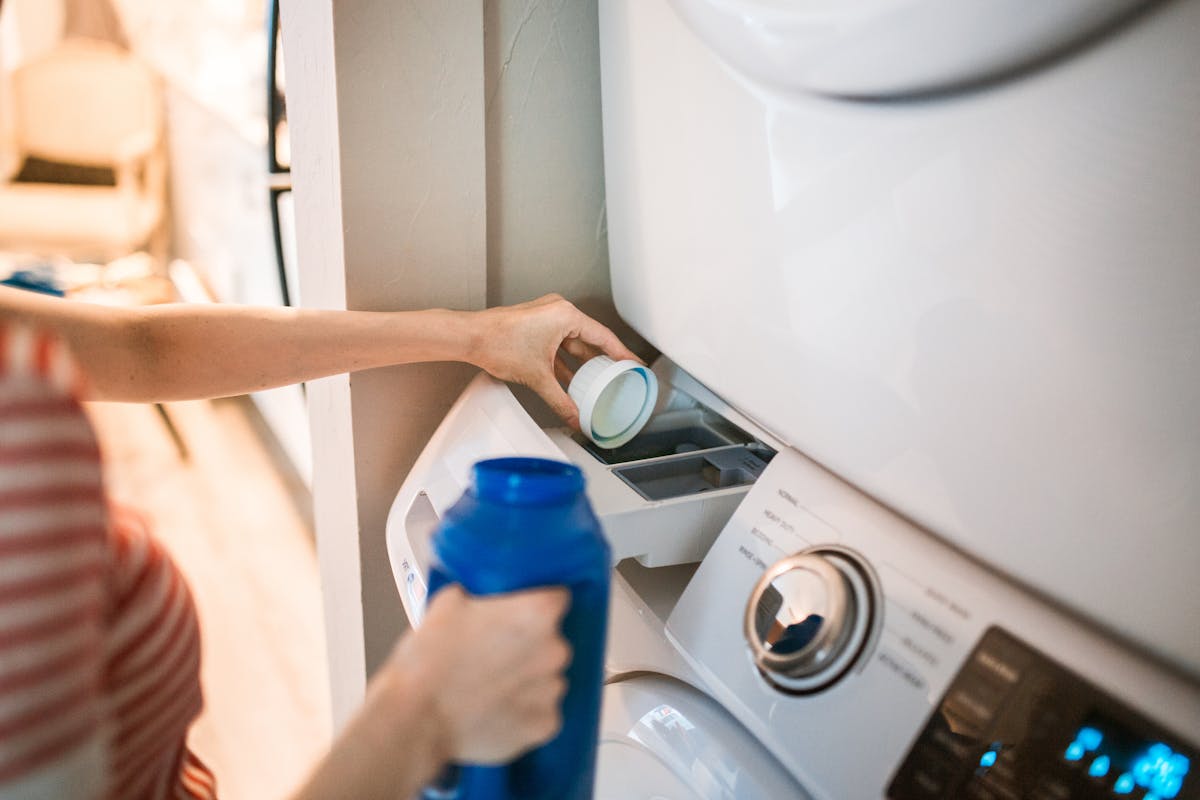
Remove the drawer completely
Most detergent drawers pull out fully — press the release tab (usually a small button or latch at the back of the drawer) as you pull. Take it to the sink.
Soak in hot vinegar water
Fill a bowl or the sink with hot water and 1 cup of white vinegar. Submerge the drawer for 15–20 minutes. Use a toothbrush to scrub the detergent and fabric softener compartments — the residue is sticky and needs mechanical action to break loose.
Scrub the drawer housing
While the drawer soaks, spray the empty drawer housing in the machine with vinegar solution and wipe thoroughly — mold often grows in this cavity. Dry the drawer before reinstalling it.
Clean the Filter & Drain Pump (Front-Loaders, Monthly)
Most front-loaders have a drain pump filter — usually behind a small access panel at the bottom front of the machine. It collects lint, hair, coins, and debris. A clogged filter causes slow draining, error codes, and amplified odor.
Locate the filter and drain the water
Open the access panel (usually a flip-down cover). Place a shallow tray and several towels below the drain hose. Pull out the small drain hose, uncap it, and let the water drain completely. Expect a small amount of water — this is normal.
Remove, clean, and reinstall the filter
Unscrew the filter cap counterclockwise. Remove the filter and rinse it under hot water, scrubbing any debris with a toothbrush. Wipe the filter housing cavity with a damp cloth. Reinstall the filter, screw it tight, close the drain cap, and close the panel.
Don't skip the towels. Even machines that appear to have drained completely can release a significant amount of water when you remove the filter. Place a stack of old towels and a baking sheet before you open anything.
Long-Term Maintenance Habits
Cleaning once fixes today's smell. These habits prevent the smell from coming back.
Always leave the door open after washing
Even 2–3 inches of clearance allows the drum to dry completely between loads. This single habit prevents 90% of front-loader odor issues.
Run a hot vinegar cycle once a month
Calendar it. In Montgomery County's hard water environment, monthly cleaning keeps mineral buildup from progressing past the point vinegar can fix it.
Use HE detergent — and use less of it
More detergent doesn't mean cleaner clothes. Excess suds coat the drum and feed mold. The recommended dose is usually far less than the fill line suggests.
Wipe the gasket dry after the last load of the day
Takes 30 seconds. Prevents black mold from establishing in the fold between cleans.
Remove laundry promptly
Wet clothes left in a closed drum for hours contribute to the same moisture problem. Move them to the dryer within 30 minutes of the cycle ending.
Before and After: What a Clean Washer Means for Your Laundry
Detergent drawer: a hidden breeding ground for mold.
The gasket fold is where black mold hides.

Clean machine = clothes that actually smell clean.

No perfume covers a musty machine — cleaning is the only fix.
When to Call an Appliance Tech vs. a Cleaning Service
| Symptom | Who to call | Why |
|---|---|---|
| Musty smell from drum or clothes | Cleaning service / DIY | Almost always a build-up issue, not a mechanical one |
| Black mold visible on gasket | Cleaning service | Requires proper scrubbing; may recur without recurring service |
| Machine vibrates excessively | Appliance tech | Bearing or drum balance issue — not a cleaning problem |
| Water not draining fully | Check filter first (DIY) | If filter is clean and problem persists, call a tech |
| Error codes on display | Appliance tech | Could be sensor, pump, or electronic fault |
| Lingering detergent smell after cleaning | DIY — adjust detergent dose | Overdosing HE detergent; reduce amount by 50% |
If your machine's smell persists after two full cleaning cycles — drum, gasket, drawer, and filter — that's worth an appliance service call. But 9 times out of 10, the vinegar and baking soda method above will fix it entirely. For homes needing regular deep-cleaning support across the whole house, see our recurring cleaning plans. More on Maryland-specific eco tips in our eco-friendly cleaning guide for Maryland homes.
Frequently Asked Questions
Ready for a Home That's Clean from Top to Bottom?
Capital Clean Care provides eco-friendly house cleaning for homes across Maryland — Rockville, Bethesda, Silver Spring, Gaithersburg, and Potomac. Certified safe products, background-checked teams, no chemical residue.
Licensed, insured, and locally owned. Montgomery County, MD.