
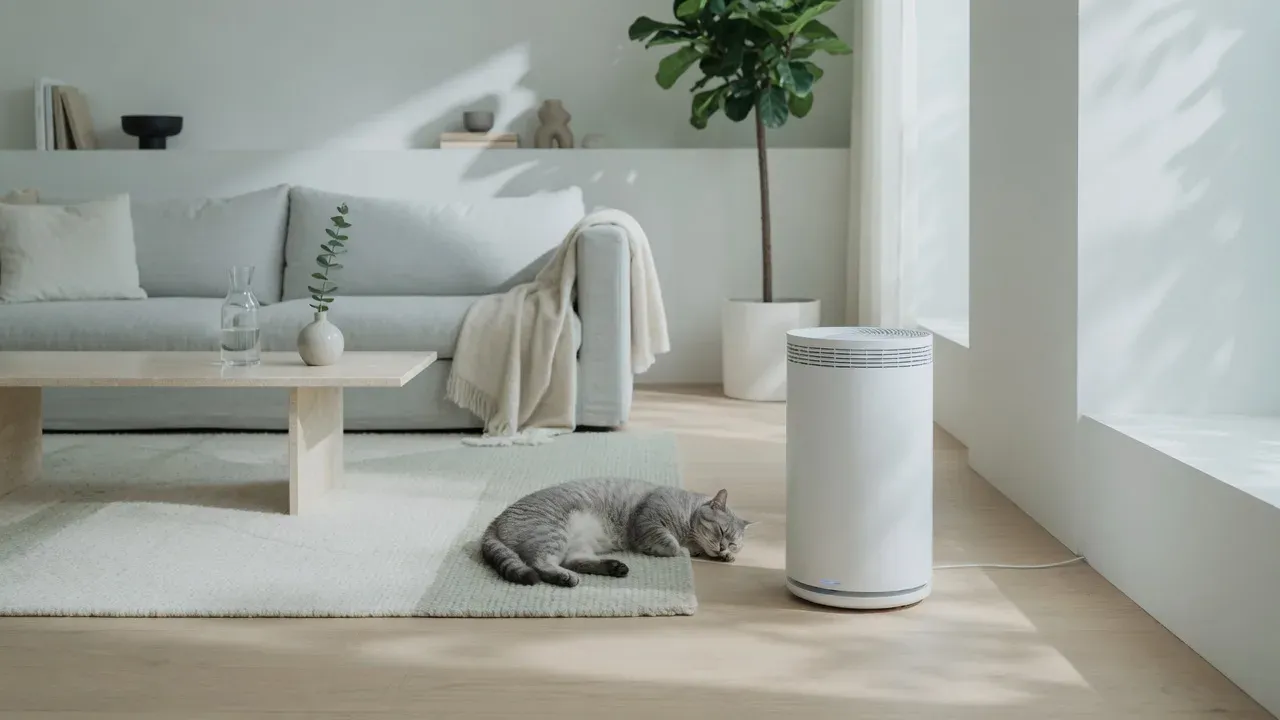
If your cat has been diagnosed with asthma — or your dog with chronic bronchitis — you've already learned that the air in your home isn't a small detail. Feline asthma is triggered or worsened by airborne particles: dust mites, pollen, mold spores, smoke, and pet dander, most of which live indoors. For these pets, ordinary cleaning isn't enough; the technical piece — HEPA-grade filtration and vacuuming — is what actually lowers what they breathe.
The catch is that the wrong equipment makes things worse. A standard vacuum can fling the very triggers back into the air. Here's what "true HEPA" really means, why it matters so much for an asthmatic pet, and the cleaning-and-filtration routine that keeps the trigger load as low as possible.
What "True HEPA" Actually Means
99.97% at 0.3 microns
A true-HEPA filter captures at least 99.97% of airborne particles down to 0.3 microns — the range that includes pet dander, dust-mite debris, and pollen, the core asthma triggers.
Medical-grade H13
H13 HEPA is a medical-grade step up, capturing ~99.95% of particles down to 0.1 microns — even finer filtration for a severely sensitive pet.
Beware 'HEPA-type'
Labels like 'HEPA-type' or 'HEPA-like' aren't held to the true-HEPA standard and underperform. For an asthmatic pet, look specifically for 'true HEPA' (and a sealed system on vacuums).
HEPA captures particles; carbon captures odor. A HEPA filter traps solid particles like dander and dust, but it does nothing for smells, smoke, or VOCs — those need an activated-carbon stage. If odor or smoke is one of your pet's triggers, choose a unit (and a cleaning approach) that addresses both.
Why a Regular Vacuum Can Make Asthma Worse
This is the part most owners miss. The way you clean can either lower the trigger load or spike it:
Standard vacuums aerosolize triggers
Dust-mite waste and dander are microscopic and light. A vacuum without sealed HEPA filtration can't hold them — it blows them back into the room through the exhaust, right where your pet is breathing.
Dry dusting relaunches particles
Feather dusters and dry cloths lift settled dander and dust into the air instead of capturing it. A damp microfiber cloth holds the particles and rinses them away.
Vacuum when the pet is elsewhere
Even with a HEPA vacuum, stirring up settled particles briefly raises the airborne count. For a sensitive pet, clean while they're in another room and let the air settle (or the purifier run) before they return.
Filterless = false clean
A room can look spotless while the air is full of fine triggers. For an asthmatic pet, the filter is the cleaning — not just the visible tidiness.
Asthma is a medical condition. HEPA cleaning lowers triggers, but it does not replace treatment. Any coughing, wheezing, or labored breathing — especially the crouched, hacking cough common in feline asthma — needs prompt veterinary care. Filtration makes that treatment work on a lower trigger load.
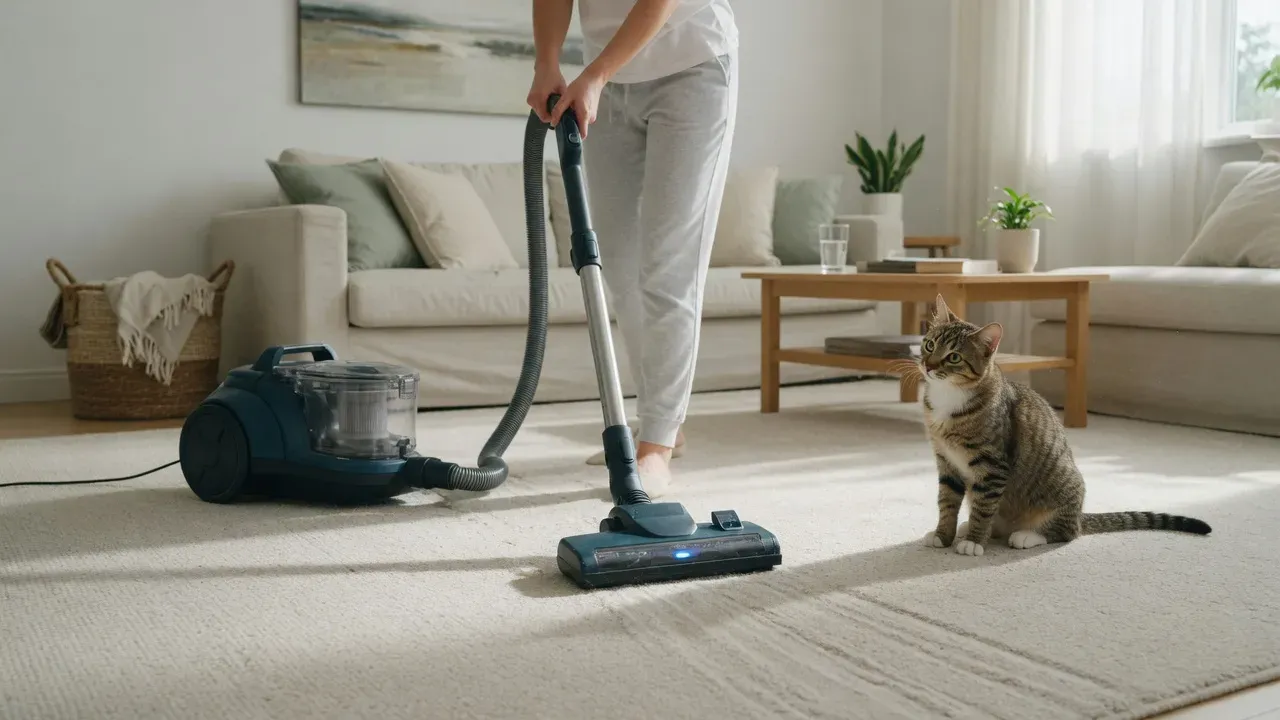
A true-HEPA vacuum traps the fine particles a standard vacuum just blows back into the air an asthmatic pet breathes.
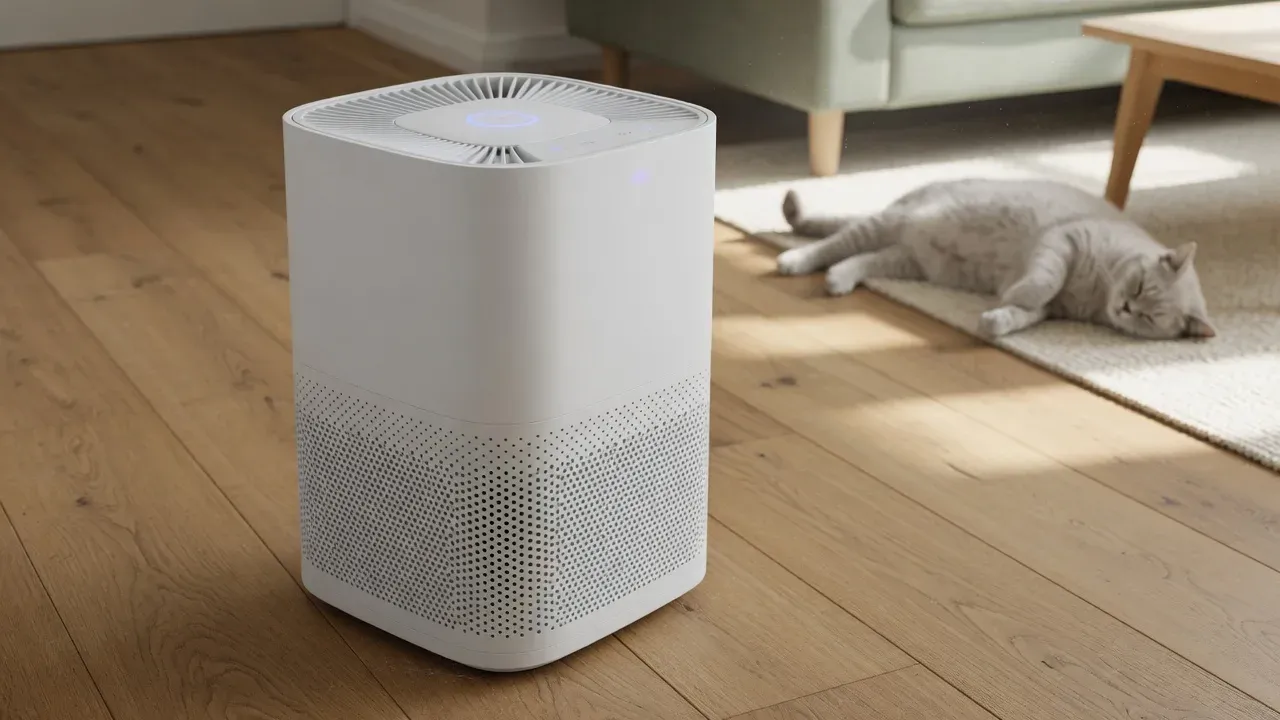
A true-HEPA air purifier, run several hours a day, captures what's still airborne between cleans.
The goal of technical cleaning: the lowest possible trigger load for a pet whose lungs are sensitive.
The Technical-Cleaning Routine for an Asthmatic Pet
Capture, filter, and keep the trigger load low
Vacuum 2–3 times a week with a true-HEPA, sealed vacuum
This is the single most important piece of 'technical' cleaning for an asthmatic pet. An ordinary vacuum lacks the sealed filtration to hold microscopic dust-mite matter and dander, so it aerosolizes them — spiking the exact airborne triggers right after you 'clean.' A true-HEPA vacuum with a sealed system captures particles down to 0.3 microns instead. Go slowly over carpet, rugs, and upholstery, especially your pet's favorite resting spots.
Run a true-HEPA air purifier in your pet's main room — at least 4 hours a day
Cleaning removes settled triggers; a purifier captures what's still floating. The American College of Allergy, Asthma & Immunology recommends HEPA air purifiers for reducing allergens, and the Asthma and Allergy Foundation of America suggests running one at least four hours a day. Place a correctly-sized true-HEPA unit where your pet sleeps and spends the most time, and pair HEPA with an activated-carbon stage if odor or smoke is also a trigger (carbon, not HEPA, handles those).
Wash bedding hot weekly and hold humidity at 30–50%
Your pet's bed is the most concentrated source of dust-mite allergen in the house — a major asthma trigger. Launder it, plus blankets and soft toys, weekly in hot water (130°F+) and dry fully. Keep indoor humidity between 30–50% with AC or a dehumidifier, since dust mites and mold can't survive in dry air. In humid Maryland summers, humidity control alone meaningfully drops the trigger load an asthmatic pet inhales.
Deep-clean with HEPA-grade equipment and fragrance-free products
Vacuuming handles the surface; a periodic deep clean with hot-water extraction empties the embedded reservoir of dander and dust-mite matter in carpet and upholstery that keeps re-seeding the air. Just as important for sensitive lungs: skip scented sprays, plug-ins, and harsh chemicals entirely — fragrance and VOCs are themselves airway irritants. Use only plant-based, fragrance-free, low-residue products around a pet that's prone to asthma flares.
Capital Clean Care
Want HEPA-grade deep cleaning without buying the equipment?
Capital Clean Care deep-cleans carpets, upholstery, and pet areas with HEPA-grade equipment and pet-safe, fragrance-free products across Bethesda, Rockville, Silver Spring, and Gaithersburg. Background-checked, eco-certified teams.
Mistakes That Spike an Asthmatic Pet's Triggers
- Using a 'HEPA-type' or filterless vacuum — it re-aerosolizes dust mites and dander instead of trapping them
- Buying an air purifier too small for the room, or running it only an hour a day
- Skipping the activated-carbon stage when smoke or odor is a trigger — HEPA alone won't touch those
- Cleaning with scented sprays, plug-ins, or harsh chemicals — fragrance and VOCs are airway irritants
- Vacuuming with the pet in the room — let the air settle before they come back
Fragrance-free matters most for sensitive lungs
For a pet prone to asthma flares, the wrong cleaner adds irritation instead of removing it. That's why our eco-friendly cleaning uses only plant-based, fragrance-free, low-residue products. Related reading: how household dust affects your pet's lungs and how pet dander wrecks your air quality.
When to Get Help
- Coughing, wheezing, or any labored breathing — see your vet promptly; asthma needs medical management
- A cat with a recurring crouched, hacking cough — a classic feline-asthma sign, not a hairball
- Flares that ease when you're away and return at home — a strong indoor-trigger signal worth acting on
- Carpet and upholstery that haven't had a HEPA-grade deep clean in months — the embedded reservoir needs a reset
Capital Clean Care's deep cleaning service lowers the airborne trigger load in carpet, upholstery, and pet areas with HEPA-grade, pet-safe protocols across Maryland, DC, and Northern Virginia — so your vet's plan works on the lowest possible baseline.
Frequently Asked Questions
Cleaner Air for a Pet That Needs It Most
Capital Clean Care provides deep cleaning and eco-friendly cleaning for pet families across Maryland — Bethesda, Rockville, Silver Spring, Gaithersburg, and Potomac. Pet-safe, fragrance-free, background-checked.
Licensed, insured, and locally owned. Montgomery County, MD.