
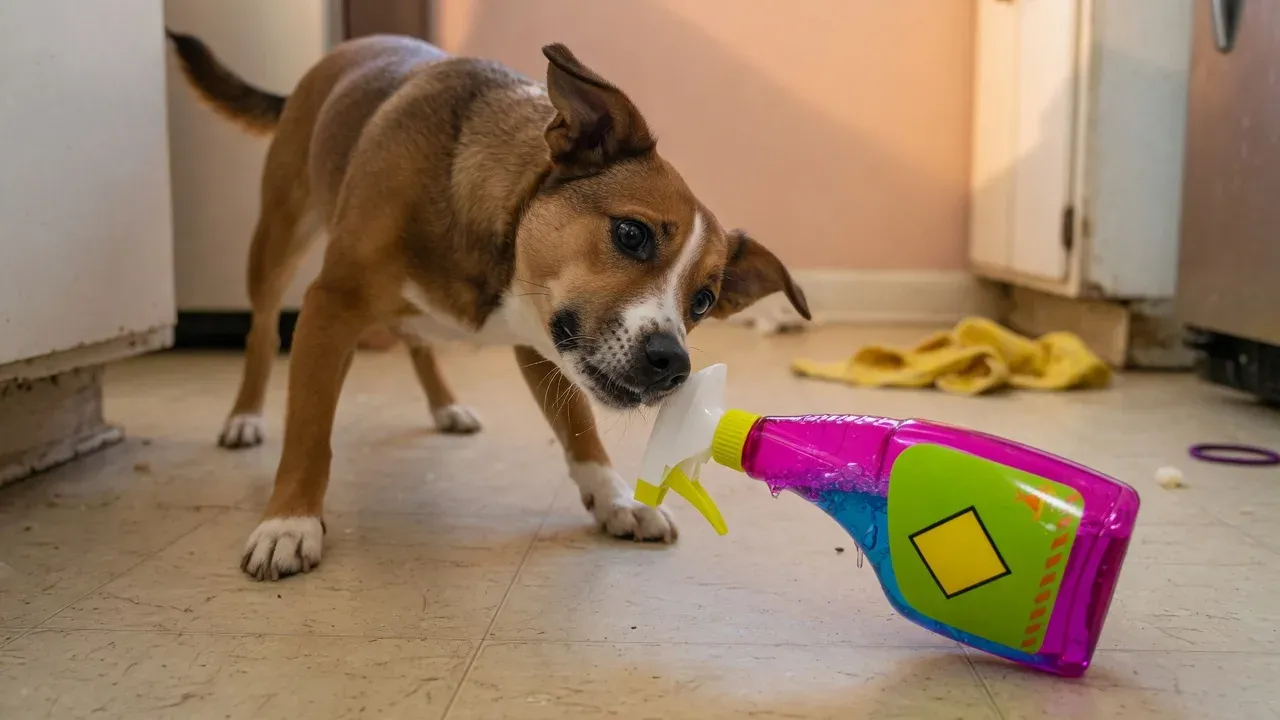
Common household cleaners — bleach, ammonia, and disinfectants — are among the most frequent causes of pet poisoning, and they're sitting in nearly every home. A dog who licks a freshly mopped floor, a cat who brushes against a sprayed counter and grooms it off, a curious nose that finds an open bottle: it doesn't take much. Caustic products can cause real harm fast, so knowing the warning signs and exactly what to do can make the difference.
Here's which products are most dangerous, the signs of poisoning to watch for, the right emergency steps (including the one thing you should not do), and how to prevent it entirely.
Watch: the warning signs of cleaning-product poisoning — and the steps to take right away.
The Most Dangerous Products in Your Home
Bleach & ammonia
Two of the most common — and most caustic — cleaners. Ingestion or even strong fumes can burn the mouth and airways. Never mix them, and keep pets well away.
Disinfectants & phenols
Multi-surface disinfectants can contain ammonia, bleach, and phenols. Phenol-based 'pine' and medicinal cleaners are especially toxic to cats, who can't process them well.
Heavy-duty cleaners
Oven, drain, and toilet-bowl cleaners and rust/lime removers are highly corrosive — among the most dangerous things a pet can contact in the house.
Pets are exposed in three ways: ingesting a product, walking on a wet treated surface and then licking their paws, or inhaling fumes in a closed room. Prevention has to cover all three — not just keeping bottles capped.
Warning Signs to Watch For
Signs can appear quickly with caustic products. If several of these show up — or you find evidence of exposure — act immediately:
Drooling or excessive salivation
Often the earliest sign, as the mouth reacts to a caustic or bitter substance.
Vomiting, diarrhea, or no appetite
Gastrointestinal upset is common; with caustic products it can include blood.
Pawing at the mouth or face
A sign of mouth irritation or chemical burns to the lips, tongue, and gums.
Difficulty breathing
From inhaled fumes or airway irritation — a serious, urgent sign.
Lethargy, weakness, or wobbliness
Whole-body signs that the toxin is affecting your pet systemically.
Tremors, seizures, or collapse
Severe poisoning — a true emergency requiring immediate veterinary care.
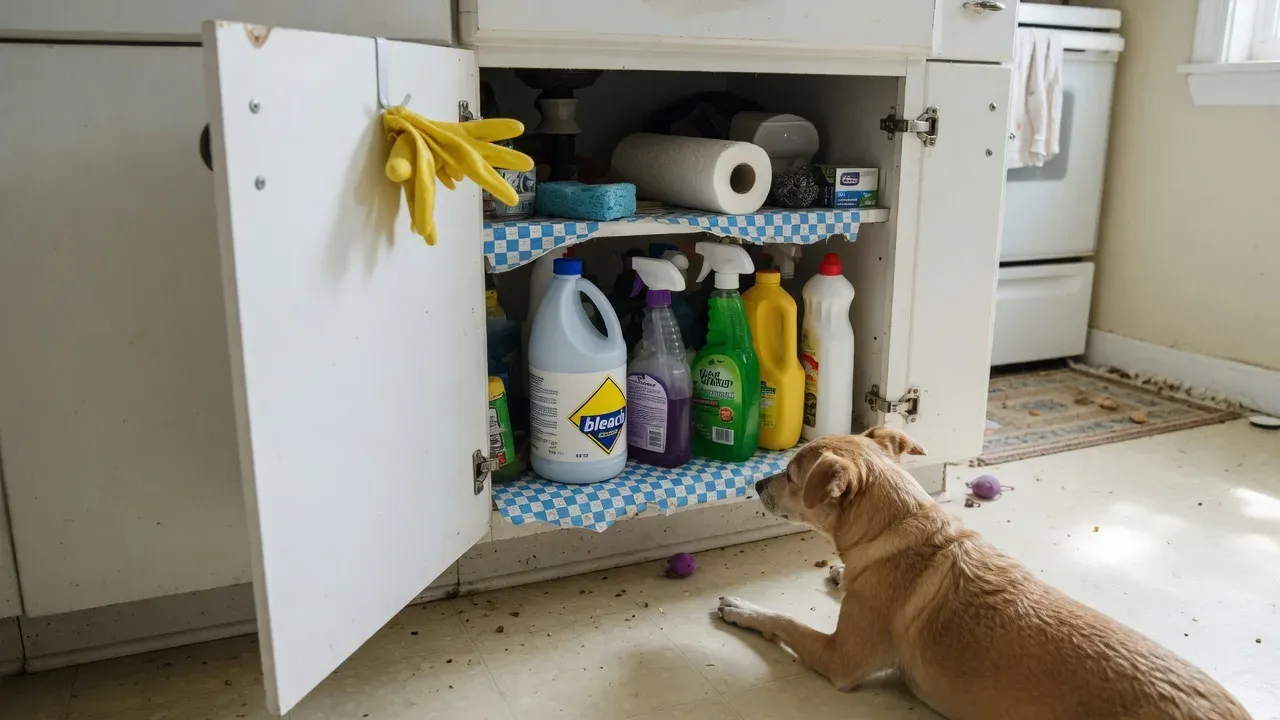
Bleach, ammonia, and disinfectants under the sink are among the most common household toxins for pets.
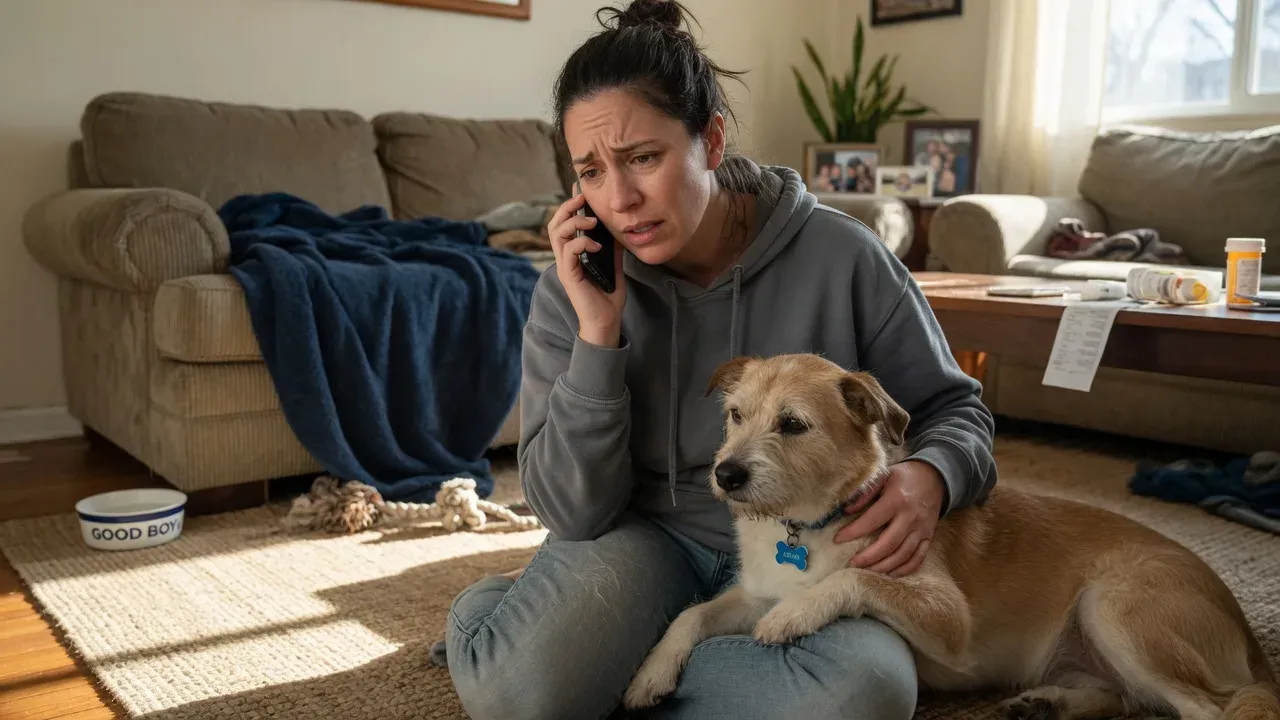
If you suspect poisoning, call your vet or a pet poison helpline right away — don't wait for symptoms to worsen.
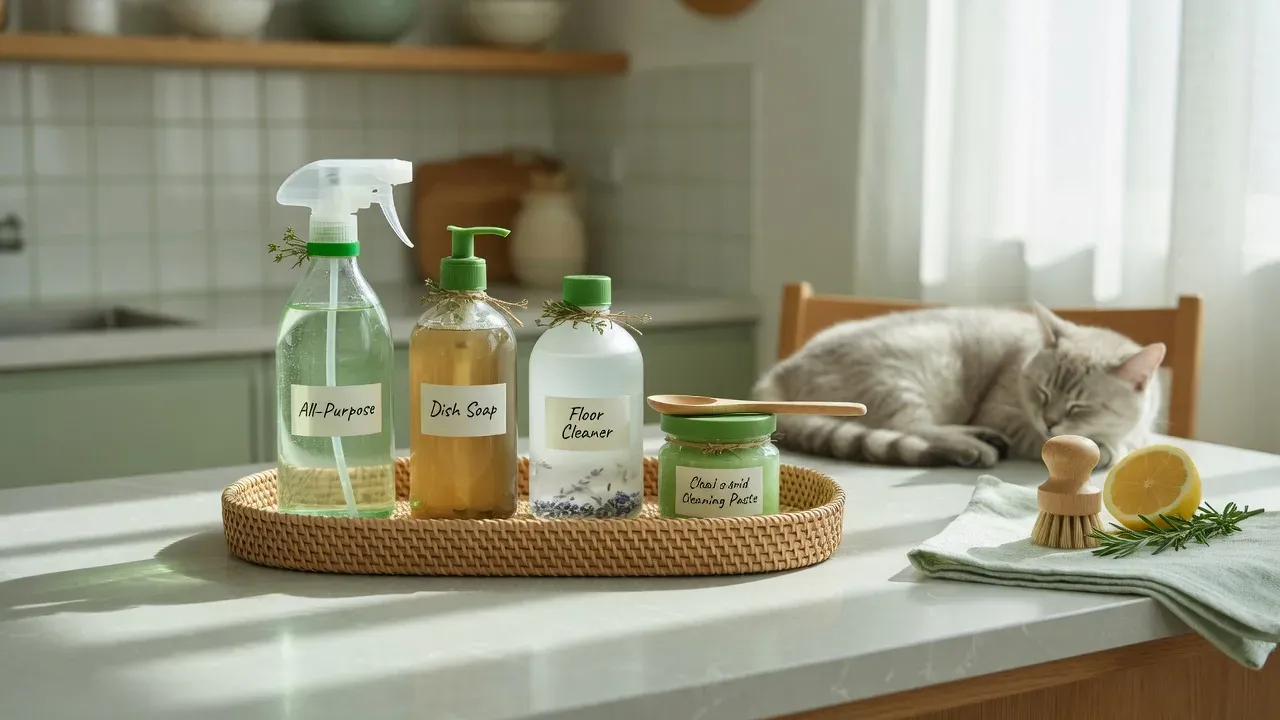
The surest prevention: switch to plant-based, fragrance-free products around the family member closest to the floor.
What to Do Right Away
Do NOT induce vomiting unless a vet or poison control tells you to — caustic cleaners cause more damage coming back up.
- 1. Remove your pet from the source; rinse paws, skin, or fur if there was contact.
- 2. Grab the product packaging or label so you can tell the vet exactly what was involved.
- 3. Call for help immediately — your vet, an emergency vet, or a pet poison helpline.
- 4. Don't give milk, salt, or home remedies unless specifically directed.
Both lines are available 24/7. A consultation fee may apply. This article is not a substitute for veterinary advice.
Capital Clean Care
The surest prevention: don't bring the hazard home
Capital Clean Care cleans with pet-safe, fragrance-free, plant-based products across Bethesda, Rockville, Silver Spring, and Gaithersburg — no bleach, ammonia, or harsh chemistry around your pets. Background-checked, eco-certified teams.
How to Prevent It
Access and product choice are everything
Store all cleaning products locked away and out of reach
The most common way pets are poisoned is simple access — a cabinet left open, a bottle on the floor, a bucket of cleaning solution left unattended. Keep all cleaners, especially bleach, ammonia, and concentrated disinfectants, behind a latched or high cabinet, and never leave a filled mop bucket or open bottle where a curious dog or cat can reach it.
Keep pets out of the room while cleaning — and until surfaces dry
Pets are exposed not just by drinking a product but by walking across a freshly cleaned, still-wet floor and then licking their paws, or by inhaling fumes in a closed room. Close the pet out of the area while you clean, ventilate with open windows or a fan, and wait until floors and surfaces are fully dry before letting them back in.
Rinse surfaces pets contact, and skip the strong stuff
Floors, counters at tail height, food and water bowls, and crates are all surfaces pets touch directly. Rinse them with water after cleaning so no chemical residue is left for paws and tongues. Avoid the harshest products entirely on these surfaces — bleach, ammonia, and phenol-based disinfectants (found in some pine and 'medicinal' cleaners) are especially dangerous to cats.
Switch to pet-safe, fragrance-free products
The single most effective prevention is removing the hazard at the source. Plant-based, fragrance-free, low-residue cleaners clean effectively without the caustic chemistry that burns mouths and irritates airways. Because your pet is the family member who lies on the floor and licks their paws, choosing genuinely pet-safe products protects the one most exposed to whatever you clean with.
Why pet-safe products are the real fix
You can lock cabinets and ventilate rooms, but the most reliable prevention is not having caustic chemicals in the house at all. That's the whole reason our eco-friendly cleaning uses only plant-based, fragrance-free, low-residue products. For more on what's actually in conventional cleaners, see our guides on pet skin allergies and an allergen-free home.
Frequently Asked Questions
A Cleaner Home Without the Chemical Risk
Capital Clean Care provides eco-friendly cleaning and deep cleaning for pet families across Maryland — Bethesda, Rockville, Silver Spring, Gaithersburg, and Potomac. Pet-safe, fragrance-free, background-checked.
Licensed, insured, and locally owned. Montgomery County, MD.