

Some pets itch for a few weeks every spring and then settle down. Others never stop — scratching, licking paws, and battling ear infections in January as much as July. The pattern itself is the biggest clue to what's driving it: seasonal allergies ride the pollen calendar, while household (perennial) allergies come from indoor triggers that are present all year.
Telling them apart matters, because it changes what you can do about it. You can't switch off pollen — but the year-round indoor half (dust mites, mold, and dander) is the part you genuinely control with cleaning. Here's how to read your pet's signs, why the two so often overlap, and the routine that lowers the load you can manage.
The Key Difference Is Timing
Seasonal (pollen-driven)
Tree, grass, and ragweed pollen spike in spring, summer, and early fall, then fade in winter. If your pet's worst weeks line up with certain months — and ease off-season — pollen is likely the main driver.
Household / perennial (indoor)
Dust mites, mold, mildew, and dander are present year-round, 'no matter how clean the house may be.' These cause symptoms that never fully disappear with the seasons — a constant, low-grade itch.
Keep an "itch calendar." For a few weeks, jot down when the scratching, paw-licking, or ear flare-ups get worse. Spikes tied to certain months point to pollen; a steady year-round itch points to indoor allergens. Many pets show both patterns at once.
On Your Pet, They Look Almost Identical
Whether the trigger is pollen or dust mites, environmental (atopic) allergies show up the same way — which is why timing, not symptoms, is what separates them:
Itching, licking, and chewing the paws
The hallmark sign. Pets walk through allergens and lick what collects between their toes — reddish-brown staining on the fur is a tell-tale of chronic licking.
Recurring ear infections
Repeated, itchy ear infections are one of the most commonly missed allergy symptoms in both dogs and cats.
Red or irritated skin, belly, and armpits
Thin-skinned, low-to-the-ground areas press into allergen-holding surfaces and react first.
Sneezing, runny eyes, or worse shedding
Airway and coat signs can accompany the skin symptoms, especially during a heavy pollen stretch.
This isn't a diagnosis. Food allergies and fleas cause overlapping signs, so persistent itching always warrants a vet visit. Cleaning targets the environmental triggers specifically — it does nothing for a food or flea allergy, which is why the right diagnosis comes first.

Pollen is seasonal and outdoor — but it rides indoors on paws and fur and settles into your floors and bedding.

Dust mites, mold, and dander are the year-round, indoor half — and the half you can actually control with cleaning.
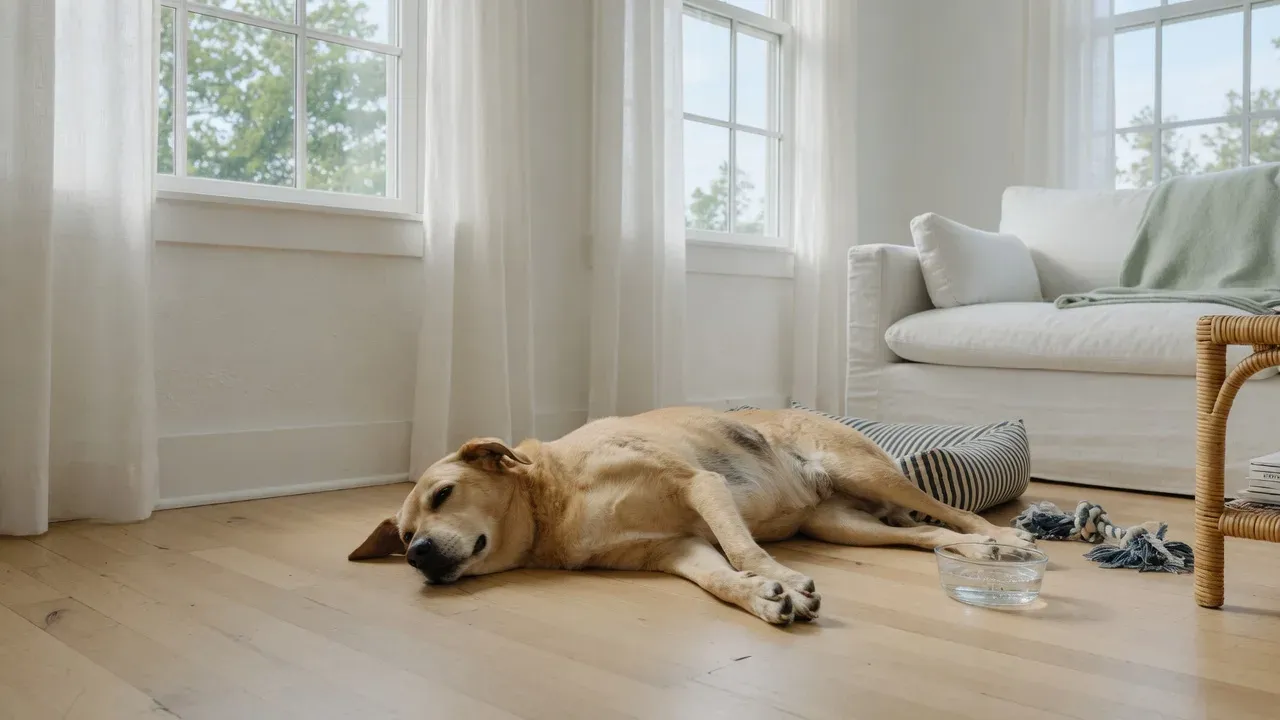
Lowering the indoor allergen load eases the total burden — even for a pet whose worst flares are seasonal.
Control the Half You Actually Can
You can't stop pollen — but you can slash the indoor load
Here's the strategic point: allergies work on total load. The lower you keep the indoor allergens, the smaller the baseline your pet's immune system is fighting — so even seasonal pollen spikes land softer. And pollen itself doesn't stay outside; it rides in on paws and fur. Both halves respond to the same handful of habits:
Wipe paws and coat after every time outdoors (pollen season)
During pollen season, your pet carries ragweed, grass, and tree pollen indoors on their paws and fur, then spreads it onto every floor and bed they touch. A quick wipe-down with a damp cloth at the door — paws, belly, and coat — removes a surprising amount before it gets tracked through the house. It's the single easiest habit to blunt the seasonal half of the problem.
HEPA-vacuum 2–3 times a week to control the year-round half
Dust mites, mold spores, and dander are the perennial allergens — present no matter the season or how tidy things look. A true-HEPA vacuum captures these fine particles instead of flinging them back into the air like a standard vacuum does. Go over carpet, rugs, and upholstery, paying attention to your pet's favorite spots, so the indoor load that's there 365 days a year stays low.
Wash bedding weekly and hold humidity at 30–50%
Your pet's bed and blankets concentrate both dander and dust-mite allergen, plus any pollen they've carried in. Launder them weekly in hot water (130°F+) and dry fully. Keep indoor humidity between 30–50% with AC or a dehumidifier — dust mites and mold can't thrive in dry air, which quietly suppresses two of the biggest perennial triggers at once, all year long.
Deep-clean quarterly and use only fragrance-free products
Vacuuming handles the surface; a periodic deep clean (hot-water carpet and upholstery extraction) empties the deep reservoir of embedded dander, mite matter, and trapped pollen that keeps re-seeding the air. Throughout, use plant-based, fragrance-free, low-residue products — scented cleaners add irritants to an already-reactive pet, which is the opposite of what allergy-prone skin and airways need.
Capital Clean Care
Can't keep up with the indoor allergen load yourself?
Capital Clean Care deep-cleans carpets, upholstery, and pet areas with pet-safe, fragrance-free products across Bethesda, Rockville, Silver Spring, and Gaithersburg. Background-checked, eco-certified teams.
Mistakes That Keep Your Pet Itching
- Assuming a spring-only itch means cleaning won't help — tracked-in pollen and rebounding dust mites both live indoors
- Letting humidity climb above 50% — it lets dust mites and mold multiply year-round
- Skipping the paw-wipe after walks in pollen season — it spreads outdoor allergens across every floor
- Using a filterless vacuum — it re-aerosolizes the dust mites and dander you're trying to remove
- Masking it with scented sprays — fragrance irritates already-reactive skin and airways
Why fragrance-free is non-negotiable for an allergic pet
Adding scented cleaners to a pet already reacting to pollen and dust just stacks on another irritant. That's why our eco-friendly cleaning uses only plant-based, fragrance-free, low-residue products. For the full room-by-room plan, see our guide to an allergen-free home for dog & cat owners.
When to Get Help
- The itching is constant, the skin is raw, or there's hair loss — see your vet; this needs medical treatment alongside cleaning
- Recurring ear or skin infections — a sign of underlying allergy a vet should manage
- You can't pin down a seasonal pattern — a vet can help separate environmental, food, and flea triggers
- Carpet and upholstery that haven't been deep-cleaned in months — the year-round reservoir likely needs a reset
Capital Clean Care's deep cleaning service resets the year-round allergen load in carpet and pet areas with pet-safe protocols across Maryland, DC, and Northern Virginia — so your vet's plan works on a lower baseline.
Frequently Asked Questions
A Lower Allergen Baseline, All Year
Capital Clean Care provides deep cleaning and eco-friendly cleaning for pet families across Maryland — Bethesda, Rockville, Silver Spring, Gaithersburg, and Potomac. Pet-safe, fragrance-free, background-checked.
Licensed, insured, and locally owned. Montgomery County, MD.