
By Capital Clean Care | Eco & Animal Health Research Team
Reading time: 8 minutes
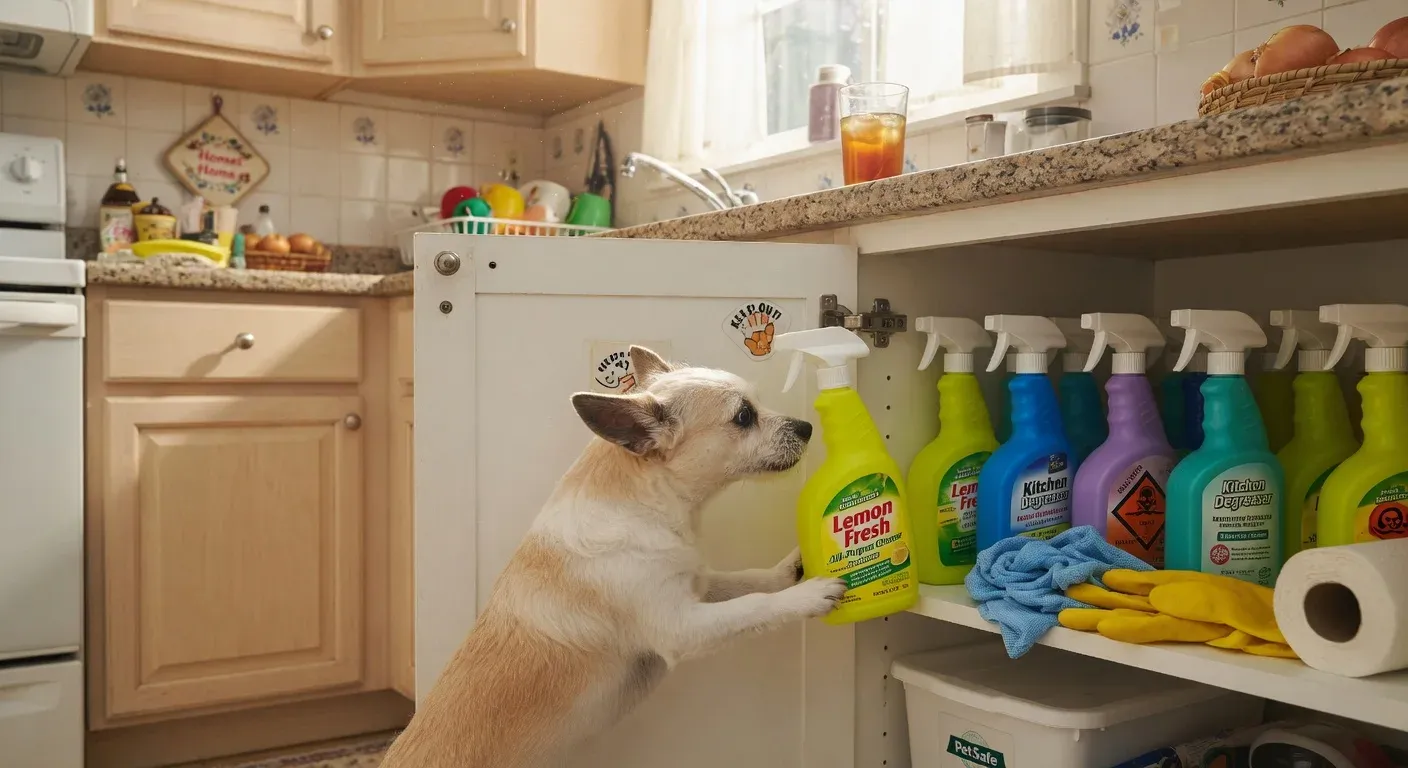
Every year, the ASPCA Animal Poison Control Center receives over 401,000 calls about pets exposed to toxic substances. What surprises most pet owners — and genuinely disturbs us as cleaning professionals — is how many of those calls trace back to the most ordinary household cleaning products. The ones sitting under your kitchen sink. The ones you used this morning before your dog started limping.
This is not a scare tactic. These are documented, peer-reviewed facts about chemistry and animal biology. And knowing them could save your pet's life.
Why Pets Are Far More Vulnerable Than You
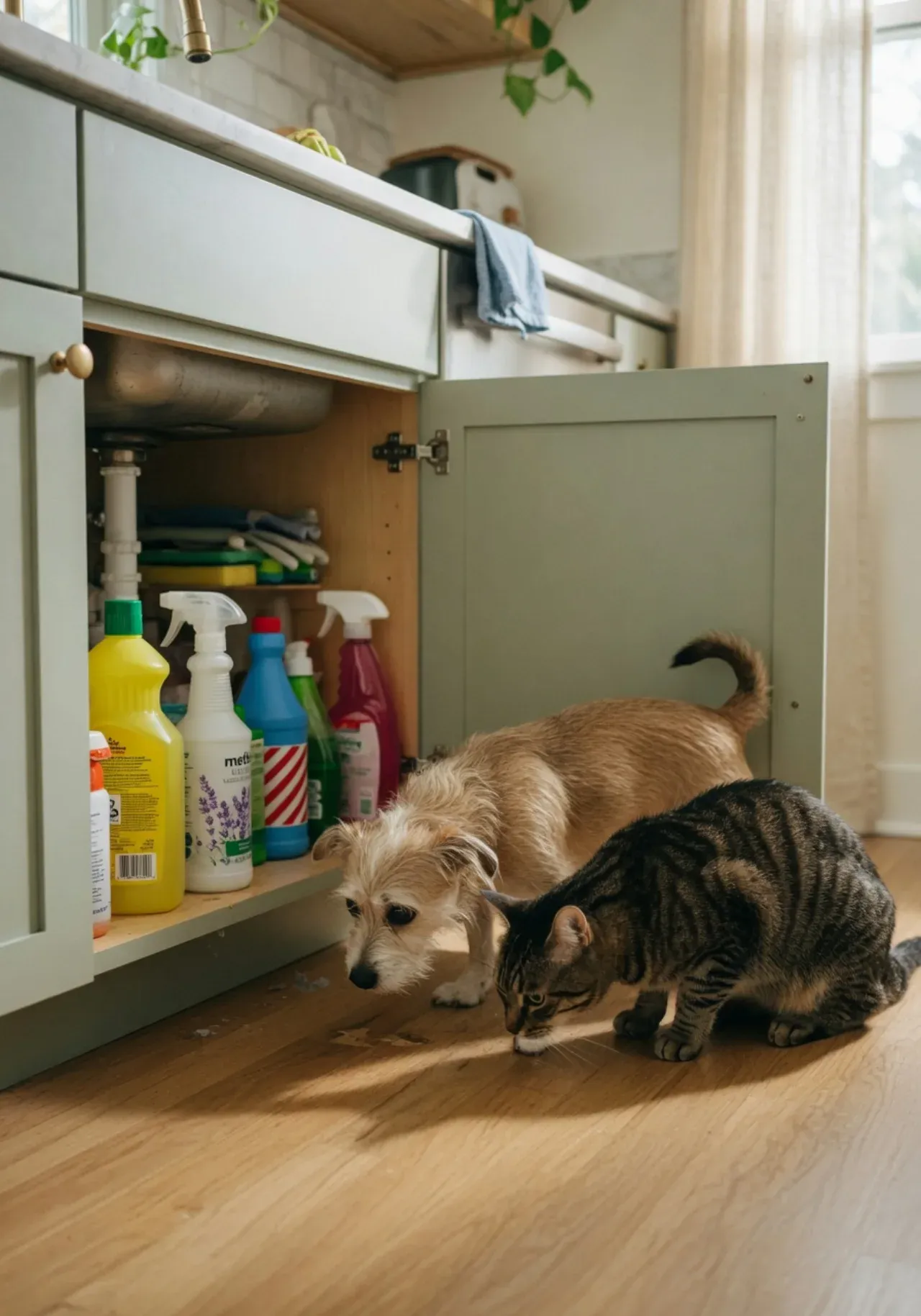
Before we get into specific products, you need to understand why pets are so much more susceptible to chemical toxicity than adult humans.
Surface area to body weight ratio. A 20-pound dog has proportionally far more skin in contact with the floor per pound of body weight than a 150-pound adult. When you mop a floor with a chemical cleaner, your dog's paws are in direct contact with that residue for hours — then he licks his paws. The exposure is constant and cumulative.
Proximity to the ground. Dogs and cats live at floor level. Vapor from volatile cleaning chemicals (VOCs) concentrates near the ground. Your nose is 5 feet up. Your cat's nose is 4 inches up.
Grooming behavior. Cats groom constantly. Any residue on their fur — from a mopped floor, a wiped countertop, a freshly sprayed surface — goes directly into their digestive system. There is essentially no barrier.
Metabolic differences. Cats, in particular, lack a key liver enzyme (glucuronosyltransferase) that allows humans and dogs to detoxify certain chemicals. Compounds that a human processes harmlessly can cause acute liver failure in a cat.
The 8 Most Dangerous Cleaning Products for Pets
1. Bleach and Chlorine-Based Cleaners
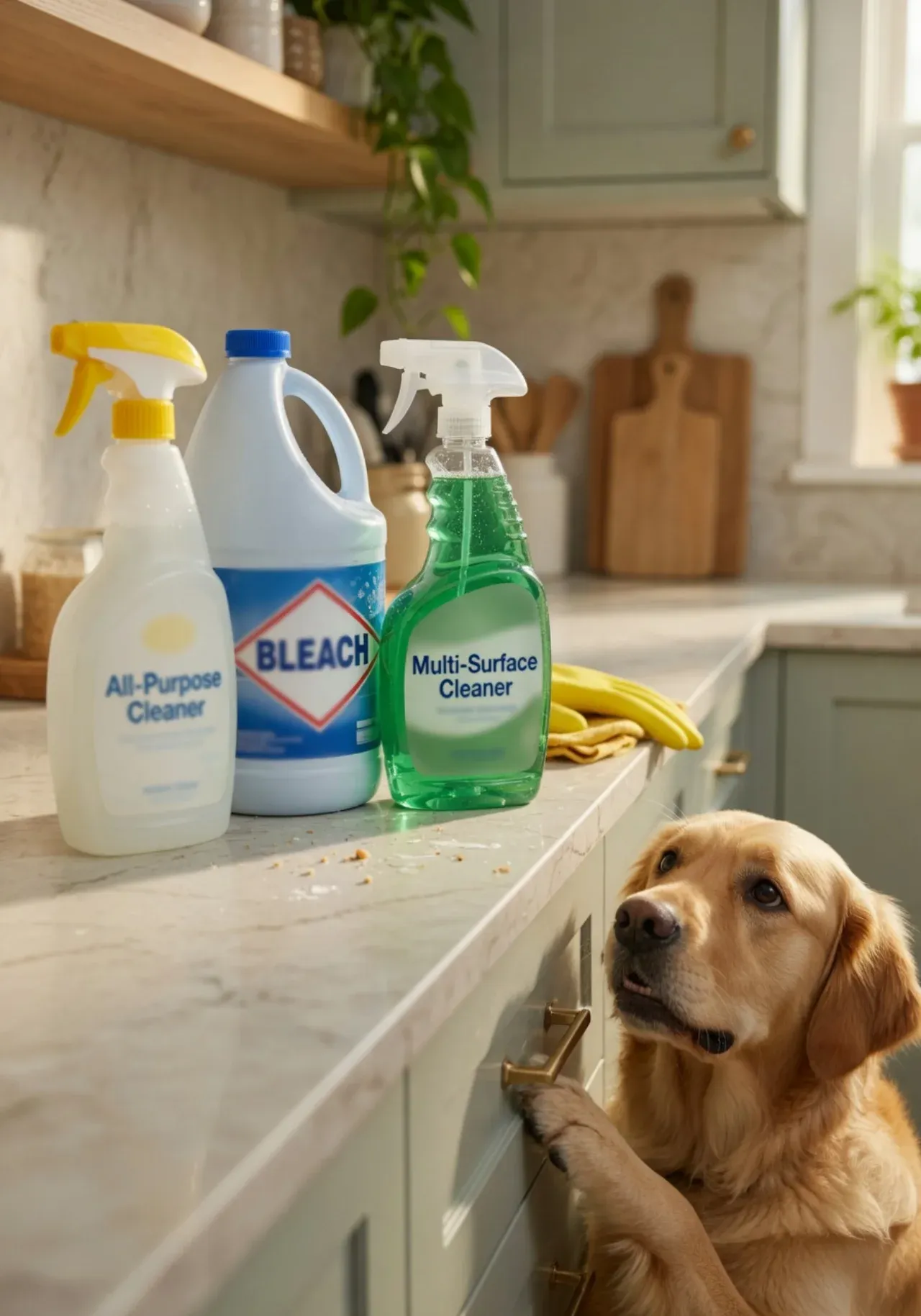
Sodium hypochlorite — the active ingredient in bleach — is one of the most common causes of pet poisoning reported to the ASPCA. At the concentrations used for household cleaning (typically 3–8%), bleach causes severe chemical burns to mucous membranes, respiratory irritation, vomiting, and in high exposures, pulmonary edema.
The hidden danger: "Diluted" bleach solutions that humans consider safe still leave residue on floors and surfaces. Pets that walk across these surfaces and then self-groom are ingesting low, chronic doses. Chronic low-level exposure to chlorine compounds is linked to respiratory inflammation and has been implicated in feline asthma.
Signs of bleach exposure in pets: drooling, vomiting, white foam around the mouth, pawing at the face, difficulty breathing.
2. Phenol-Based Cleaners (Pine-Sol, Lysol Classic Formula, Coal Tar Soap)
This is the one that catches most cat owners completely off guard. Phenols — the active ingredient in many "classic" disinfectants — are acutely toxic to cats. Cats cannot metabolize phenols efficiently, and even small amounts can cause liver failure within 24–72 hours.
Lysol's classic yellow pine scent? Phenol. That "clean" smell many people associate with a sanitized home? Potentially lethal to your cat.
A 2018 study published in the Journal of Veterinary Internal Medicine documented multiple cases of phenol-induced hepatotoxicity in cats whose owners had no idea the product was dangerous to animals.
The hidden danger: Many "natural" pine-scented cleaners contain naturally-derived phenolic compounds. "Natural" does not automatically mean "safe for cats."
Signs of phenol toxicity in cats: lethargy, yellow tinge to gums or eyes (jaundice), vomiting, tremors, loss of coordination.
3. Quaternary Ammonium Compounds (Quats)
"Quats" are found in a massive range of disinfecting products — spray cleaners, fabric softeners, disinfecting wipes, and many no-rinse floor cleaners. They are effective disinfectants and are generally considered low-toxicity for humans.
For pets, however, they present two serious problems:
First, direct contact with concentrated quats causes chemical burns to the mouth, esophagus, and stomach lining — especially in cats and small dogs that groom surfaces.
Second, and more concerning: a growing body of research suggests chronic, low-level exposure to quaternary ammonium compounds may be associated with reproductive toxicity and developmental effects. A Cornell University study found that mice exposed to Quat levels typical of a "freshly cleaned" home environment showed reduced litter sizes and delayed puberty over multiple generations. While this research is still developing, the precautionary principle applies strongly here.
Signs of Quat exposure: oral ulcers, excessive drooling, reluctance to eat, vomiting.
4. Essential Oil Diffusers and "Natural" Sprays
We need to address this one specifically because the wellness movement has created a false sense of security around essential oils. Many essential oils are highly toxic to cats, and moderately toxic to small dogs.
Toxic essential oils for cats include:
- Tea tree (melaleuca) — causes severe neurological symptoms even in tiny doses
- Eucalyptus — liver and nervous system toxin
- Pennyroyal — can cause acute liver failure
- Cinnamon, clove, thyme — mucosal irritants, liver toxins
- Pine and spruce — phenolic compounds (see above)
Diffusers are particularly dangerous because the micro-droplets settle on fur and are then ingested during grooming. A cat does not need to drink the oil — simply being in a room with an active diffuser for several hours can cause exposure sufficient for clinical symptoms.
Signs of essential oil toxicity: wobbling/ataxia, drooling, vomiting, skin redness, difficulty breathing, tremors.
5. Ammonia-Based Glass Cleaners
Most glass and window cleaners contain ammonia. At household concentrations, ammonia causes upper respiratory irritation, eye irritation, and nausea in pets. The issue is that ammonia vapors are heavier than air — they settle exactly where your pets are.
Chronic ammonia exposure is associated with persistent respiratory inflammation. In homes with birds, ammonia-based cleaners can be fatal — birds have extraordinarily sensitive respiratory systems.
6. Formaldehyde-Releasing Preservatives
Many floor cleaners, wood polishes, and "streak-free" products contain formaldehyde-releasing preservatives like DMDM hydantoin or 2-bromo-2-nitropropane-1,3-diol. These compounds slowly release small amounts of formaldehyde as they break down.
Formaldehyde is a known carcinogen in both humans and animals. The International Agency for Research on Cancer (IARC) classifies it as Group 1 — the highest risk category. Pets spend far more time on treated surfaces than humans do, and the cumulative dose over months and years is significant.
7. Grout and Tile Cleaners (Acid-Based)
Acid-based cleaners used for grout and tile often contain hydrochloric acid (muriatic acid) or phosphoric acid. Even well-diluted post-cleaning residues on grout lines can cause chemical burns on the delicate skin between a dog's toes — one of the most common presentations seen by veterinary dermatologists.
If your dog has chronically irritated paws — licking, redness between the toes, or skin thickening — the floor cleaning products in your home should be the first suspect.
8. Dryer Sheets and Fabric Softeners
This one is often overlooked because it doesn't seem like a "cleaning product." Cationic detergents in dryer sheets and liquid fabric softeners are moderately to severely toxic to cats and dogs if ingested. Even rubbing against a recently dried dryer sheet can transfer enough residue to a pet's fur to cause irritation.
The fumes from heated dryer sheets — which many people don't realize diffuse through the dryer exhaust into the laundry room — can cause respiratory irritation in small animals.
What You Should Do Right Now
Step 1: Do a product audit. Go under your sink, to your cleaning supply closet, and check labels. Look for: sodium hypochlorite, phenol, quaternary ammonium, ammonia, formaldehyde-releasing agents.
Step 2: Store products out of reach. Even sealed containers can leak VOCs. Keep cleaning products in ventilated spaces away from where pets sleep.
Step 3: Increase ventilation. When using any cleaning product — even "safer" ones — ensure the area is well-ventilated and keep pets out of the space until surfaces are completely dry.
Step 4: Switch to certified pet-safe products. Look for products certified by the EPA's Safer Choice program or formulated specifically for pet-safe environments. These products are formulated without phenols, without harsh quaternary ammonium compounds, and with chemistry that poses minimal risk to animals.
Step 5: Consider professional eco-cleaning. A certified eco-friendly cleaning service uses vetted, pet-safe products and protocols that standard cleaning companies don't — and they know how to achieve true disinfection without chemical residue.
The Bottom Line
Your home should be a sanctuary for every member of your family — including the four-legged ones. The cleaning industry has, for decades, prioritized killing germs over protecting the biology of the animals who live in those spaces. That's changing — but slowly.
The best protection for your pet isn't avoiding cleaning. It's cleaning smarter, with chemistry that respects animal biology as much as it respects your floors.
At Capital Clean Care, every product we use in your home has been evaluated for safety around pets. Our eco-friendly cleaning protocols eliminate pathogens without leaving behind the chemical residues that cause chronic harm to dogs, cats, and other animals. Serving Montgomery County, MD and surrounding areas.
Keep Reading
- The Complete Guide to Eco-Friendly Cleaning for Pet Owners (Room by Room)
- How Your Clean House Might Be Making Your Pet Sick: The Science You Need to Know
Get a free quote for pet-safe cleaning: capitalcleancare.com | 📞 (240) 704-2551
Sources & Further Reading:
- ASPCA Animal Poison Control Center Annual Report
- Journal of Veterinary Internal Medicine (2018) — Phenol-induced hepatotoxicity in cats
- Cornell University / Duke University — Quaternary Ammonium Compound Research (2019)
- EPA Safer Choice Program — https://www.epa.gov/saferchoice
- AVMA (American Veterinary Medical Association) — Household Hazards for Pets
- IARC Monographs — Formaldehyde Classification