
By Capital Clean Care | Eco & Animal Health Research Team
Reading time: 11 minutes
Owning a pet and maintaining a truly clean home are not competing goals — they just require different thinking than what the conventional cleaning industry has sold us for decades.
This guide was developed from a combination of professional cleaning expertise, animal biology research, and real-world experience cleaning homes with dogs, cats, birds, and small animals across Montgomery County, Maryland. Whether you have a single rescue cat or a multi-dog household, these protocols will help you achieve a genuinely clean, pathogen-reduced home without the chemical residues that silently compromise your pet's health.
Let's go room by room.
Before You Start: The 3 Principles of Pet-Safe Eco Cleaning
Principle 1 — Residue is the enemy. Most cleaning products are designed to be rinsed off surfaces. When you clean a kitchen countertop, you rinse. When you mop a floor, the product mostly dries in place. For pets at floor level, that dried residue is constant dermal and inhalation exposure. Every product choice should be evaluated not just for cleaning power, but for what it leaves behind.
Principle 2 — "Natural" ≠ "Safe for pets." Pine oil is natural. Tea tree oil is natural. Thymol (derived from thyme) is natural. All three can cause serious harm to cats or small dogs. Evaluate products on chemistry and certified safety data, not marketing language.
Principle 3 — Ventilation is a cleaning tool. Fresh air dilutes VOCs and accelerates evaporation of cleaning agents. Open windows during cleaning and keep pets out of freshly cleaned rooms until surfaces are fully dry and aired — typically 20–30 minutes minimum.
What Products Are Actually Safe? The Certified Short List
Before getting into room-by-room protocols, here are the product categories you can trust:
EPA Safer Choice Certified Products
The EPA's Safer Choice label means every ingredient has been evaluated for human and environmental safety. Many Safer Choice certified products are also safe for pets, but always cross-reference with the ASPCA's toxic plant and chemical list.
Enzyme-Based Cleaners
Enzymes (protease, amylase, lipase) are biological molecules that break down organic matter — urine, feces, blood, food — at the molecular level. They are non-toxic to mammals by design. Brands like BioKleen, Nature's Miracle (enzyme formula), and Enzyme Wizard are well-researched options.
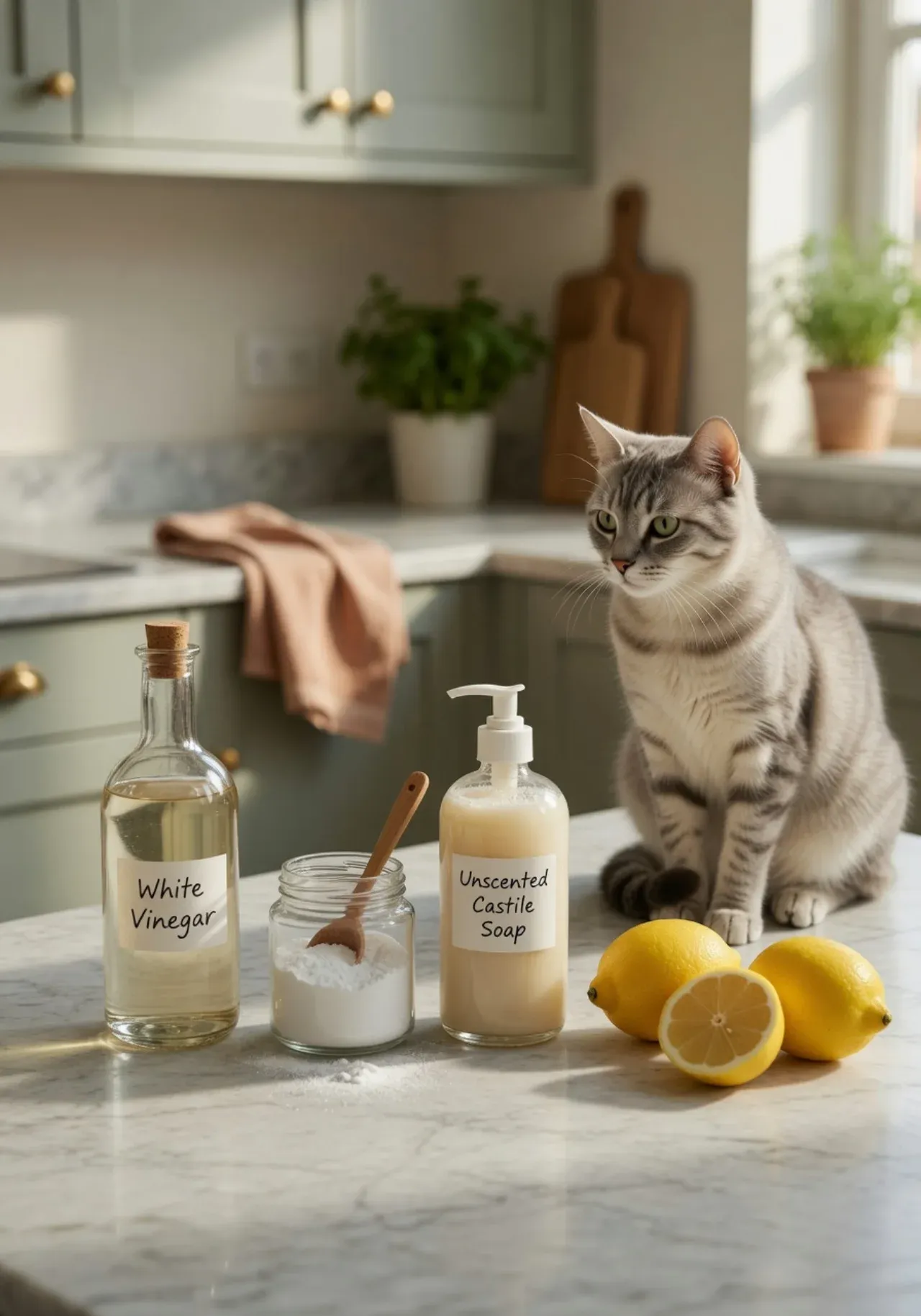
Pure Castile Soap
Unscented castile soap (saponified olive or coconut oil + water) is genuinely safe for pets at normal dilution. Dr. Bronner's Unscented Baby is a benchmark product. Avoid any castile soaps with added essential oils for homes with cats.
White Vinegar (Diluted)
A 1:1 dilution of white vinegar and water is effective for glass, windows, and general surface cleaning. Important caveat: it is not a disinfectant (it doesn't kill bacteria at household concentration) and should not be used as a substitute for actual sanitization. It does neutralize alkaline residues and deodorize effectively.
Baking Soda
Sodium bicarbonate is safe for all pets, mildly abrasive, and excellent for odor absorption. The backbone of DIY pet-safe cleaning.
What to Avoid:
- Phenol compounds (Lysol classic, pine-based cleaners)
- Quaternary ammonium compounds (most disinfecting wipes)
- Bleach (unless unavoidable for specific sanitation needs — see protocol below)
- Essential oils in any cleaning product used in cat households
- Ammonia-based glass cleaners
Room-by-Room Protocol
🏠 Living Room & Common Areas
The challenge: Upholstery, carpet, and area rugs trap pet dander, hair, saliva, and fecal matter from paws. Pets also spend the most time here — on sofas, rugs, and floors — maximizing their exposure to whatever products you use.
Flooring:
Use an enzyme-based floor cleaner or a castile soap solution (1 tbsp unscented castile soap per gallon of warm water). Mop in sections and allow to air dry before letting pets back in. For tile grout, use a paste of baking soda and water + gentle scrubbing instead of acid-based grout cleaners.
For hardwood floors: avoid any product with a citrus extract — d-limonene (found in many "natural" wood floor cleaners) is moderately toxic to cats. Use pH-neutral wood floor cleaners certified by the EPA Safer Choice program.
Carpets and Rugs:
Vacuum before any wet cleaning — this is critical. A HEPA-filter vacuum traps pet dander, dust mites, and flea larvae that otherwise get redistributed.
For spot cleaning: enzyme cleaner applied directly to the stain, covered with a damp cloth, left for 10–15 minutes. Blot (don't rub) to lift. Never use phenol-based carpet fresheners or sprays with synthetic fragrances.
For quarterly deep cleaning: low-moisture steam cleaning (above 212°F kills most pathogens without chemicals). Use no detergent additives in steam cleaners used in pet homes.
Upholstery:
A diluted solution of unscented castile soap (1 tsp per cup of water), applied with a cloth, blotted dry. Follow with a dry baking soda application to neutralize odors — let sit 15 minutes, vacuum off.
🍳 Kitchen
The challenge: Food residues attract pets. Kitchen floors and lower cabinets receive the most paw contact. Any cleaning chemical on a kitchen floor will reach your pet's digestive system via paw licking.
Daily cleaning: Damp mop with hot water only, or with a 1:4 dilution of white vinegar for grease. Avoid spray-and-leave products on kitchen floors.
Surface disinfection (countertops, sink):
If you need to disinfect — which you should after handling raw meat — use a diluted hydrogen peroxide solution (3% H₂O₂ from the pharmacy, used undiluted). Hydrogen peroxide breaks down to water and oxygen. It is safe for pets once it has evaporated (2–3 minutes). It is an EPA-registered disinfectant effective against Salmonella, E. coli, and other food pathogens.
Important: never mix hydrogen peroxide with vinegar — it creates peracetic acid, which is corrosive.
Dishwasher and appliances: Use fragrance-free, Safer Choice certified dishwasher pods. Avoid citrus-scented dishwasher soaps — the steam can carry d-limonene into the kitchen air during the drying cycle.
🛁 Bathrooms
The challenge: Bathrooms have the highest concentration of harsh cleaning products in most homes. Mold/mildew treatments, toilet bowl cleaners, and tile cleaners are typically among the most chemically aggressive products in any cleaning kit.
Toilet: Enzyme-based toilet bowl cleaners are effective for maintenance cleaning. For periodic deep cleaning of mineral deposits, use citric acid powder (food grade) — safe for pets, non-toxic, highly effective against calcium and rust stains. Avoid automatic tank tablets with chlorine or paradichlorobenzene (the active ingredient in many "drop-in" toilet fresheners — it is a probable carcinogen and has been found to cause anemia in cats with chronic exposure).
Tile and grout: Baking soda paste + soft brush for routine grout cleaning. For mold, a diluted hydrogen peroxide spray (3%) applied, left 10 minutes, scrubbed and rinsed is effective and pet-safe once dry.
Shower and tub: Unscented castile soap + warm water. For soap scum: white vinegar spray, left 5 minutes, scrubbed with a non-scratch pad.
Key protocol: Keep pets out of the bathroom until all surfaces are rinsed and fully dry. The concentration of cleaning product vapors in an unventilated bathroom is disproportionately high.
🛏 Bedrooms
The challenge: If your pet sleeps in or near the bedroom (most do), the surfaces here get the most sustained animal contact. This is where bedding, fabric, and carpet cleaning choices matter most.
Bedding (human): Wash at 60°C (140°F) minimum to kill dust mites and flea eggs. Use fragrance-free, Safer Choice detergent. Avoid dryer sheets — use wool dryer balls instead.
Pet bedding: Wash weekly at high temperature using only unscented, dye-free detergent. No fabric softener. Dry completely before returning to pet.
Air quality: If you use any plug-in air fresheners, scented candles, or reed diffusers in the bedroom, consider removing them. Many synthetic fragrance compounds are VOCs that accumulate in poorly ventilated rooms. For odor management, a bowl of baking soda in a corner is unglamorous but genuinely effective.
🐾 Pet-Specific Areas: Crates, Litter Boxes, Food Stations
Water and food bowls:
Wash daily with hot water and unscented dish soap. The biofilm that forms in water bowls (the slimy coating) is a significant source of bacterial exposure. Stainless steel bowls are preferable to plastic — plastic scratches and harbors bacteria in micro-abrasions.
Litter boxes:
Empty, wash, and dry litter boxes weekly minimum. Use hot water + diluted hydrogen peroxide (spray, wait 2 minutes, rinse well). Never use bleach on litter boxes — the ammonia in cat urine reacts with chlorine bleach to produce chloramine gas, which is toxic to both humans and cats.
Avoid scented litters — they are a significant source of respiratory irritant exposure for cats, who spend time in direct contact with the litter.
Crates and kennels:
Enzyme cleaner for any organic matter, followed by a hot water rinse. For disinfection after illness: diluted hydrogen peroxide (3%), applied, left 10 minutes, rinsed thoroughly.
The Litter Box Cleaning Protocol That Most People Get Wrong
The single most common error we see in pet homes is cleaning litter boxes with bleach-based products. Because cat urine contains high concentrations of urea and ammonia, and because bleach contains sodium hypochlorite (a chlorine source), the chemical reaction produces chloramine vapors — toxic to the respiratory system and a known irritant to the mucous membranes.
The correct protocol:
- Empty all litter into a sealed bag for disposal
- Rinse the box with hot water
- Spray with 3% hydrogen peroxide
- Wait 3–5 minutes
- Scrub with a dedicated brush
- Rinse thoroughly with hot water
- Allow to air dry completely before refilling
- Refill with unscented, low-dust litter
What About Disinfection? Do We Need It?
One of the most common questions we get from pet owners is whether eco-friendly cleaning actually disinfects. It's a fair question with a nuanced answer.
First, understand what disinfection means. EPA-registered disinfection requires killing 99.999% of specific listed pathogens. Very few household cleaners — eco or conventional — meet this standard. Most household "disinfectants" are more accurately sanitizers (99.9% reduction) or cleaners.
Second, most of what harms your pet isn't bacteria on surfaces — it's chemical residue. The primary health risk in most pet homes isn't a Salmonella colony on the kitchen floor. It's the cumulative daily exposure to low-level toxins from cleaning product residues. Focus on chemical safety first, and reserve true disinfection protocols (hydrogen peroxide, heat) for specific high-risk moments: after illness, after contact with raw meat, after a sick animal visit.
When true disinfection is needed:
- Hydrogen peroxide (3%) — safe for pets once evaporated
- Steam cleaning at 212°F+ — no chemical residue, kills pathogens and parasites
- Alcohol (isopropyl 70%) on hard surfaces — safe once evaporated, do not use on fabric
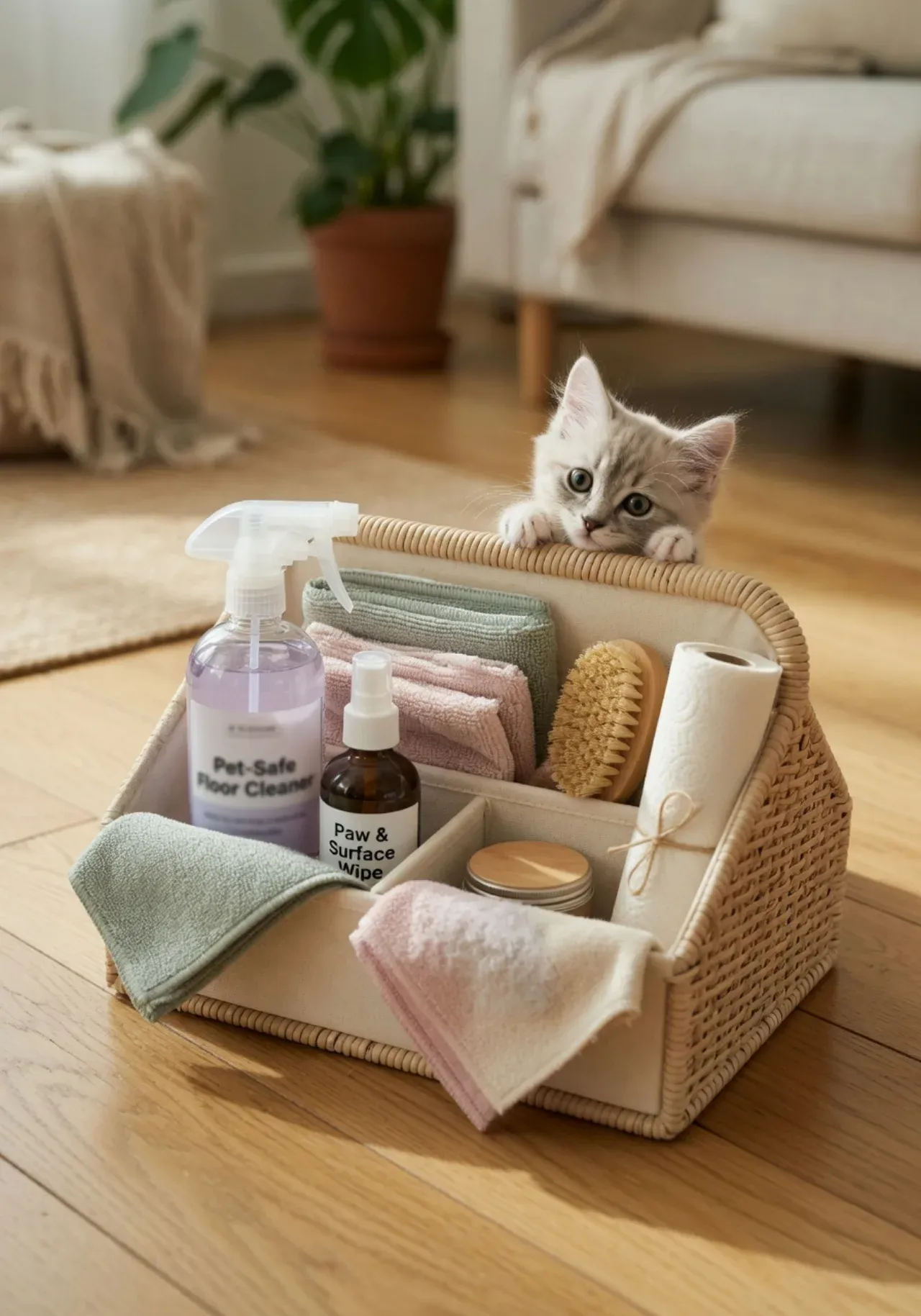
Building a Pet-Safe Cleaning Kit
Here is a complete, functional kit that handles virtually every cleaning task in a pet home without any toxic risk:
| Product | Use | Cost |
|---|---|---|
| Unscented castile soap | General floors, surfaces, dishes | $ |
| 3% hydrogen peroxide | Disinfection, mold, stains | $ |
| White vinegar | Glass, mineral deposits, deodorizing | $ |
| Baking soda | Odor, gentle abrasive, carpet | $ |
| Citric acid powder | Toilet descaling, lime scale | $ |
| Enzyme cleaner (BioKleen/Nature's Miracle) | Urine, feces, organic stains | $$ |
| HEPA vacuum | Dander, hair, parasites, dust | $$$ |
| Microfiber mop + cloths | Reduce chemical use overall | $ |
| Wool dryer balls | Replace dryer sheets | $ |
Total for consumables: Under $50. Total chemical risk to your pets: close to zero.
When to Call a Professional Eco Cleaner
Some cleaning situations exceed what a responsible DIY approach can safely handle:
- Post-construction or renovation cleaning — fine particle contamination, adhesive residues, and drywall dust require specialized equipment and products
- Deep carpet sanitation after flea infestation — professional steam cleaning with appropriate temperatures and dwell time
- Mold remediation — beyond surface mold, this requires containment and products that should not be applied in occupied pet spaces
- Moving in/out cleaning — previous occupants' chemical residues and pet dander from unknown animals require thorough treatment
In these cases, choosing a cleaning company that explicitly uses pet-safe, eco-certified products is not a luxury — it's a health decision for your animals.
Capital Clean Care has served pet-loving families across Montgomery County, Maryland since 2015. Every product in our kit is evaluated for safety around dogs, cats, birds, and small animals. We don't just say "eco-friendly" — we can show you the ingredient list.
Keep Reading
- The Silent Threat: Common Cleaning Products That Are Poisoning Your Pet Right Now
- How Your Clean House Might Be Making Your Pet Sick: The Science You Need to Know
Book a pet-safe clean: capitalcleancare.com | 📞 (240) 704-2551
Sources:
- EPA Safer Choice Program Database — https://www.epa.gov/saferchoice
- ASPCA Animal Poison Control Center — https://www.aspca.org/pet-care/animal-poison-control
- Journal of Feline Medicine and Surgery — VOC exposure in domestic cats
- American Veterinary Medical Association — Environmental Hazards Guidelines
- National Institute of Environmental Health Sciences — Household Chemical Exposures in Companion Animals