
A glass tips over at a dinner party and suddenly there's a spreading red bloom on your light carpet. The panic is real — red wine is one of the most notorious stains there is, packed with deep natural pigments (chromogens) and tannins that bond fast to fibers. But here's what most people get wrong in that first minute: they grab the wrong thing and start scrubbing, which is exactly what sets the stain for good.
The method below is the one cleaning pros and stain scientists actually rely on — and it skips bleach entirely. With a clean cloth, cold water, a little dish soap, and 3% hydrogen peroxide, you can lift even an alarming-looking spill without harsh chemicals near your kids or pets. Speed and technique matter far more than any expensive product.
The First 60 Seconds Decide Everything
Blot — never rub
Press straight down with a clean cloth to lift the wine. Rubbing drives pigment deeper into the fibers and frays them, turning a fixable spill into permanent damage.
Cold water only
Hot water sets red wine's tannins permanently. Cold water dilutes and lifts. This single rule is the difference between a stain that comes out and one that doesn't.
Work outside-in
Always blot from the edge of the stain toward the center so you contain it instead of spreading the ring wider across the carpet.
No supplies handy? Pour a generous layer of plain table salt over a fresh spill right away. It wicks up the wine while you gather everything else — a genuinely effective first-aid step for fresh stains.
What You'll Need
All eco-friendly, all likely already in your home — no bleach, no commercial solvent required.
Clean white cloths or paper towels
Several. White so you can see how much wine is transferring. The workhorse of the whole process is blotting.
Cold water
For diluting and rinsing. Never warm or hot — heat sets the stain permanently.
3% hydrogen peroxide
Standard drugstore brown-bottle strength. Oxidizes and breaks down the red pigment. Breaks down to water and oxygen — no toxic residue. (Not for wool.)
Liquid dish soap
A grease-cutting surfactant that lifts the loosened pigment out of the fibers. A few drops is all you need.
Table salt and baking soda
Salt for absorbing fresh spills; baking soda to absorb any faint residual stain and odor overnight.
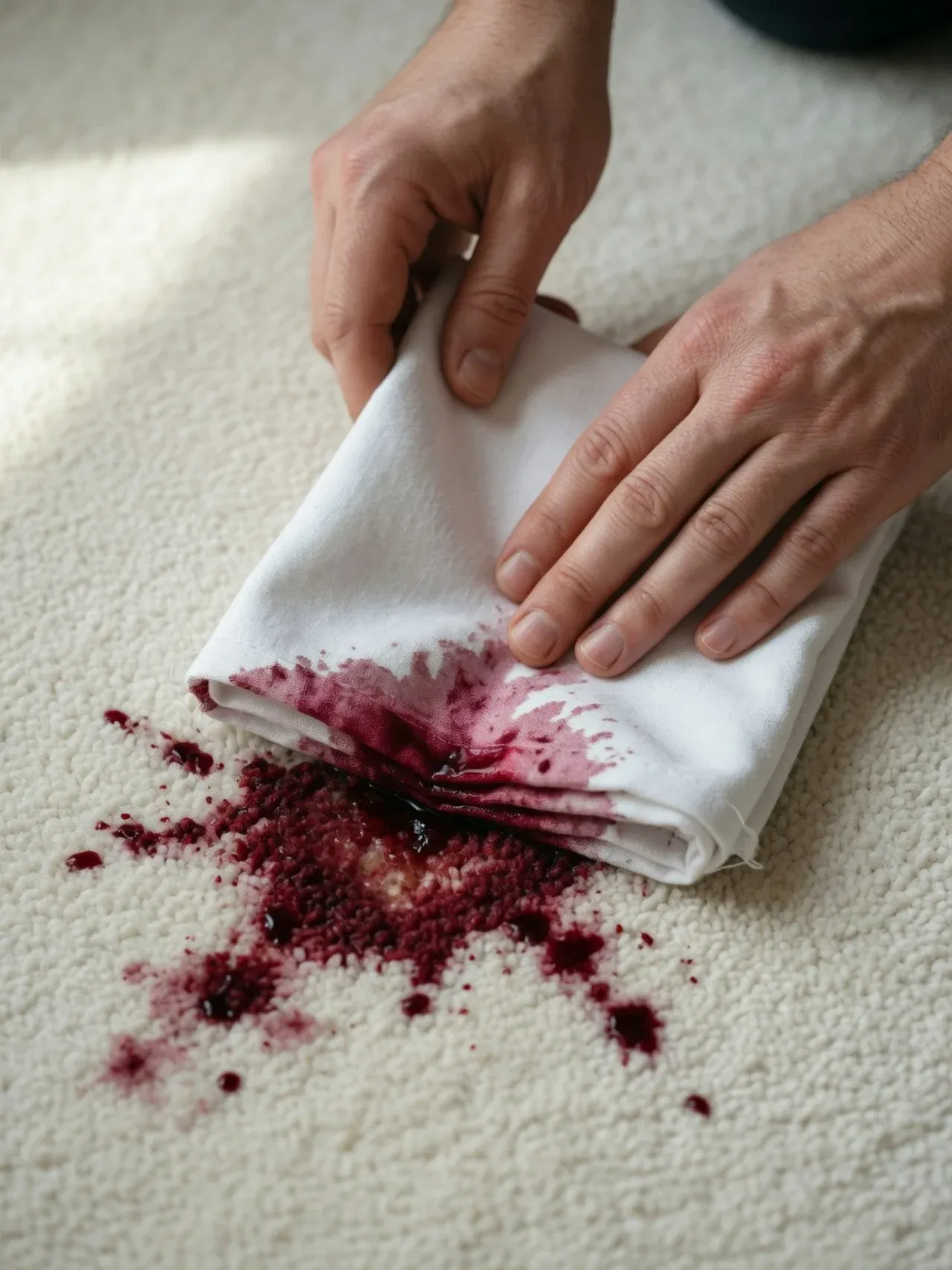
Blot, never rub. Press straight down to lift the wine — rubbing drives the pigment deeper into the fibers.
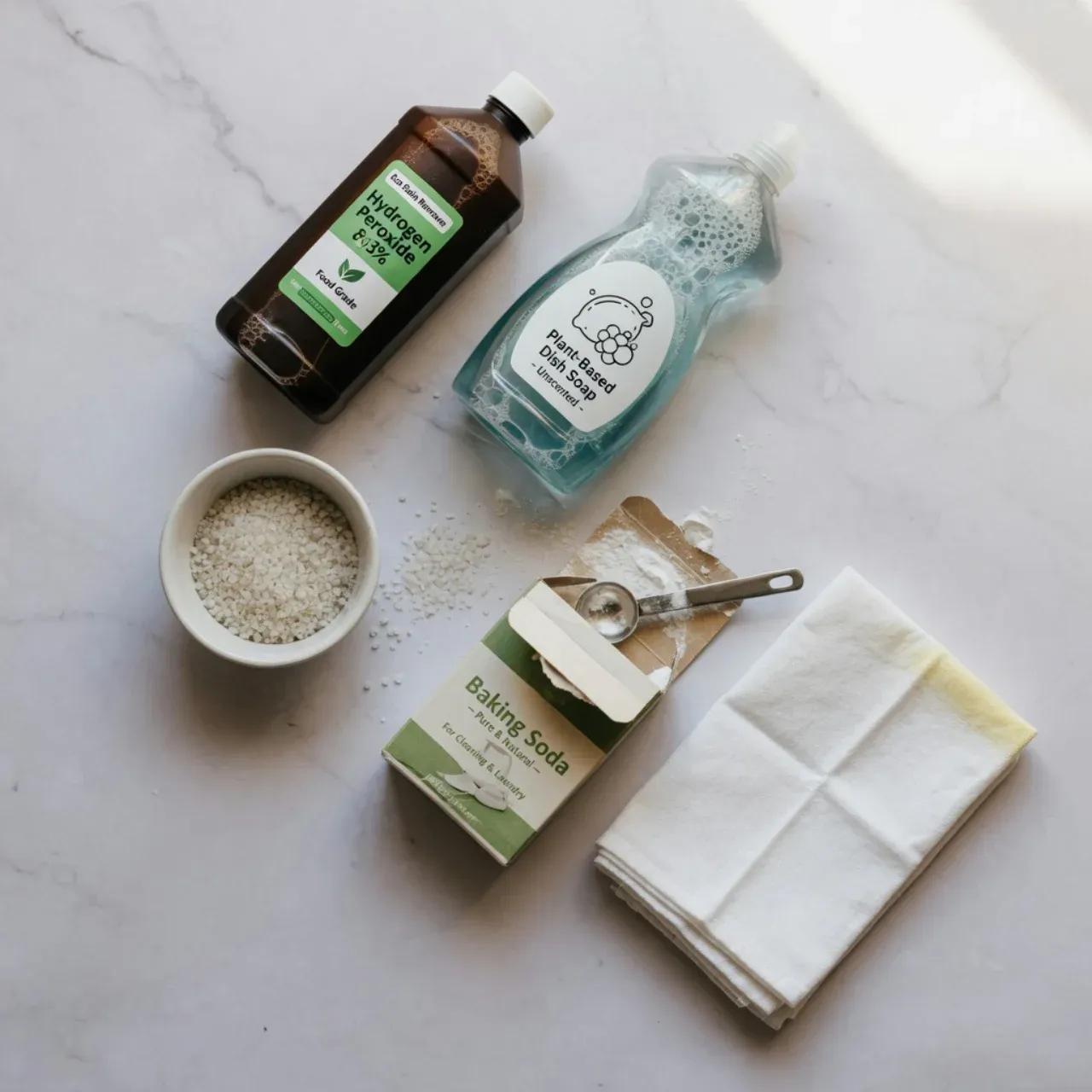
The eco toolkit: 3% hydrogen peroxide, dish soap, salt, and baking soda — no bleach required.
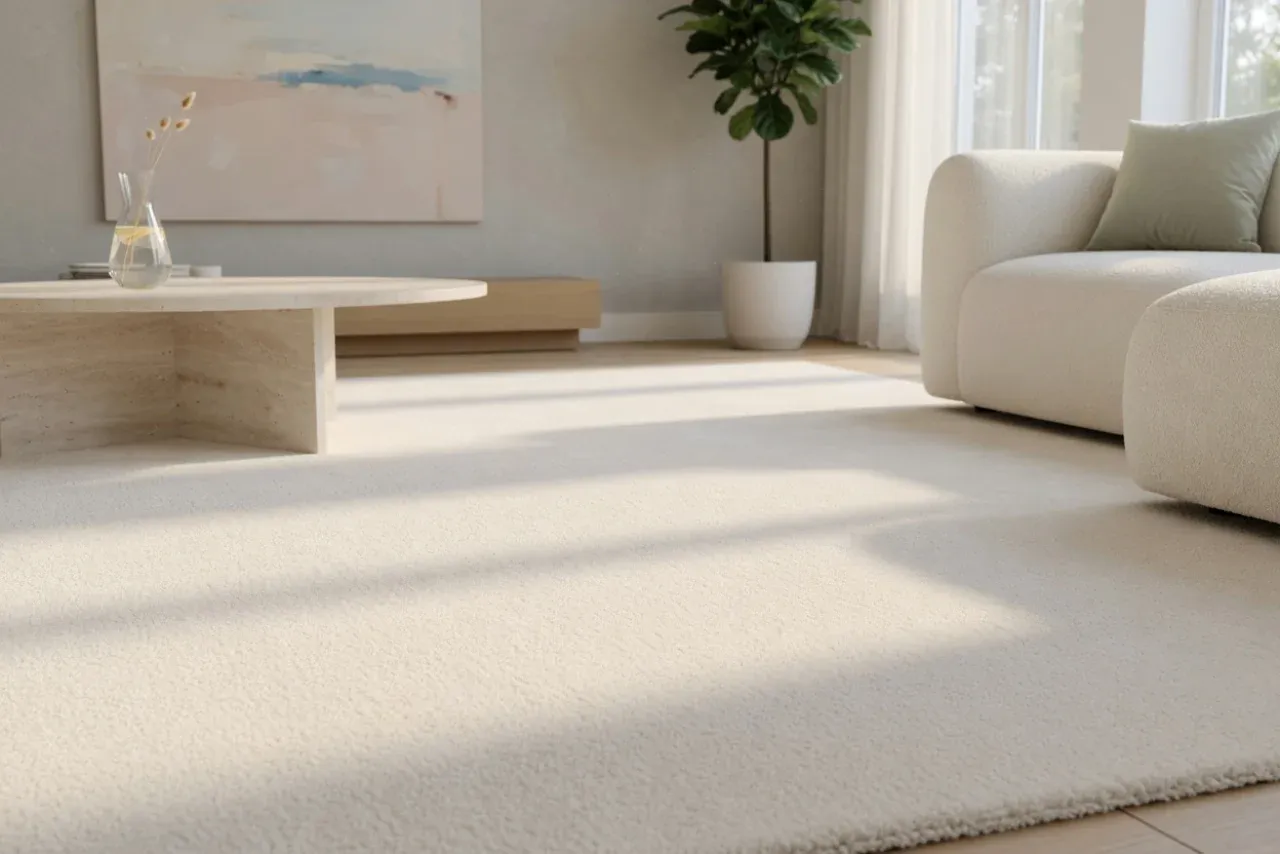
The goal: stain fully lifted, fibers intact, zero bleach or harsh solvents used.
The Step-by-Step Method
Best for: fresh and recent stains on synthetic carpet & upholstery
Blot up as much wine as you can — immediately
The moment wine hits the fiber, grab a clean white cloth or paper towel and press straight down to absorb as much liquid as possible. Keep moving to a clean section of cloth and repeat until little or no color transfers. Work from the outside of the stain inward so you don't spread it. Never rub or scrub — rubbing pushes the pigment deeper into the carpet and frays the fibers.
Flush with a little cold water and keep blotting
Pour a small amount of cold water onto the stain to dilute the remaining wine, then blot again with a dry cloth. Repeat once or twice. Always use cold water, never hot — heat sets the tannins and proteins in red wine permanently, turning a removable fresh stain into a set-in one. The goal here is to lift and dilute before any cleaning solution goes on.
Apply the dish soap + hydrogen peroxide solution
Mix two parts 3% hydrogen peroxide with one part liquid dish soap. Dab a little onto the stain (patch-test a hidden spot first on colored carpet — and skip peroxide entirely on wool). The peroxide oxidizes the red pigment, breaking it down while the soap lifts it from the fibers. Gently work it in with your fingertips and let it sit about 15 minutes.
Blot, rinse with cold water, and repeat if needed
Blot the area with a clean, damp cloth — you should see the stain fading onto the cloth. Rinse by blotting with plain cold water to remove the soap and peroxide, then blot dry. For a stubborn stain, repeat the solution-and-blot cycle two or three times; oxidation works gradually and a faint stain often disappears on the second pass.
Dry the area and lift the fibers
Press a dry towel over the spot to absorb remaining moisture, then let it air-dry completely — placing a fan nearby speeds it up. Once dry, run your hand or a soft brush over the carpet to fluff the fibers back up. If any faint shadow remains after drying, a sprinkle of baking soda left overnight and vacuumed up will absorb the last of it along with any odor.
Drag the handle to compare
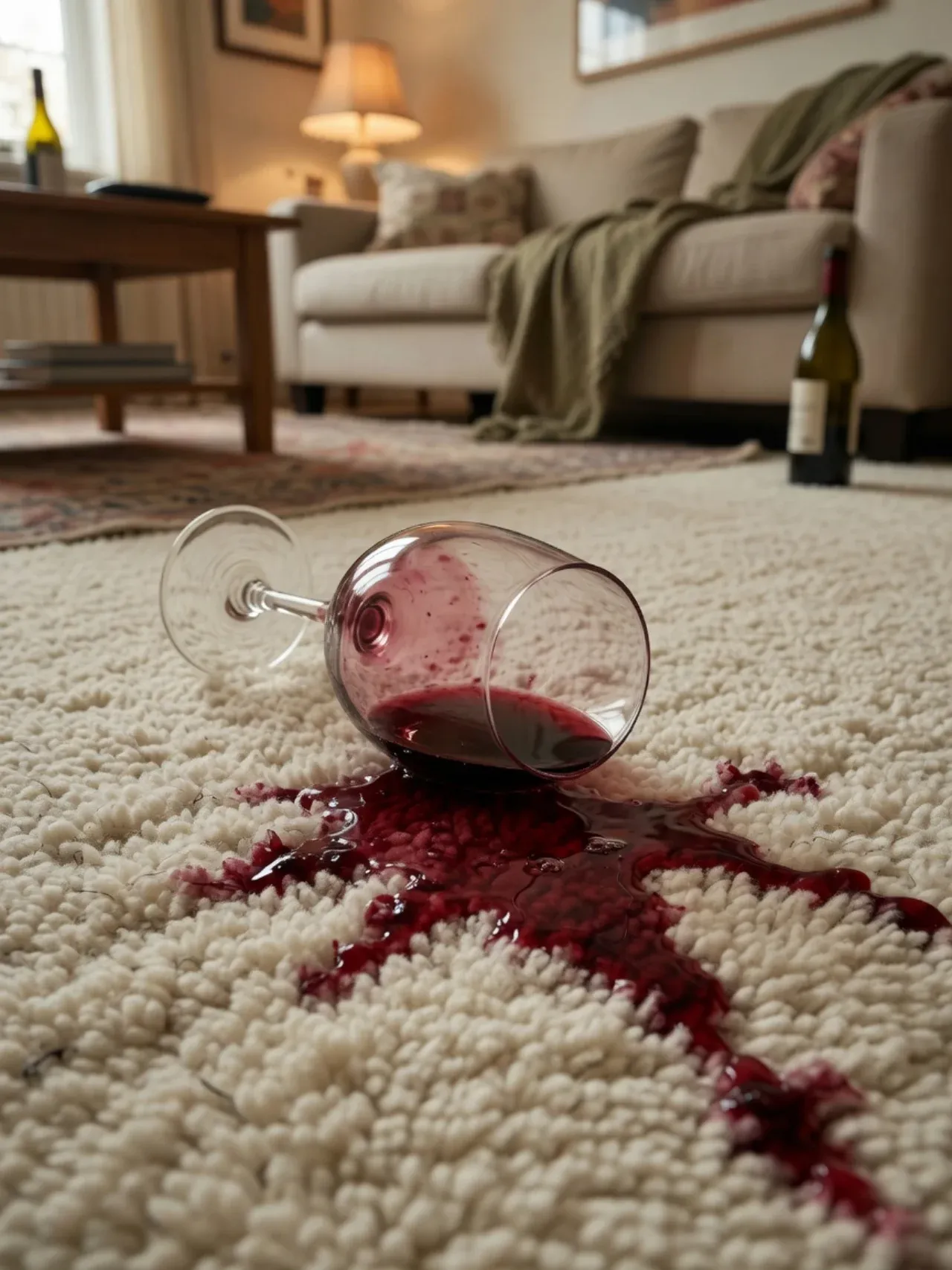
Dish soap + hydrogen peroxide, no bleach — fibers intact, color restored.
Capital Clean Care
Stain won't budge — or it's spread across the room?
Capital Clean Care's deep cleaning teams handle set-in carpet and upholstery stains across Bethesda, Rockville, Silver Spring, and Gaithersburg. Eco-certified, no bleach, background-checked.
Mistakes That Set the Stain for Good
- Rubbing or scrubbing — it drives pigment deeper and damages the fibers
- Using hot or warm water — heat permanently sets red wine's tannins
- Reaching for chlorine bleach — it can bleach out the carpet's own color, leaving a worse mark
- Putting a stained garment in the dryer before the stain is gone — dryer heat locks it in
- Letting the spill sit 'until later' — every minute the wine dries makes it harder to lift
- Using hydrogen peroxide on wool without testing — it can damage and lighten wool fibers
Why no bleach?
Bleach doesn't just risk stripping your carpet's color — in Maryland it eventually reaches the Chesapeake Bay watershed, where chlorinated byproducts harm aquatic life. Hydrogen peroxide breaks down into nothing but water and oxygen. It's the same no-toxics standard behind our eco-friendly cleaning service.
When to Call a Professional
Some wine stains need extraction equipment
Once a stain has fully dried and bonded — or soaked into the padding underneath — surface blotting can only do so much. Hot-water extraction reaches what DIY can't.
- The stain is old, dried, and survived several full treatment cycles
- Wine soaked through to the carpet pad or down into upholstery filling
- The fabric is wool, silk, antique, or labeled dry-clean-only
- A large area or multiple spills (a whole-room party cleanup)
For set-in stains and post-party cleanups, Capital Clean Care's deep cleaning service treats carpet and upholstery with eco-safe products across Maryland.
Frequently Asked Questions
Hosting Again Soon? Start Spotless.
Capital Clean Care provides house cleaning and deep cleaning across Maryland — Bethesda, Rockville, Silver Spring, Gaithersburg, and Potomac. No bleach, no fumes, background-checked teams.
Licensed, insured, and locally owned. Montgomery County, MD.