

You just signed the lease on a Silver Spring apartment — great location, great price, and a persistent layer of stale cigarette smoke baked into every wall, every inch of carpet, and every ceiling tile. Or maybe you bought a home in Gaithersburg that was smoked in for years, and two weeks of open windows have barely made a dent. Whatever brought you here, the problem is the same: third-hand smoke, and it doesn't leave on its own.
The good news: you can remove cigarette smell completely using natural, eco-safe methods — without ozone generators, toxic sprays, or a full gut renovation. This guide covers every surface, every room, and every HVAC component, with methods that work in Maryland's humid climate and won't compromise your family's air quality. For more eco-friendly cleaning tips for Maryland homes, see our full guide.
Why Cigarette Smoke Smell Persists
Cigarette smoke doesn't just float in the air — it actively bonds to every porous surface it touches. Drywall, wood trim, carpet backing, upholstery foam, curtain fabric, and even the silicone caulk around your tub absorb nicotine and tar compounds on contact. Once embedded, these molecules continue to off-gas at room temperature for months or years. That's what researchers call third-hand smoke: the residue that remains after the visible smoke is gone.
Nicotine bonds to surfaces
Nicotine is a sticky alkaloid that adheres to paint, drywall, and fabric at the molecular level — requiring acid (vinegar) or mechanical abrasion to remove.
Maryland humidity makes it worse
High summer humidity in Gaithersburg and Silver Spring reactivates surface-bound nicotine, causing it to off-gas more intensely on warm, humid days.
HVAC spreads it everywhere
Central air systems recirculate smoke-contaminated air through every room — including rooms that were never smoked in — until filters and ducts are cleaned.
The sequence matters. Every step in this guide builds on the last. Skipping straight to air fresheners or painting over walls without cleaning first is why most DIY attempts fail — the source keeps off-gassing through whatever you layer on top.
Step 1 — Air It Out First (3 Steps)
Before touching a single surface, flush the air. This removes the highest concentration of airborne smoke molecules and makes every subsequent cleaning step more effective. Do this on a dry day — outdoor humidity below 60% is ideal.
Open all windows and doors simultaneously
Create true cross-ventilation by opening every window and exterior door at the same time. Cigarette smell is trapped in stagnant air — moving it out is step one. In Silver Spring or Gaithersburg, choose a dry day with outdoor humidity below 60% to avoid pulling in humid air that drives deeper absorption into walls and flooring.
Set up fans in a push-pull configuration
Place one fan in a window blowing inward (intake) and a second fan at the opposite end of the home blowing outward (exhaust). This pressure differential flushes the interior air volume in 15–20 minutes. For multi-story homes, run exhaust fans at the top floor and intake fans at the lowest level — smoky, warm air rises and collects at the ceiling.
Run HVAC on fan-only mode while ventilating
Set your thermostat to 'fan only' (not heating or cooling) while windows are open. This circulates interior air continuously through your filters. Immediately after this step, replace HVAC filters — they will have captured a heavy concentration of smoke particulates and nicotine compounds. Use a MERV-11 or higher filter for smoke removal.
Capital Clean Care
Move-in smoke remediation beyond DIY reach? We handle it.
Capital Clean Care's eco-certified teams serve Silver Spring, Rockville, Gaithersburg, and Bethesda. Vinegar-based protocols — no ozone, no chemical residue.
Deep Clean Walls & Ceilings — 4 Steps
Walls and ceilings hold the largest volume of embedded nicotine in any smoked home. You can often see it: a yellow-brown film on light-colored walls, especially near vents and in corners. Cleaning this is labor-intensive but essential — no amount of absorbers or air purifiers can overcome walls that are continuously off-gassing.
Dust and dry-wipe surfaces first
Use a dry microfiber cloth or a dry mop on a long handle to remove loose dust and soot from walls and ceilings before any wet cleaning. Wetting a dusty nicotine-coated wall first spreads the contamination rather than removing it. Pay extra attention to the ceiling — smoke rises, and ceilings typically hold more nicotine than walls.
Wash with white vinegar solution
Mix equal parts white vinegar and warm water in a bucket. Working from top to bottom (ceiling first), wipe every surface with a wrung-out sponge or cloth. Change the solution when it turns visibly yellow or brown — a heavily smoked room may require 3–4 bucket changes. The acetic acid in vinegar dissolves nicotine's alkaloid bonds from painted and sealed surfaces without damaging most latex paint.
Apply TSP substitute for stubborn residue
For rooms with heavy yellow staining, follow the vinegar wash with a TSP substitute (trisodium phosphate-free cleaner, available at hardware stores). Mix per label instructions and apply with a sponge, working in sections. TSP substitute is more aggressive than vinegar on heavy nicotine buildup and is safer for users and the environment than true TSP. Rinse with clean water after.
Apply odor-blocking primer before repainting
If smell persists after washing or if you plan to repaint, apply a shellac-based or oil-based primer (Zinsser BIN or Kilz Original) before any finish coat. Standard latex primer does not seal nicotine — it bleeds through within weeks. One coat of shellac primer seals the surface permanently. Apply with a brush or roller in a well-ventilated room; shellac fumes are strong and require good airflow.
Carpet & Upholstery Deodorize — 4 Steps
Carpet is the single largest odor reservoir in a smoked home. The fibers, the backing, and the pad underneath all absorb nicotine. In severe cases the pad must be replaced — but in most move-in situations, the following four steps achieve substantial improvement before that drastic measure.
Vacuum thoroughly with a HEPA filter vacuum
Before any wet treatment, vacuum the entire carpet using a vacuum with a HEPA filter. This lifts loose particulates and prepares the fiber for deeper treatment. Use the slow, overlapping stroke method — one pass at walking speed deposits particulates back down; slow passes with overlapping strokes actually extract them. Empty the canister outside immediately.
Apply baking soda generously and leave overnight
Sprinkle a heavy, visible layer of baking soda over the entire carpet surface. Work it lightly into the fibers with a stiff brush or the back of a broom. Leave for a minimum of 8 hours — overnight is ideal, 24 hours is better for heavy odor. Baking soda (sodium bicarbonate) is alkaline and reacts with the acidic nicotine compounds, neutralizing them rather than just masking the smell. Vacuum completely in the morning.
Treat upholstery with vinegar mist and baking soda
For sofas, chairs, and upholstered headboards, vacuum all surfaces first, then mist lightly with a 1:2 vinegar-to-water solution. Do not saturate. Immediately sprinkle baking soda over the misted surface, let sit for 2–4 hours, then vacuum completely. The combination of vinegar and baking soda works on fabric the same way it works on carpet — neutralizing nicotine at the chemical level.
Steam clean or call a pro for embedded odor
For carpet or upholstery with deep, years-long smoke penetration, hot-water extraction (professional steam cleaning) is the most effective next step. The high-temperature water and suction action flush nicotine from deep in the carpet pile and backing — something dry methods cannot reach. Capital Clean Care's{' '}<Link to='/services/move-in-move-out-cleaning' className='text-accent underline hover:no-underline'>move-in/move-out cleaning</Link>{' '}service includes carpet steam treatment across Montgomery County.
Curtains, Bedding & Clothing — 3 Steps
Fabric items that were present during smoking need to be washed separately from regular laundry — smoke compounds can transfer to other items in the wash. The method below works for curtains, bedding, and machine-washable clothing.
Pre-soak in a vinegar bath for 30 minutes
Fill a bathtub or large basin with cold water and add 2 cups of white vinegar per gallon of water. Submerge curtains, bedding, or clothing and soak for at least 30 minutes. The vinegar penetrates the fabric and begins breaking down nicotine bonds before the wash cycle. Cold water only for the soak — heat sets odors into fabric at this stage.
Wash on the hottest safe cycle with baking soda
Transfer directly from the soak to the washing machine. Add your usual HE detergent plus ½ cup of baking soda placed directly in the drum. Select the hottest cycle the fabric care label allows. Skip fabric softener — it coats fibers and can trap residual odor. For very heavy smoke exposure, run a second cycle.
Dry outdoors in direct sunlight if possible
UV light from direct sun kills residual odor-causing compounds more effectively than a dryer. Hang outside for 2+ hours when available. If using a dryer, run on the highest heat setting for a full cycle. Never fold or store until completely dry — any remaining moisture restarts the odor cycle. Curtains should be rehung immediately after drying to prevent wrinkling and re-absorption from stored bedding.
HVAC, Filters & Air — 3 Steps
A smoked home's HVAC system is a smoke-distribution machine. Every time the system ran while the home was smoked in, it pulled contaminated air across the filter, through the air handler, and into every duct in the house. Ignoring the HVAC is the most common reason homes still smell after a thorough surface cleaning.
Replace all HVAC filters immediately
Remove and discard every HVAC filter in the home — return air filters, supply grilles, and any media filters in the air handler. Replace with MERV-11 or higher filters rated for smoke and allergens. A saturated smoke filter is an active odor source that pumps contaminated air into every room every time the system runs. Budget $20–40 per filter and change again in 30 days after the initial deep clean.
Clean supply and return grilles
Wipe all supply and return air grilles with a vinegar-dampened microfiber cloth. These metal grilles accumulate a visible layer of nicotine-laden dust that off-gasses directly into room air. For grilles with heavy buildup, remove them and soak in a vinegar solution for 20 minutes before scrubbing and drying thoroughly before reinstalling.
Consider professional duct cleaning for severe cases
If the smell persists after filter replacement and surface cleaning, ductwork may have accumulated nicotine deposits on interior surfaces. Professional duct cleaning uses high-powered vacuums and brushes to extract buildup from inside the duct walls. This is especially worth considering for homes smoked in for 5+ years in the Montgomery County area, where central air systems run 8–10 months of the year and have processed an enormous volume of contaminated air.
Natural Odor Absorbers That Actually Work
After cleaning surfaces, passive odor absorbers continue drawing residual smoke compounds from the air around the clock. These four options are safe, inexpensive, and available at any grocery or hardware store. Place them in every room — especially closets, bathrooms, and enclosed spaces where air circulation is limited. This is the eco-safe approach we recommend across all Maryland homes we clean.
White vinegar bowls
Place uncovered bowls of undiluted white vinegar in each room. The acetic acid vapor neutralizes nicotine molecules in the air. Replace every 48–72 hours. The vinegar smell itself dissipates within a few hours, leaving neutral air — not vinegar-scented air.
Activated charcoal bags
Activated charcoal adsorbs VOCs and smoke compounds at the molecular level. Place 200–400g bags in each room, closet, and cabinet. Unlike baking soda, activated charcoal doesn't saturate quickly — bags last 1–2 months. Recharge by placing in direct sunlight for a few hours.
Fresh coffee grounds
Open containers of fresh coffee grounds absorb and neutralize airborne odors effectively. Replace every 2–3 days as the coffee oxidizes and loses absorption capacity. A practical option for kitchens and living areas where charcoal might not fit aesthetically.
Baking soda in closed spaces
In closets, cabinets, and drawers, open boxes or shallow bowls of baking soda absorb odors passively. Replace monthly. For closets with smoked clothing still present, this won't substitute for washing — but it slows re-contamination of freshly cleaned items.
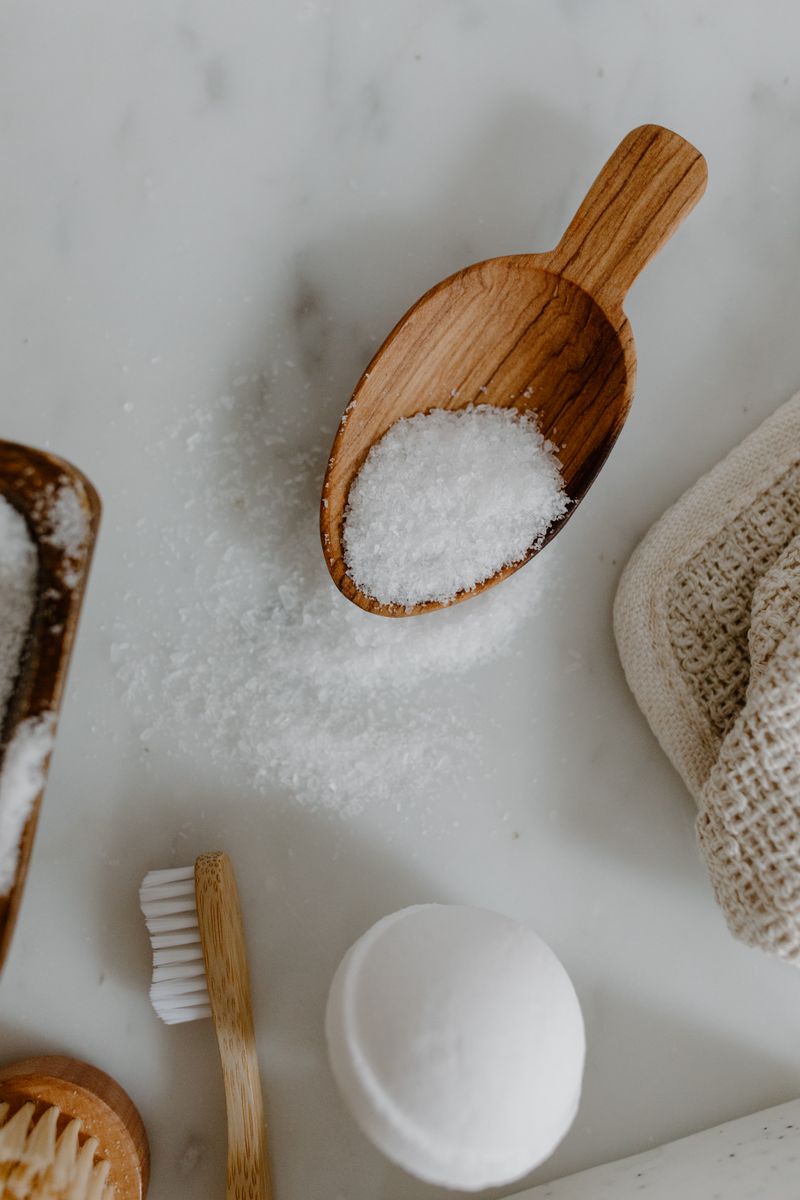
Baking soda draws nicotine compounds out of carpet fibers and upholstery — leave it overnight for best results.

Vinegar bowls, activated charcoal, and coffee grounds passively pull smoke VOCs from the air.
A HEPA + activated carbon purifier handles airborne molecules — after surface cleaning removes the source.

The result of deep-cleaning walls, carpet, and HVAC: a genuinely fresh, smoke-free home.
When You Need a Professional
DIY has limits — know when to escalate
Everything in this guide is effective for light-to-moderate smoke contamination. For homes where smoking occurred indoors daily for years, the nicotine penetration can exceed what surface cleaning reaches. At that point, the risk is spending significant time and effort for incomplete results.
Signs you're dealing with a professional-level job:
- Smell returns within days of cleaning — surfaces are re-releasing trapped compounds faster than absorbers can capture them
- Visible yellow-brown staining on ceilings that reappears after washing
- HVAC continues to distribute smell even after filter replacement
- Drywall has been painted over multiple times without primer — sealer cannot penetrate
- Carpet pad has absorbed smoke below the fiber level — requires replacement, not cleaning
Capital Clean Care's move-in/move-out cleaning service is specifically designed for situations like this. Our teams work systematically through walls, ceilings, all hard surfaces, carpet, and appliances using vinegar-based protocols — no ozone, no chemical residue, and safe for Maryland's watershed. See more in our eco-friendly cleaning tips for Maryland homes.
Frequently Asked Questions
Ready for a Smoke-Free Home? Let Us Do the Heavy Work.
Capital Clean Care provides eco-friendly cleaning and move-in cleaning across Maryland — Silver Spring, Rockville, Bethesda, Gaithersburg, and Potomac. Vinegar-based protocols, background-checked teams, no ozone or harsh chemicals.
Licensed, insured, and locally owned. Montgomery County, MD.